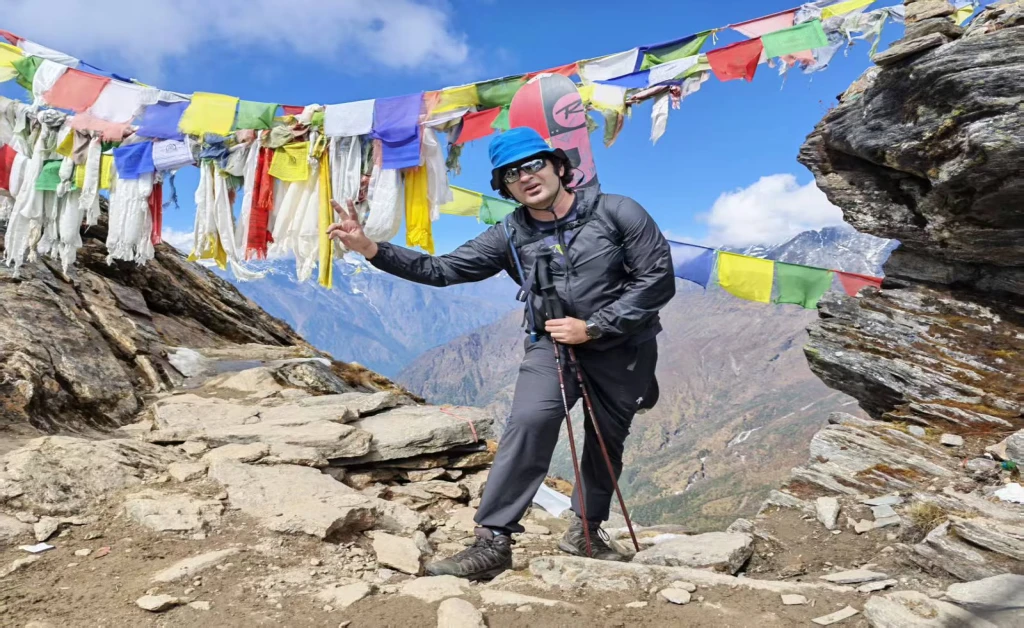
Imagine standing at a summit, 6,470 meters above sea level, a Himalayan peak, surrounded by some of the world’s highest mountains, before descending through vast snow-covered slopes. That is what a trek from Khare to Mera Peak Climbing and ski-back has to offer: an extraordinary experience for mountaineers and adventure enthusiasts.
Situated in Nepal’s remote Hinku Valley, Mera Peak is one of the most popular and highest trekking peaks in the country. Though a traditional Mera Peak Climbing itinerary takes around 12-15 days, if you start directly from Khare and are experienced and properly acclimatised climbers, you can complete the summit in just three days.
The 3-day Khare to Mera Peak expedition includes pre-climbing training, an ascent to Mera High Camp, and a challenging summit attempt followed by descent to Khare. For those with a proper and appropriate skiing experience, equipment, favourable snow conditions, and professional support, you can descend from the peak skiing, adding extra spice to this adventure.
Once you reach the peak, it will offer you marvellous and spectacular views of Mount Everest, Mount Lhotse, Mount Makalu, Mount Cho Oyu, and Mount Kanchenjunga. Whether you are interested in traditional mountaineering or exploring the possibility of skiing down the Himalayan slopes, this short expedition delivers an unforgettable, once-in-a-lifetime high-altitude experience.
Overview of Khare to Mera Peak Climb - 3 Days
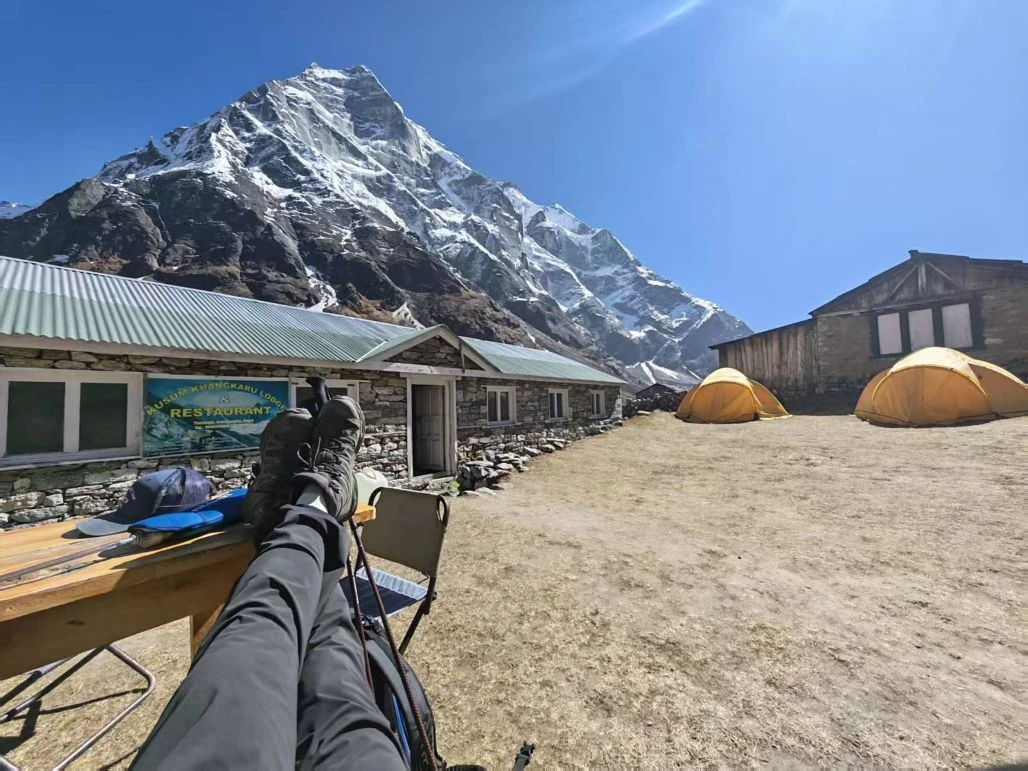
The Khare to Mera Peak climbing adventure is a short but demanding mountaineering expedition that begins from Khare, a small mountain settlement at approximately 5,045m above sea level.
As opposed to the traditional Mera Peak expedition, involving several days of trekking through the Hinku valley, this package focuses primarily on the climbing section making it a tad bit easier. This package is suitable to those climbers or trekkers who have already reached Khare through an established trekking itinerary and have allowed sufficient time for acclimatisation.
During the three days, climbers receive essential mountaineering training, have a chance to cross Mera Glacier, spend a night at High Camp, and attempt the summit before returning to Khare.
This adventure is explicitly rewarding as it combines different adventures and scenic beauty all along the trail, i.e glacier travel, snow climbing, camping, and jaw-droppingly beautiful Himalayan scenery, that too all in a very short time frame.
Khare to Mera Peak and Back Distance
No matter how short your expedition is, understanding the distance of your journey is really very important.
The climbing route covers rocky moraine, snowy slopes, glacier sections, and steep summit terrain. Although the overall distance is relatively short compared with longer Himalayan treks, the high altitude significantly increases the physical demands.
The approximate distance breakdown is:
Route | Approximate Distance |
Khare to Mera High Camp | 4–6 km |
Mera High Camp to Summit and back to High Camp | Part of summit-day route |
High Camp to Khare | Included in summit-day return |
Summit day total | 12–13 km |
Overall climbing section | Approximately 16–19 km |
These figures are approximate and can vary depending on the selected route, camp location, snow conditions, and GPS measurements.
Khare to Mera Peak and Back Difficulty
Khare to Mera Peak climbing is challenging given its high elevation, glacier crossings, cold temperatures, and demanding summit day.
Even though Mera Peak is generally classified as a trekking peak rather than a highly technical expedition mountain, it still isn’t known to be an easy climb.
The three-day itinerary is demanding given that it compresses the climbing stages into a very short time-frame.
Note that, before attempting this three day expedition, climbers must be acclimatised before starting the journey from Khare.
- High Altitude:- The starting point, Khare itself is at a high elevation, approximately 5,045 m, while the summit, Mera Peak, reaches an elevation of approximately 6,470m. At these elevations, oxygen availability is significantly lower than at sea level. You may experience altitude sickness. The symptoms may include fatigue, headaches and breathlessness amongst others. Do not ignore any of the symptoms you may have while on the journey to conquer the summit.
- Glacier and Snow Walking:- The route between Mera La and High Camp involves glacier travel and snowy terrain. You must be comfortable walking with crampons and using an ice axe. Crevasses and changing snow conditions also require careful route selection and rope management.
- Long Summit Day:- The summit day generally requires 10-13 hours of climbing and descending. You must maintain a steady pace whilst dealing with the freezing temperatures, strong winds, and limited oxygen, starting early in the morning.
- Weather Conditions:- The weather in the Himalayas is always unpredictable as it changes rapidly. Strong winds, snowfall, poor visibility, and unstable snow conditions may affect the summit attempt.
Thus, you must follow your guide’s instructions and if essential you have to be prepared to turn around.
What Affects the Mera Peak Climbing Cost?
Taking into several accounts, these are the facts that affect the Mera Peak Climbing Cost.
1. Climbing Permits: Climbers require the appropriate Mera Peak climbing permit and associated documentation. Permit charges vary according to the climbing season and applicable regulations.
Mera Peak NMA Permit Cost 2027
Climbing Season | Months | NMA Permit Cost (Per person) |
Spring | March-May | USD 350 |
Autumn | September-November | USD 175 |
Winter | December-February | USD 175 |
Summer | June-August | USD 175 |
2. Climbing Guide
Hiring a qualified climbing guide is essential for glacier travel, rope management, route selection, and summit safety.
3. Equipment Rental
Mountaineering equipment such as crampons, ice axes, climbing boots, harnesses, helmets, and ropes may be available for rent in Khare.
The reference operator lists an approximate rental package of USD 100–150 per person for selected climbing equipment. Actual costs depend on the items required.
4. Camping and Food
The expedition requires a tented camp at Mera High Camp, along with meals, cooking equipment, and support staff.
5. Ski Equipment and Specialist Support
If you want to include a ski descent, additional expenses may apply for ski equipment, specialist guides, technical support, and safety equipment.
Therefore, it is important to confirm whether skiing is included in your package or arranged separately.
Mera Peak Ski Back: An Additional Himalayan Adventure
One of the thrilling adventures associated with this expedition is the possibility of skiing back to descend through snow-covered slopes.
Instead of descending the traditional way on foot, if you are an experienced ski mountaineer, you may explore a ski descent from a suitable section of the mountain.
Mera Peak can offer an exciting skiing experience as it is surrounded by wide snow slopes. However, since the entire expedition is based on a high-elevation, the skiing experience may differ from that of a commercial ski resort.
The terrain includes glaciers, crevasses, steep snow sections and changing new conditions.