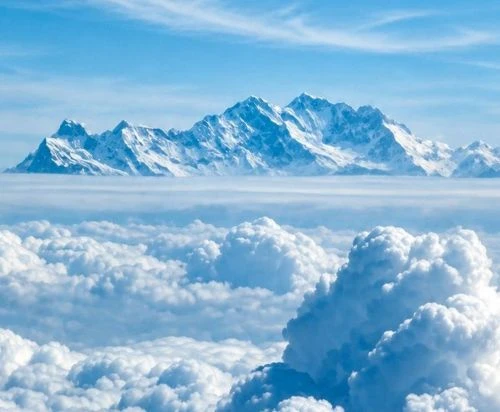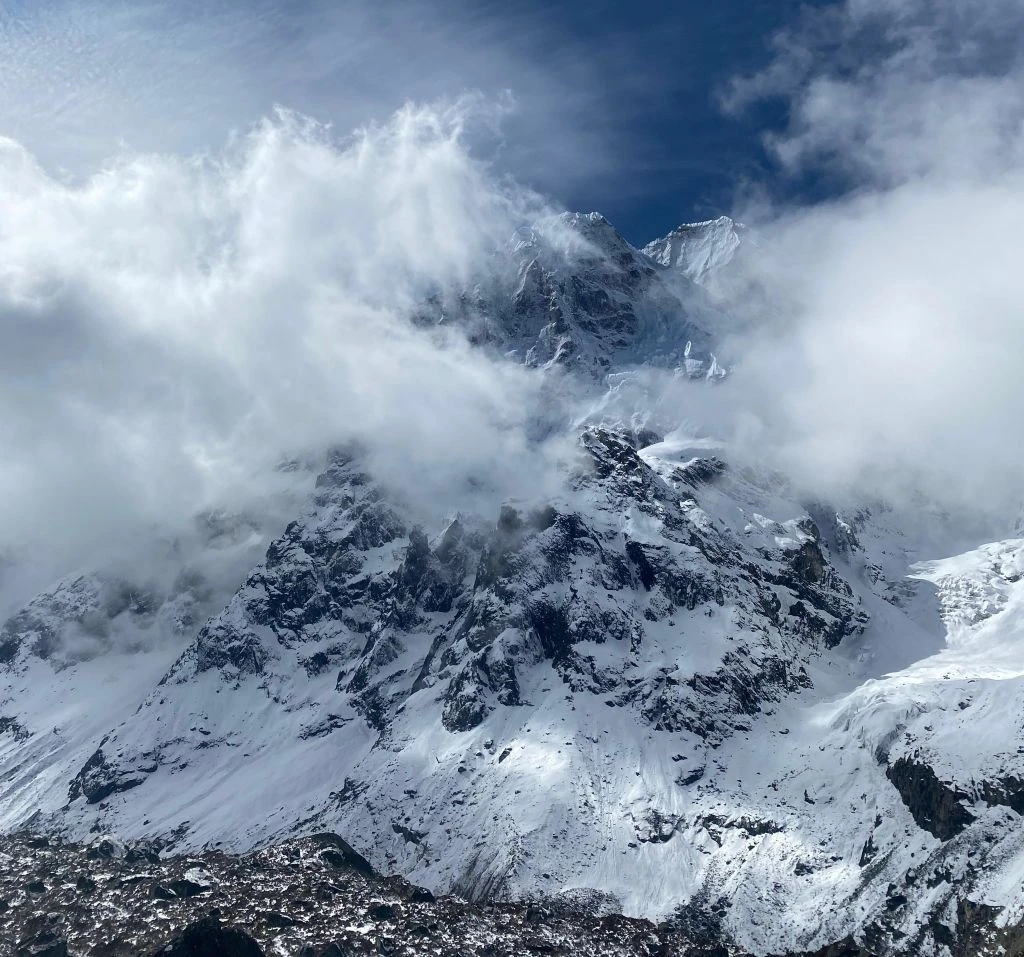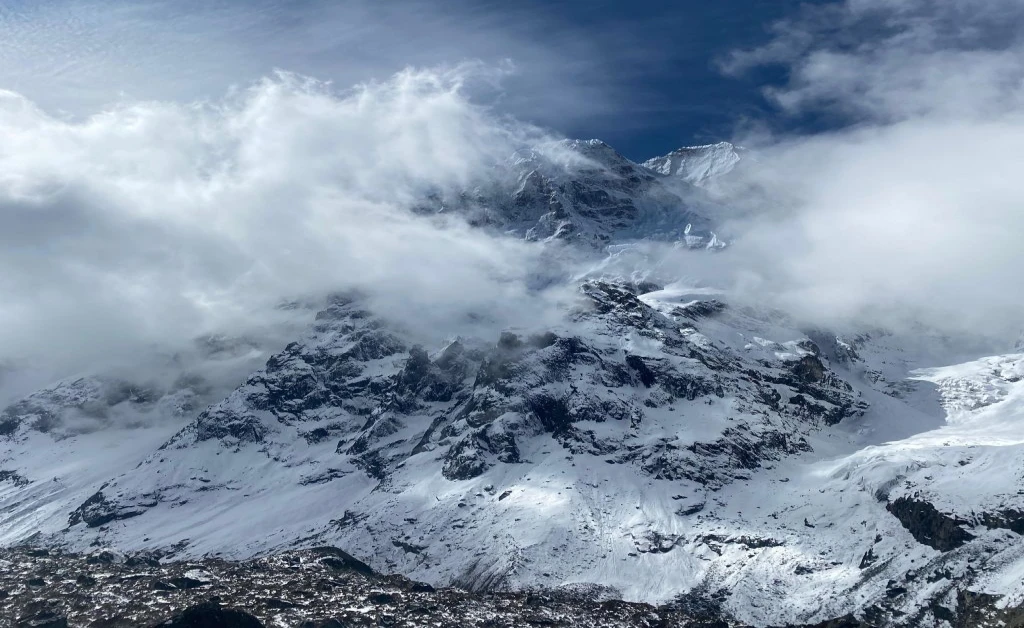
The Kanchenjunga South Base Camp Trek is a 13-day trek that leads to the base camp for the third-highest mountain on earth, Kanchenjunga at 8,586m, in the isolated eastern corner of Nepal. And it offers an alternative to the very well-known trekking routes of Everest and Annapurna.
This trek will take you through untouched wilderness in the Kanchenjunga Conservation Area, which is home to snow leopards, red pandas and some of the oldest villages belonging to the Limbu and Rai communities.
All of our senior trekking guides at Mountain Rock Treks have had the opportunity to trek the entire length of this route. From the beautiful tea plantations in Fikkal to the raw glacial moraines found under Yalung Base Camp, we've trekked every metre along the provided itinerary. So this isn't just a route we sell as trekkers. It's a true and complete knowledge of the route.
Additional Introduction to
Kanchenjunga South Base Camp Trek offers you the opportunity to explore the south face of Kanchenjunga, which is the third-highest mountain in the world and towers 8,586 meters in height. This 13-day trekking adventure takes you on an adventurous walk through the Simbua Khola river valley, crossing different climatic zones all the way to Oktang at an altitude of 4,730m, also known as the South Base Camp.
From Taplejung village, you can begin your walk and continue through Limboo villages of Lalikharka and Khokling to follow the Simbua Khola river through the forest stopover of Tortong. Crossing the high pass of Lasiya Bhanjyang, the terrain spreads out wide and gives way to the Yalung Valley.
From this point, you come face-to-face with Talung peak at 7,349 meters, Rathong peak at 6,678 meters, and Kabru peaks, which form the tallest and southernmost mountains that measure over 7,000 meters high in the world.
The Kanchenjunga Conservation Area houses snow leopards, Asian black bears, red pandas, and the Himalayan Tahr. Bird watchers might see the blood pheasant, snow cock, and golden-breasted fulvetta within the dense forests of the trail's lowlands. The Kanchenjunga Conservation Area has been recognized by the WWF under its Sacred Himalayan Landscape program.
The Kanchenjunga region attracts far fewer tourists compared to Everest and Annapurna. You will get to walk through the quaint villages inhabited by Rai, Limbu, and Sherpa communities. This trail involves crossing rivers, seeing Mani walls, stone chortens, and prayer flag lines that have existed for ages due to Tibetan Buddhist influence.
Moderate physical fitness and a certain amount of experience with trekking are required. The daily hiking hours average between five and seven hours, and there are stretches of the trail that require fitness, as well as being quite isolated. Our expertly trained team at Mountain Rock Treks has vast experience with the Kanchenjunga trek and will organize everything while you focus on the trek itself.
Highlights
Stand on Oktang (Kanchenjunga South Base Camp) at 4580 m, right there by the third-highest mountain in the world.
View from very close proximity Kanchenjunga (8586 m), Yalung Kang (8505 m), Talung (7349 m), Kabru (7412 m) and Rathong (6678 m).
Walk along the Yalung Glacier, one of Nepal's longest glaciers.
Follow the Simbua Khola river valley through dense forests, alpine meadows, and glacial moraines.
Cross the Lasiya Bhanjyang pass, which is decorated with prayer flags and is the access point into the upper Yalung Valley.
Trek through remote villages inhabited by the Limbu and Rai tribes, Lalikharka, Khokling, Tortong, and Yamphuding.
Encounter numerous Buddhist monasteries, many ancient chortens, and many Mani walls along the way.
Have the opportunity of spotting red pandas, snow leopards, Himalayan tahr, blood pheasants, and snow cocks that are found in the Kanchenjunga Conservation Area (KCA).
Experience trekking through four distinct ecosystems i.e., subtropical jungle, rhododendron forests, alpine meadows, and glacier terrain.
One of the most remote, least frequented treks in Nepal, enjoy pure wilderness without crowds.
Pass through the famous tea gardens and cardamom farms of Fikkal and Kanyam in the Ilam district.
The adventure begins with a scenic 45-minute domestic flight to Bhadrapur over eastern Nepal's hills.
Experience the warm hospitality of Sherpa, Limbu & Rai people along the way.
Acclimatization day in Cheram (3870 m) to explore with a guide.
Quick Facts on Kanchenjunga South Base Camp Trek 2026
Duration: 13 Days from Kathmandu
Max. Elevation: 4,580 m / 15,026 ft
Trek Starting Point: Taplejung (also by air to Bhadrapur)
Daily Walking Hours: 5–7 hours
Difficulty: Strenuous
Germination Temperature Range: 23-65F (-5° - 18°C, season dependent)
Group Size: 2–12 trekkers
Permits Needed: Kanchenjunga Conservation Area Permit (KCAP) + Restricted Areas permit
Accommodation: Teahouses throughout the trail
Meals: All trek days (breakfast, lunch & dinner)
Best Seasons: March–May and September–November
Fitness Needed: Previous experience of multi-day trekking is highly recommended
Why Most Trekkers Haven't Heard of This Trek?
Compared to Everest Base Camp's over 50,000 yearly trekkers, only 2,000 hikers annually hike to Kanchenjunga. The remote area requires obtaining a permit to hike through it, thus keeping other people away from using the hiking route and leaving you in the complete isolation of the beautiful, wild Himalayan wilderness.
This is the best-kept secret in Nepal for hikers who appreciate solitude, culture, untouched beauty, and don't want to compete for space to take pictures for their Instagram accounts; so if you want to experience something that most people don't get to experience, Kanchenjunga is the perfect trek for you.
A Trek to the Base of the World's Third-Highest Mountain in 2026/27
In the Himalayas, Kanchenjunga is the world’s highest mountain. It is located along the border of Nepal and Sikkim, India. Its south base camp is called Yalung Base Camp and is located at a height of 4580 m. It offers dramatic views of the mountain from close up due to its height. At Everest Base Camp, you only see part of a glacier and not the summit, which is behind the Lhotse face.
However, you will be right under the entire southern wall of Kanchenjunga at Yalung Base Camp and will be totally amazed by its size and grandeur. Our guides from Mountain Rock Treks have been here many times before, yet they are still impressed by the mountain itself.
Kanchenjunga South Base Camp Trek Cost 2026 and 2027
The Kanchenjunga South Base Camp Trek cost starts from $1350 per person for a standard group package. Additionally, we have private and custom packages available for 2026 and 2027 upon request. All of our pricing is completely transparent.
You can expect to pay exactly what you see, so there are no hidden fees or last-minute surprises, and you will not have to have any uncomfortable discussions with your guide when you finish your trek.
Package Type | 2026 Price (Per Person) | 2027 Price (Per Person) |
1-1 pax | US $ 1450 | US $ 1450 |
2 - 4 Pax | US $1400 | US $1400 |
5 - 8 Pax | US $1350 | US $1350 |
Is the Kanchenjunga South Base Camp Trek Worth the Cost?
Our professional opinion and the opinions of all of the trekkers we assist were the same: a definite yes. Here is a breakdown of how much value $1,350 will provide you:
Fully guided, fully supported trekking in this beautiful wilderness setting for 13 days.
The chance to see the Yalung Glacier and the South Face of the 3rd tallest mountain in the world;
All logistics taken care of for you - permit approvals, transportation, accommodation, and food, so you can focus on enjoying your trek and not worrying about anything else;
All guides who have walked this trail many times before know every aspect of the trail, such as twists, turns, hazards, and enjoyment, so that they can provide you with great advice and assistance along the trail.
A life experience that most people on this planet will never have.
When comparing a 13-day European vacation, a resort holiday, or even a domestic adventure trip and an all-inclusive package of the Kanchenjunga South Base Camp Trek with Mountain Rock Treks, it is clear that you are getting fantastic value for money.
Is Kanchenjunga in India or Nepal?
This has been one of the most frequently asked questions about Kanchenjunga. Technically speaking, it borders both India (specifically, the state of Sikkim) and Nepal. Thus, Kanchenjunga is a shared natural marvel between two different countries.
However, the two main trekking base camps located at the north and south base camps are both only accessible via the Nepal side through the Taplejung district, which lies in the eastern region of the country.
On the Indian side of Kanchenjunga lies the Khangchendzonga National Park in Sikkim, which has been designated as a UNESCO World Heritage Site. There are only limited opportunities for trekking on the Indian side.
This means that the trails on the Indian side are much more basic and undeveloped than those located on the Nepal side, there is much greater restriction on permits that are issued for individuals wanting to trek on the Indian side, and the "classic" base camp experience that many trekkers are searching for is definitely found on the Nepal side.
Why the Nepal Side Offers the Best Kanchenjunga Trekking Experience
Access to South Base Camp (Yalung 4,580m) and North Base Camp (5,143m) from Nepal
Richer culture due to no mass tourism and a great deal of interaction with authentic Limbu and Rai villages
One of the world’s most biodiverse Conservation Areas is the Kanchenjunga Conservation Area
Far Superior infrastructure, teahouse network, and availability of guides on the Nepal side
For South Kanchenjunga trekking, Mountain Rock Treks operates from the Nepal side, providing a full, undiluted Kanchenjunga experience.
Is Kanchenjunga South Base Camp the Hardest Trek in Nepal?
The Kanchenjunga South Base Camp Trek is considered one of the most challenging and isolated trekking routes in Nepal. However, whether or not it truly is the hardest trek in Nepal depends largely on your definition of "difficulty".
Trek | Max Altitude | Daily Hours | Remoteness | Difficulty (Out of 5) |
Kanchenjunga South BC | 4,580 m | 6–7 hrs | Extremely Remote | 4 / 5 |
Upper Dolpo Trek | 5,190 m | 7–8 hrs | Most Remote in Nepal | 5 / 5 |
Manaslu Circuit | 5,106 m | 6–8 hrs | Very Remote | 4 / 5 |
Kanchenjunga Circuit (N+S) | 5,143 m | 7–9 hrs | Extremely Remote | 5 / 5 |
Everest Base Camp | 5,364 m | 5–6 hrs | Moderate | 3 / 5 |
Annapurna Circuit | 5,416 m | 5–7 hrs | Low–Moderate | 3 / 5 |
What Makes the Kanchenjunga South Base Camp Trek So Challenging?
The challenge of completing this trekking route is caused by the remoteness and duration, not just the altitude. As opposed to the Everest Base Camp trek, where a rescue helicopter can arrive at your location within 1hr drive from almost anywhere, there are sincerely remote (and not very accessible) portions of the Kanchenjunga trek.
There are no medical services (or advanced medical care) beyond Taplejung. One of the other reasons for being challenged is that there are no truly maintained trails on this trekking route compared to some of the other popular trekking routes. Additionally, the weather can change quickly (and dramatically) above 3,500M in elevation.
With the right preparation/care, proper equipment, and by following Mountain Rock Treks' safety protocols, this is achievable for any physically fit individual who has a desire to finish what they start. In part, the challenge of this trek enhances the reward approximately 10-fold.
Kanchenjunga and K2 Are the Same or Not?
No, Kanchenjunga and K2 are not the same mountains, as K2 is the second-highest mountain located on the Border of Pakistan (Gilgit-Baltistan) and China (Taxkorgan Tajik Autonomous County), and Kanchenjunga is the 3rd highest mountain located on the border between Nepal and Sikkim, India.
Feature | Kanchenjunga | K2 |
Height | 8,586 m / 28,169 ft | 8,611 m / 28,251 ft |
World Ranking | 3rd Highest | 2nd Highest |
Location | Nepal–India (Sikkim) border | Pakistan–China (Xinjiang) border |
Mountain Range | Himalayas | Karakoram |
First Summit | 1955 · British expedition | 1954 · Italian expedition |
Trekking Access | Yes · South & North Base Camp | Yes · K2 Base Camp via Baltoro Glacier |
Nickname | The Five Treasures of Snow | The Savage Mountain |
Difficulty to Climb | Extremely difficult | One of the hardest in the world |
Country for Trekking | Nepal | Pakistan |
While both K2 and Kanchenjunga are two of the most challenging mountains in the world, they are both located at opposite ends of Asia, K2 situated in the Karakoram range of Pakistan and Kanchenjunga in the Himalayas of eastern Nepal.
All base camp treks to K2 are distinctly different from those to Kanchenjunga and are presented with different countries, cultures, topography, and logistical challenges.
Mountain Rock Treks is solely focused on the Nepal Himalayas and all of our guides have extensive first-hand experience in the Kanchenjunga area; the trails, climate, local communities and of course the mountain itself. Having this specific local knowledge is what separates a successful trek from an exceptional trek.
How Mountain Rock Treks Makes This Journey Safe and Unforgettable
Mountain Rock Treks' mission is to ensure a safe and authentic adventure on every trek. Our Kanchenjunga South Base Camp Trek guides are not just following the path; they are also trained to handle emergencies as certified Wilderness First Responders, equipped with pulse oximeters, emergency oxygen, and complete first aid kits during each trek.
Our itinerary has been specifically designed to include a mandatory acclimatization day (Day 2 - Cheram) with a strict "never ascend if symptomatic" policy that has produced a base camp success rate of over 92%.
Our guides do not simply make sure you are safe; they help make your experience unique by offering insights into rare species of animals during the trek, sharing folklore from the Limbu tribe regarding their spiritual connection to Kanchenjunga, and knowing the best place to stand at base camp to capture the photo that will mark your journey.
Each aspect of your trekking experience has been taken care of so that you can relax and enjoy the moment.