Everest Base Camp and Ama Dablam Expedition
Taking on the adventure of trekking to the Everest Base Camp with the Ama Dablam Expedition can be a scenic opportunity to explore Nepal’s most famous trekking destinations alongside a demanding technical mountaineering objective.
Everest Base Camp lies at approximately 5,364 meters on the southern side of Mount Everest. To reach there, you must trek for multiple days through the Khumbu region, where you will pass through settlements such as Namche Bazaar and Lobuche.
This whole experience will provide you with exposure to high-altitude trekking, gradual elevation gain, and the spectacularly breathtaking mountain scenery surrounding Everest.
Why Include Everest Base Camp?
- Experience the Everest region: You’ll have the opportunity of visiting famous trekking locations and experience the surreal mountain scenery surrounding Everest, including peaks such as Nuptse, Pumori, and Lhotse.
- Build Trekking endurance: In this trip, if you consider taking it, you’ll have to walk for consecutive days, which can help you prepare for the endurance the longer expedition demands.
- Become familiar with altitude: When you spend time at higher elevations, you’ll have the opportunity to observe how your body responds to the environment, i.e thinner air. However, it does not guarantee that reaching Everest Base Camp will be adequate acclimatisation for Ama Dablam.
- Experience Sherpa Culture: Since the trek passes through the traditional settlements, monasteries, and communities that support Himalayan trekking and mountaineering, you’ll have the chance to learn and see what life in the Himalayan region actually is.
Can You Climb Ama Dablam After Visiting Everest Base Camp?
Affirmatively. Everest Base Camp visit can be incorporated into a suitable Ama Dablam itinerary. However, the order of the activities matters.
The route to Everest Base Camp for hiking is not the same as climbing because the trek does not provide sufficient preparation for the rock climbing, rope techniques, exposed ridges, and difficult snow and ice of Ama Dablam.
In addition, it is also important to take into consideration issues such as fatigue, rest periods, altitude acclimatization, and the location of the Ama Dablam Base Camp.
As far as climbers who have the right technical skills are concerned, it can be organized both as an approach and as a separate trekkers’ program. The guide for the expedition should decide on that.
Everest Base Camp and Kala Patthar
A customizable itinerary can include Kala Patthar too, a famous viewpoint near Gorak Shep which offers you mesmerizing panoramic views of Everest and neighboring peaks.
Although Kala Patthar is a trekking viewpoint rather than a technical summit, reaching there involves significant altitude exposure.
Climbers should avoid adding it to the adventure simply to accumulate altitude. The decision should be made depending on acclimatisation, recovery, itinerary design, and the requirements of the main expedition.
Peaks to Consider Climbing Before Ama Dablam
Ama Dablam is not the appropriate first technical Himalayan climb for most mountaineers. Climbers should develop relevant skills through previous alpine climbing, rock and ice training, fixed-rope practice, and suitable high-altitude objectives.
There are several peaks in Nepal that can help you train for your expedition to Ama Dablam. Based on your skills and experience, you can have a pick amongst these peaks.
Island Peak (6,189 meters)
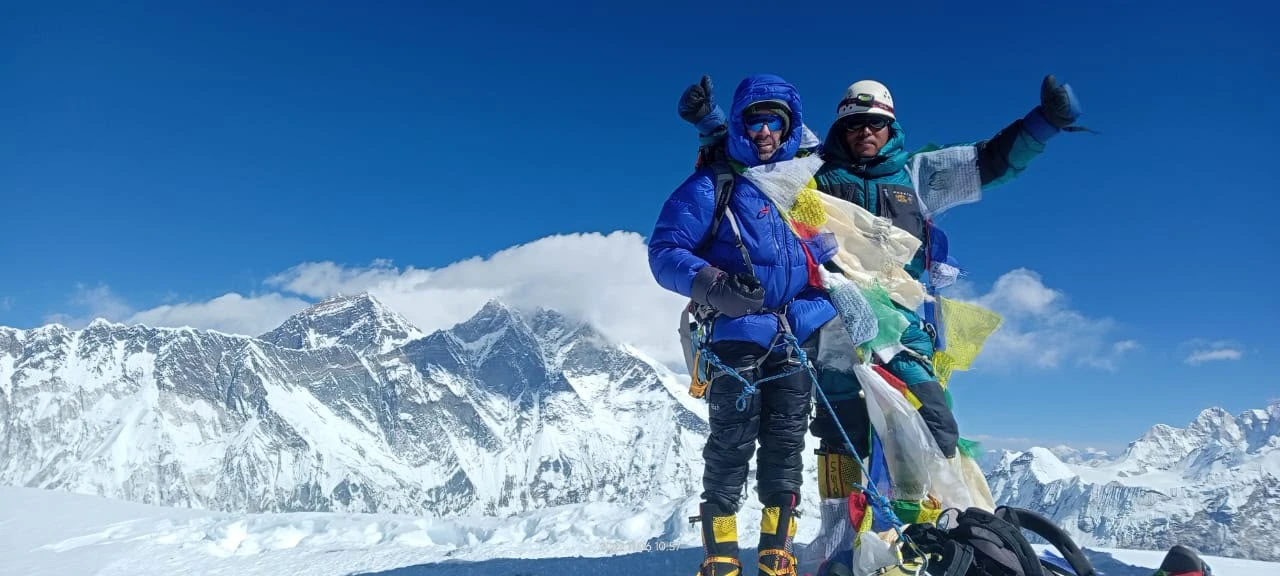
Island Peak, also known as Imja Tse, is a popular Himalayan climbing objective in the Everest region. It offers an exciting introduction to Himalayan mountaineering, combining glacier travel, steep snow slopes, and fixed-rope climbing. It is an excellent choice for trekkers preparing for more technical expeditions like Ama Dablam.
How it helps prepare you:
Develop familiarity with crampons and an ice axe.
Practise fixed-rope ascent and descent where required.
Gain experience operating at high altitude.
Learn how to manage equipment during a summit attempt.
Best suited for: Climbers developing foundational Himalayan mountaineering experience.
2. Lobuche East (6,119 metres)
Lobuche East is a tough trekking peak that lies on the way to the base camp of Mount Everest. It provides amazing views of Everest, Lhotse, Nuptse, and Ama Dablam. Tough terrain and technical climbs make Lobuche East a good choice for mountaineers who wish to develop climbing skills for Himalayan trips.
The route includes steep snow and ice, rocky terrain, and exposed summit sections. It can provide opportunities to develop technical confidence and practise movement on more demanding terrain.
Some expedition operators incorporate Lobuche East into an Ama Dablam programme to help climbers acclimatise and refresh technical skills before moving to the main mountain.
How it helps prepare you:
Practice technical climbing techniques.
Develop confidence on exposed terrain.
Gain experience with high-altitude climbing equipment.
Improve judgement and movement efficiency on a demanding summit route.
Best suited for: Climbers with previous mountaineering experience who need additional technical preparation.
Lobuche East is not a substitute for dedicated rock and ice climbing training, and it does not fully replicate the difficulty of Ama Dablam.
3. Mera Peak (6,476 metres)
Mera Peak is Nepal's highest permitted trekking peak, located in the remote Hinku Valley. Although less technically demanding than Island Peak or Lobuche East in normal conditions, it requires excellent fitness, acclimatisation, and basic mountaineering skills. Its high altitude makes it an excellent preparation climb for ambitious Himalayan mountaineers.
Its standard route is generally less technical than Ama Dablam, although glacier travel, cold temperatures, altitude, and summit-day demands remain serious challenges.
How it helps prepare you:
Build experience at elevations approaching 6,500 metres.
Practice pacing during a long summit day.
Evaluate endurance and recovery at altitude.
Develop familiarity with high-altitude expedition routines.
Best suited for: Climbers seeking additional altitude experience and endurance preparation.
Mera Peak is particularly useful for altitude exposure, but it provides less direct practice for Ama Dablam's exposed rock and mixed-climbing sections.
4. Other Preparatory Climbing Objectives
Climbers may also consider other suitable mountaineering objectives based on their experience and training needs.
However, the choice should be based on technical difficulty, route conditions, altitude, and the skills required for Ama Dablam rather than the number of summits completed.
A climber with substantial alpine experience may not need to climb all three preparatory peaks. Conversely, a climber who has completed several trekking peaks may still need further technical training before attempting Ama Dablam.
Comparison of Preparatory Peaks
Peak | Elevation | Main Preparation Benefit | Important Limitation |
Island Peak | 6,189 m | Foundational Himalayan climbing and fixed-rope experience | Does not replicate Ama Dablam's sustained technical ridge climbing |
Lobuche East | 6,119 m | More technical terrain and exposed summit sections | Still differs from Ama Dablam's sustained technical demands |
Mera Peak | 6,476 m | High-altitude endurance and summit-day experience | Standard route is generally less technical |
Ama Dablam | 6,812 m | Advanced technical mountaineering objective | Requires substantial prior climbing experience |
Which Peak Is Best Before Ama Dablam?
There is no single mandatory preparatory peak for every climber.
Choose Island Peak if you need to develop foundational Himalayan climbing skills.
Consider Lobuche East if you need further experience with technical terrain and exposure.
Consider Mera Peak if your main priority is high-altitude endurance and experience near 6,500 metres.
Prioritise technical rock and ice training if your climbing background does not adequately prepare you for Ama Dablam's Southwest Ridge.
For many climbers, a combination of technical training and an appropriate preparatory peak is more valuable than attempting several summits without a clear progression plan.
How to Include Everest Base Camp
To combine Everest Base Camp with Ama Dablam, the programme must allow extra trekking days and appropriate recovery.
A possible approach is to visit the Everest Base Camp area during the initial Khumbu trek, then descend and continue towards the Ama Dablam approach. However, the precise route and overnight stops must be designed by a Mountain Rock Trek & Expedition.
The additional altitude exposure should not replace the acclimatisation and climbing rotations required for Ama Dablam.
How to Include Lobuche East
Lobuche East may be incorporated into a combined expedition for appropriately experienced climbers.
Such a programme typically requires extra time for the climb, recovery, and transfer towards Ama Dablam Base Camp. The operator must assess whether attempting both peaks is appropriate for the individual climbers and prevailing conditions.
Do not add a second summit simply to make an itinerary more attractive. The additional workload can increase fatigue and complicate acclimatisation.
Ama Dablam Climbing Route and High Camps
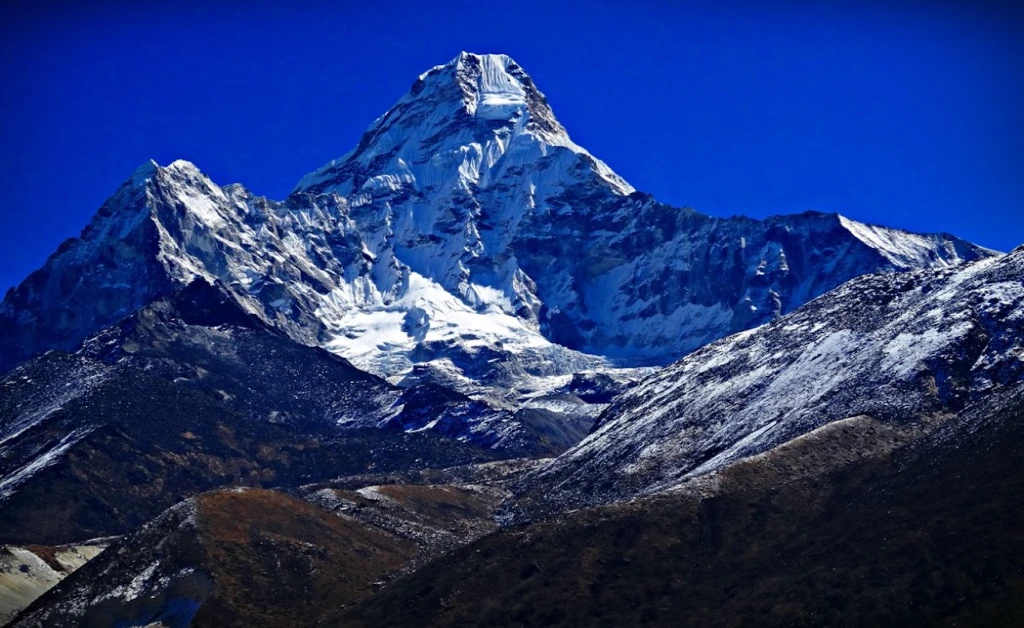
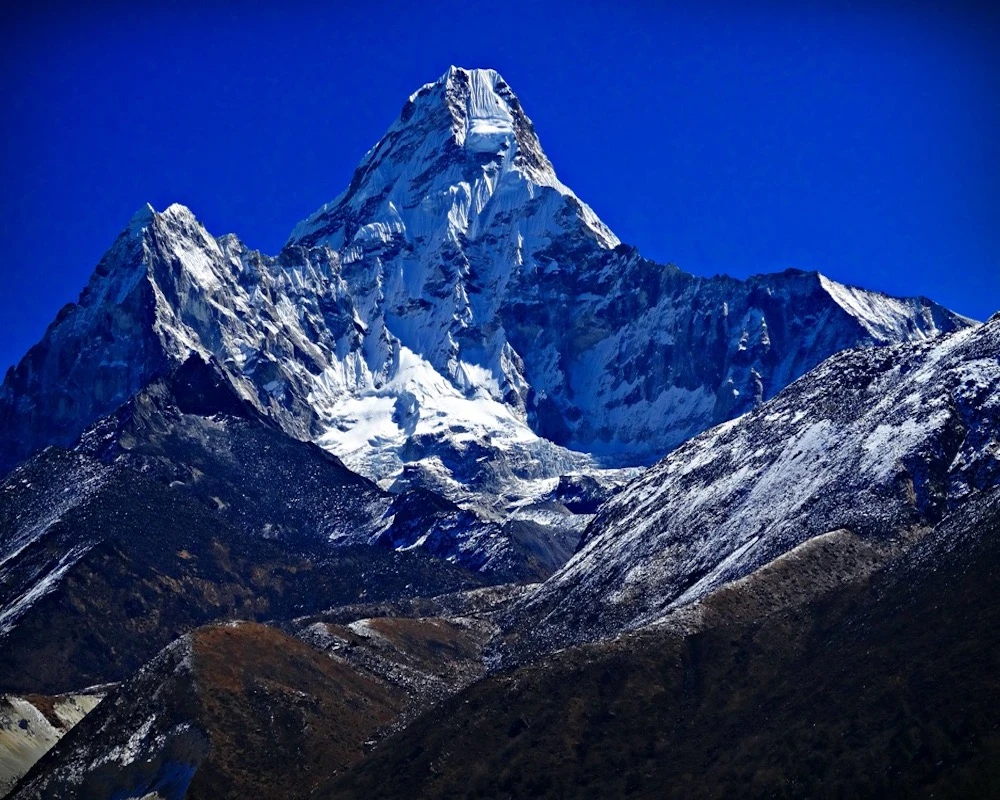
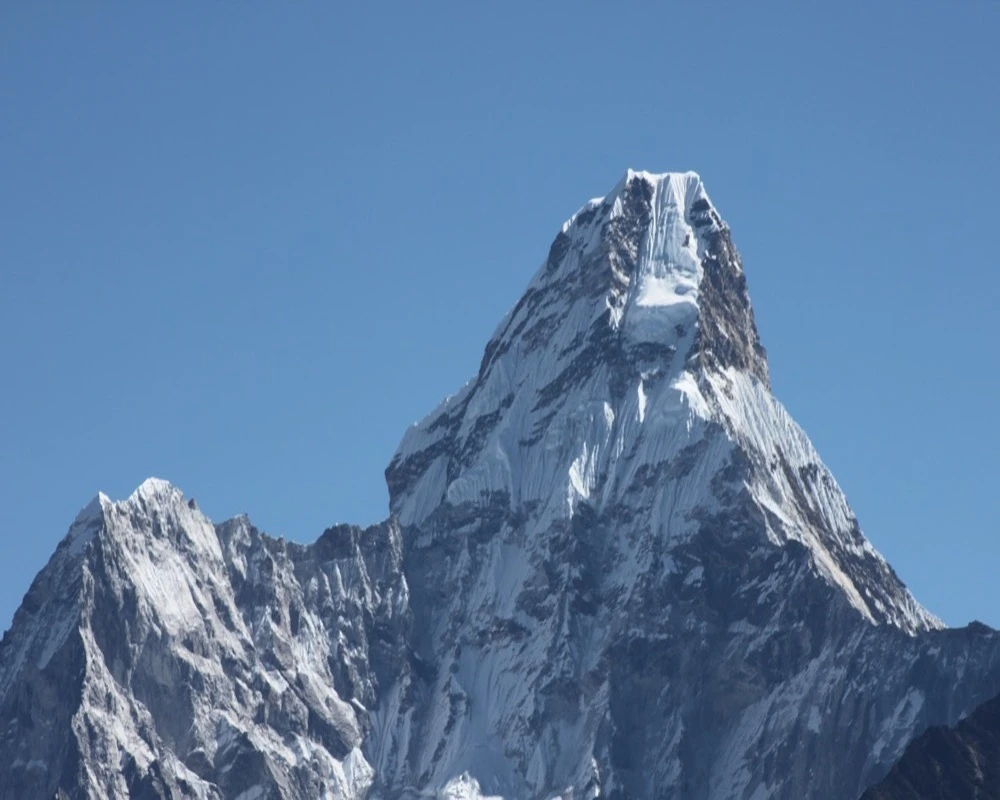
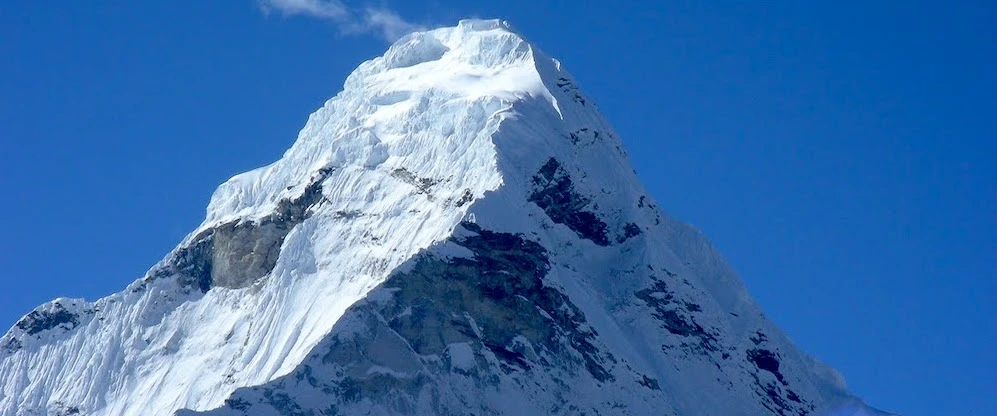
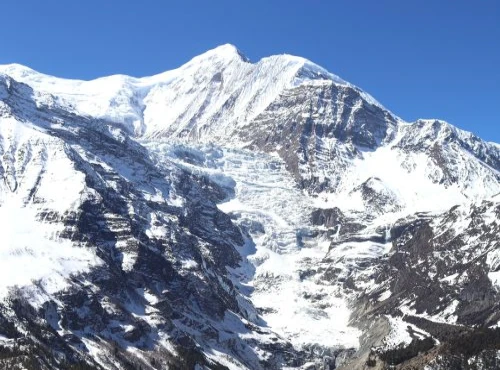
The Southwest Ridge is the standard route for most Ama Dablam climbing expeditions. Known for its exposed ridges, technical rock sections, steep snow and ice, and sustained climbing at high altitude, this route is one of the most beautifully challenging pathways.
Despite having fixed ropes installed on the sections of the route, climbers still require appropriate technical skills and the ability to move efficiently while managing exposure and altitude.
Ama Dablam Base Camp
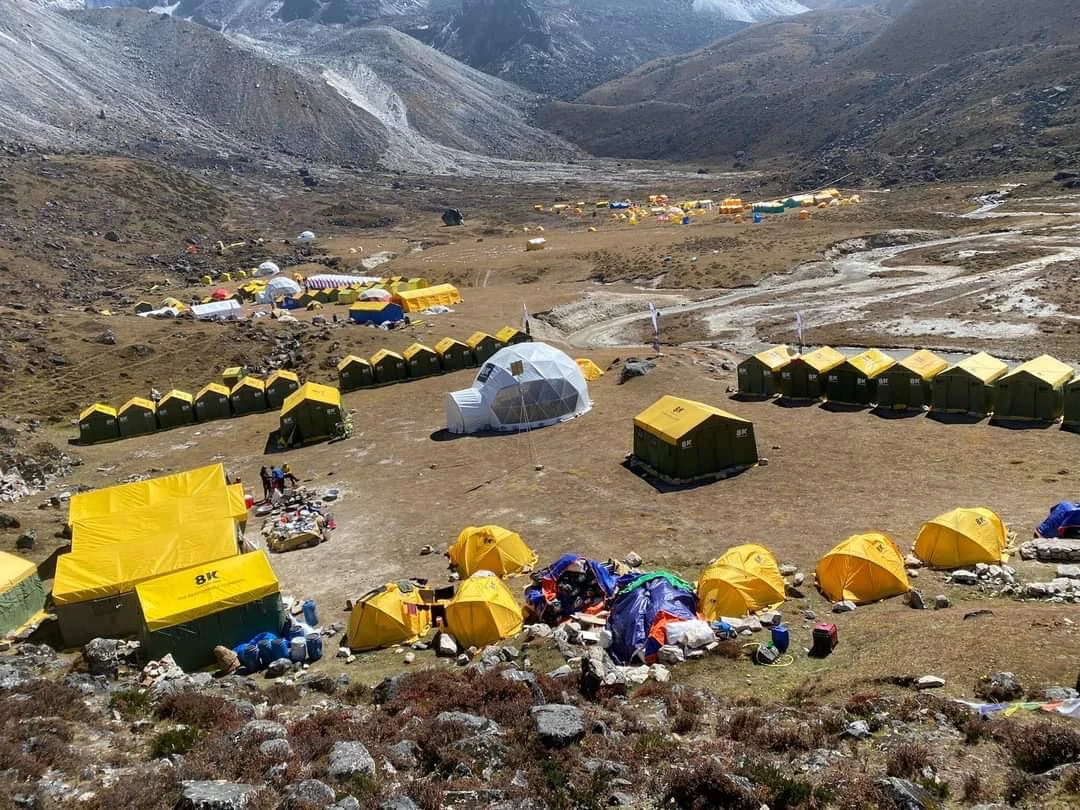
The base camp is at an altitude of approximately 4,600 meters, which serves as the main operational center for the expedition. Climbers rest, acclimatise, organise equipment, attend briefings, and prepare for climbing rotation here.
Base camp is also where the team monitors the weather forecasts and evaluates whether ascending to higher altitude is safe and suitable.
Camp I
Camp I is located on the lower Southwest Ridge, generally around 5,700 meters from the sea level, although the exact location may or can vary.
Reaching Camp I involves technical climbing and exposed terrain. Climbers must understand and be familiar with the techniques on how to use their harnesses, crampons, carabiners, and fixed-rope systems correctly.
Camp II
Camp II is situated at approximately 5,900 meters on the exposed ridge. The route towards Camp II includes demanding rock and mixed-climbing sections. Climbers need secure movement techniques, effective rope management, and the ability to maintain concentration even whilst feeling fatigue.
Camp II is an important staging point for the higher sections of the climb.
Higher Camps and Summit Approach
Camp arrangements above Camp II can vary with route conditions, expedition strategy, and the position of the hanging glacier known as the Dablam.
The upper mountain includes exposed climbing terrain where falling ice, strong winds, and deteriorating weather may and or can create serious hazards. The expedition leader determines the appropriate camp configuration and summit strategy according to current conditions.
Ama Dablam Summit
The summit reaches 6,812 meters and offers extraordinary views across the Himalayas.
The summit push is physically and technically demanding. Climbers must be prepared for extreme cold, high winds, altitude sickness, and the possibility of turning around before reaching the top. Reaching the top is never guaranteed. Safe descent always remains a priority.
Ama Dablam Expedition Difficulty and Required Experience
The Ama Dablam Expedition is considered a challenging technical mountaineering objective. It is not suitable for beginners without substantial climbing experience.
The mountain demands physical endurance, technical competence, confidence on exposed terrain, and sound judgement at altitude.
Technical Climbing Skills
The climbers willing to ascend the peak should have experience with:
- Using crampons and an ice axe.
- Climbing on rock, snow, and ice.
- Ascending and descending fixed ropes.
- Managing carabiners, harnesses, and other climbing equipment.
- Moving safely on exposed ridges.
- Rappelling and descending technical terrain.
- Understanding rope systems and mountain safety procedures.
Climbers are highly encouraged to discuss their previous experience with the expedition operator before booking.
Physical Endurance
The expedition involves long days, steep ascents, heavy clothing, and sustained physical effort.
Good cardiovascular fitness, leg strength, core stability, and the ability to recover between demanding days are essential.
Previous High-Altitude Experience
Previous experience at altitude helps climbers understand how their bodies respond to reduced oxygen availability. However, prior altitude experience does not guarantee that a climber will avoid altitude illness.
A qualified expedition team will assess each participant's experience and readiness before departure.
Spring Weather and Climbing Conditions: March, April and May
Spring offers several opportunities for climbing Ama Dablam, but conditions differ throughout the season.
Weather at high altitude can change rapidly. Snowfall, wind, temperature, and route conditions may vary considerably from one year to the next.
Ama Dablam Spring Weather Chart
Weather Conditions | March | April | May |
Season | Early spring | Mid-spring | Late spring |
Daytime temperature at lower trekking elevations | Approximately 0°C to 12°C | Approximately 5°C to 15°C | Approximately 8°C to 18°C |
Night temperature at lower trekking elevations | Approximately -10°C to 2°C | Approximately -5°C to 5°C | Approximately 0°C to 8°C |
Base camp daytime temperature | Often around -10°C to 5°C | Often around -5°C to 8°C | Often around 0°C to 10°C |
Base camp nighttime temperature | Often around -20°C to -5°C | Often around -15°C to -5°C | Often around -10°C to 0°C |
High-camp temperatures | Frequently well below freezing | Frequently well below freezing | Frequently well below freezing |
Snowfall possibility | Snowfall and accumulated winter snow may affect the route | Snowfall remains possible | Snowfall remains possible, with conditions varying as the monsoon approaches |
Wind conditions | Cold winds can increase exposure | Variable; strong winds remain possible | Variable, with potentially unsettled conditions |
Visibility | Clear periods alternate with cloud and snowfall | Often good during suitable weather windows | Good during clear periods, but cloud and precipitation may increase |
Daylight | Increasing | Longer days | Longer days |
Lower-elevation trekking conditions | Cold mornings and evenings | Generally milder | Generally warmer, with possible rain at lower elevations |
Main climbing concern | Cold, snow accumulation, and route preparation | Wind, snow, and changing conditions on exposed ridges | Wind, snowfall, and increasing weather variability |
General planning outlook | Requires careful assessment of early-season conditions | Popular spring climbing period | Early May may offer opportunities, but flexibility is important |
Temperature ranges are indicative and can vary substantially by location, elevation, exposure, and weather conditions. High-camp temperatures are particularly unpredictable. These figures should not be treated as a daily forecast.
Ama Dablam Expedition in March
March is the gateway where the climate transitions from winter to spring. Lower elevations begin to warm yet higher elevations can still remain cold. Snow accumulation and icy terrain may complicate access to the climbing route.
What to expect:
Cold conditions, particularly at night and above base camp.
Potentially greater snow accumulation on the mountain.
Freezing temperatures and strong winds at higher elevations.
Beautiful mountain views during clear weather.
A need for careful assessment of snow stability and route conditions.
Ama Dablam Expedition in May
April is a popular month for spring mountaineering in Nepal. During April, the temperatures generally become more favourable at lower elevations, and the daylight hours get longer which helps and supports expedition activities. However, afternoon cloud development, snowfall, and strong winds can still affect climbing plans.
What to expect:
Gradually warming temperatures at lower elevations.
Longer daylight hours for climbing and acclimatisation.
Potentially favourable summit windows.
Cold conditions and wind exposure on the upper mountain.
Changing snow and ice conditions that require ongoing assessment.
April is often a practical choice for an Ama Dablam spring climbing expedition, provided the route and weather are suitable.
Ama Dablam Expedition in May
Early May can offer additional opportunities for summit attempts before the monsoon arrives. At lower elevation you can experience a warmer temperature, but increasing atmospheric moisture and changing weather patterns can make conditions less predictable as the month progresses.
What to expect:
Relatively warmer conditions at lower elevations.
Continued freezing temperatures at high camps.
Potentially favourable climbing windows in early May.
Increasing risk of unsettled weather later in the month.
Possible delays caused by snowfall, wind, or poor visibility.
Climbers planning an Ama Dablam Expedition in May should retain sufficient flexibility to accommodate weather delays.
Which Month Is Best for Ama Dablam?
Month | Main Characteristics | Planning Considerations |
March | Colder, early-spring conditions | Assess snow accumulation, route preparation, and extreme cold |
April | Popular spring climbing period | Balance summit opportunities with changing mountain weather |
May | Warmer lower elevations and longer days | Consider increasing instability as the monsoon approaches |
For many climbers, April and early May are attractive options. However, no month guarantees favourable summit conditions. The final decision should depend on the current forecast, route condition, and professional assessment.
Flexible Days for Bad Weather, Storms and Lukla Flight Delays
The ability to adapt to the weather is one of the vital things that every Ama Dablam Expedition should consider in spring. Lukla flights could be delayed or canceled because of the bad weather conditions. At higher altitude, the storms and strong winds might make it difficult for climbers to move between camps.
Mountain Rock Treks & Expedition recommends that enough time should be added while planning the Ama Dablam climbing expedition. The flexible schedule reduces the stress level of the climber and allows the expedition leader to focus on safety issues.
Why Are Contingency Days Important?
1. Lukla Flight Delays
Flights between Kathmandu and Lukla are weather-dependent. Delays can affect the beginning or end of the expedition, so travellers should avoid scheduling international departures too close to their expected return from the mountains.
Depending on the operating schedule, flights may also use Ramechhap Airport instead of Kathmandu, requiring additional road transportation.
2. Storms and Strong Winds
Ama Dablam's exposed ridges and high camps are particularly vulnerable to strong winds and deteriorating weather. A storm may require climbers to remain at base camp or another safe location until conditions improve.
3. Snowfall and Route Conditions
Fresh snow, ice accumulation, and changing mountain conditions can affect fixed ropes, climbing access, and the safety of exposed sections.
The expedition leader may need to postpone a climbing rotation or summit attempt until the route can be assessed.
4. Acclimatisation and Recovery
Some climbers need additional time to acclimatise or recover after demanding climbing rotations. Allowing flexibility helps avoid unnecessary pressure to continue ascending according to a rigid schedule.
Ama Dablam Expedition Permits and Documentation
Climbing Ama Dablam requires the appropriate mountaineering authorisation and compliance with Nepal's applicable regulations.
Requirements and fees can change, so climbers should confirm the current rules before travelling.
Essential Documentation
Depending on the expedition arrangements, participants may need:
- A valid passport.
- A Nepal visa, where applicable.
- An Ama Dablam climbing permit.
- Applicable national park entry documentation.
- Required expedition registration and supporting documents.
- Travel and mountaineering insurance details.
- Emergency contact information.
- Medical information relevant to safe participation.
The expedition operator will and should explain which permits are arranged on the climber's behalf and which documents must be supplied personally.
Ama Dablam Climbing Permits
The permit fee depends on the applicable government rules and climbing season.
Do not rely on outdated prices from older expedition pages. Ask Mountain Rock Treks & Expedition for the current permit fee and a breakdown of any additional government charges.
Proper documentation should be arranged before the expedition begins.
Accommodation, Meals and Expedition Logistics
The Ama Dablam Expedition combines hotel accommodation, trekking lodges, and high-altitude camping.
The facilities available depend on the location and the services included in the expedition package.
Accommodation in Kathmandu
Most itineraries begin with a hotel stay in Kathmandu to allow climbers to meet the expedition team, attend briefings, check equipment, and complete final preparations.
Teahouse Accommodation
During the approach trek, climbers generally will stay at local teahouses or mountain lodges. Facilities will become more basic at higher elevations, and availability can vary with the season.
Base Camp Accommodation
Base camp accommodation is typically tent-based.
Depending on the package, facilities may include sleeping tents, a dining tent, cooking arrangements, and designated spaces for storing equipment.
Meals and Hydration
A balanced diet is essential during acclimatisation and climbing.
Meals commonly include rice, lentils, vegetables, noodles, potatoes, soups, and other locally available foods. The actual menu depends on the location and expedition arrangements.
At high altitude, appetite can decrease, making it important to maintain regular food and fluid intake.
Transportation and Supplies
Expedition logistics may include flights to Lukla, ground transportation, porters, staff, equipment transport, and supplies for base camp.
Flights can be delayed by poor weather, so climbers should allow enough time for schedule changes.
Before booking, clarify which transportation costs, accommodation nights, meals, and baggage allowances are included.
Travel Insurance, Rescue and Emergency Planning
Travel insurance for the Ama Dablam Expedition should explicitly cover technical mountaineering at the intended altitude.
Many standard travel policies exclude high-altitude climbing or technical mountaineering, so it is important to check the policy wording carefully.
What Your Insurance Should Cover
Confirm whether your policy includes:
Technical mountaineering on Ama Dablam.
Activities up to at least 6,812 metres.
Emergency helicopter evacuation where available.
Emergency medical treatment.
Hospitalisation and repatriation.
Trip interruption or cancellation, where appropriate.
Do not assume that ordinary trekking insurance covers a technical climbing expedition.
Emergency Planning
Before departure, confirm the team's communication arrangements, emergency contacts, medical supplies, evacuation procedures, and decision-making responsibilities.
Helicopter evacuation may be limited by altitude, weather, visibility, landing conditions, and operational restrictions. It must not be treated as a guaranteed rescue option.
The expedition leader should have a clear plan for responding to altitude illness, injuries, severe weather, and other emergencies.
Ama Dablam Expedition Equipment Checklist
The correct equipment is essential for an exposed technical climb in cold, high-altitude conditions.
Your expedition leader should provide a detailed, route-specific equipment list. Equipment requirements vary by season, climbing system, and personal needs.
Clothing
Moisture-wicking base layers.
Insulating mid-layers.
Warm fleece or insulated jackets.
Waterproof and windproof outer layers.
Insulated down or synthetic belay jacket.
Technical climbing trousers.
Insulated mountaineering gloves.
Lightweight liner gloves.
Warm mittens for extreme cold.
Balaclava or face covering.
Warm hat and sun hat.
Several pairs of mountaineering socks.
Footwear
Suitable high-altitude mountaineering boots.
Compatible crampons.
Trekking boots for the approach.
Camp shoes or lightweight recovery footwear.
Boots and crampons must be compatible and tested before the expedition.
Technical Climbing Equipment
Mountaineering harness.
Climbing helmet.
Ice axe suitable for the route.
Climbing carabiners.
Approved personal safety lanyard or via ferrata-style system, as specified by the guide.
Ascenders and rappelling equipment appropriate to the climbing system.
Crampons and any required technical accessories.
Headlamp with spare batteries.
Mountaineering goggles and sunglasses.
The expedition operator should confirm which technical equipment is supplied and which items must be brought personally.
Personal and Health Essentials
Personal first-aid supplies.
Prescribed medication.
Sunscreen and lip protection.
Personal toiletries.
Water bottles or an insulated flask.
Water-treatment supplies where required.
High-energy snacks.
Passport copies and essential documents.
Personal communication equipment, where appropriate.
Sleeping and Camping Equipment
Depending on the package, climbers may need a high-altitude sleeping bag, sleeping mat, and personal camping accessories.
Confirm the expected temperature rating and whether the expedition company supplies suitable equipment.
Why Choose Mountain Rock Treks & Expeditions?
Choosing the right expedition operator is an important part of planning an Ama Dablam climbing expedition.
Mountain Rock Treks & Expeditions provides an opportunity to organise your Himalayan adventure with a Nepal-based trekking and mountaineering company.
When evaluating the company's Ama Dablam package, consider the following factors.
Expedition Planning
A well-organised expedition should include a clear itinerary, acclimatisation strategy, equipment requirements, and contingency arrangements for weather delays.
Experienced Climbing Support
Ask about the qualifications and Ama Dablam experience of the climbing guides, the guide-to-client ratio, and the availability of personal climbing assistance.
Transparent Pricing
Request a detailed breakdown of the expedition cost, including permits, transportation, accommodation, meals, climbing staff, and any additional charges.
Safety and Communication
Confirm the company's procedures for altitude monitoring, weather assessments, emergency communication, and evacuation planning.
Customised Expedition Arrangements
Discuss your previous climbing experience, fitness, preferred departure dates, and equipment needs before selecting a package.
A successful expedition depends on professional planning, climber preparation, suitable conditions, and responsible decision-making.
For itinerary details, availability, and current pricing, visit the Mountain Rock Treks & Expedition Ama Dablam Expedition page.
Book Your Ama Dablam Spring Expedition
Planning an Ama Dablam Expedition in Spring begins with selecting suitable dates, assessing your climbing experience, and preparing for the technical demands of the mountain.
March, April, and May each offer different conditions, so your itinerary should reflect the current weather outlook, route preparation, and expedition team's recommendations.
Before confirming your booking, discuss your previous mountaineering experience, equipment requirements, acclimatisation schedule, and emergency arrangements with your expedition operator.
Ama Dablam Expedition Success Rate with Mountain Rock Treks & Expedition
The success rate is an important consideration when choosing an operator for an Ama Dablam climbing expedition. However, summit success depends on several factors, including weather, route conditions, climber experience, acclimatisation, health, and the expedition team's decisions. We, Mountain Rock Treks And Expedition, have a success rate of 90%, of the total expedition as per last year. We value your safety and comfort in your journey. However, we always prioritise safe descents rather than challenging ascend towards the peak. If in any case, reaching the peak is difficult, we’ll lay back until climbing is considered safe.
What Influences Ama Dablam Summit Success?
Several factors can influence whether climbers reach the summit:
Weather conditions: Strong winds, snowfall, and poor visibility can close the summit window.
Climber preparation: Appropriate physical fitness and technical experience improve readiness for the route.
Acclimatisation: A suitable schedule helps climbers adjust to altitude, although it cannot eliminate altitude illness.
Route conditions: Snow, ice, fixed ropes, and exposed climbing sections may affect progress.
Expedition planning: Experienced guides, reliable equipment, and careful decision-making contribute to safe climbing.
Contingency days: Additional time may allow the team to wait for better conditions when appropriate.
Even a well-prepared expedition may not reach the summit if conditions are unsafe.
Ready to plan your Ama Dablam Expedition in Nepal?
Contact Mountain Rock Treks & Expedition to discuss spring departure dates, expedition costs, climbing support, and the preparations required for this challenging Himalayan objective.
With appropriate training, experienced guidance, and careful planning, you can prepare for an unforgettable mountaineering experience in the heart of the Khumbu Himal.