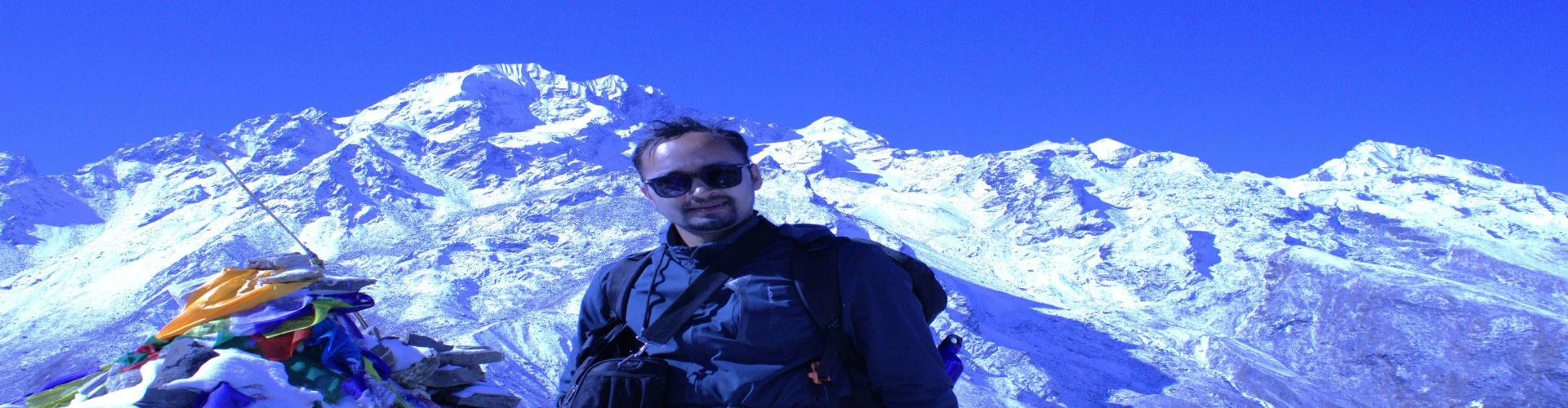
Routes and Itinerary for Langtang Valley Trek
A Glance at the New Itinerary, Followed by an Alternate Route
Day 1:Upon arrival at Kathmandu International Airport, transfer to the hotel.
Day 2:Kathmandu to Thulo Syabru (approx. 2100-2230m). 7h scenic(private 4 wheel)drive. Overnight at a guest house.
Day 3:Thulo Syabru to Lama Hotel (2470m). Overnight at a guest house.
Day 4:Lama Hotel to Langtang Valley (3430m). Overnight at a guest house.
Day 5:Langtang Valley to Kyanjin Gompa (3870m). Overnight at a guest house.
Day 6:Explore around Kyanjin Gompa. Morning climb to Tsergo Ri (4985m). Overnight at the Guest House.
Day 7:Kyanjin Gompa to Lama Hotel. Overnight at the lodge.
Day 8: Lama hotel to Thulo syapru. Overnight at the lodge.
Day 9:Thulo Syabru to Kathmandu (by private 4-wheel drive). Overnight at a standard hotel in Kathmandu.
Day 10:Transfer to Kathmandu International Airport or onward for the next program.
Difference Between The Old and The New Itinerary of Langtang Valley Trek
At a glance, you might not find vast changes or differences between the two itineraries, yet both the itineraries are slightly and significantly different as opposed to each other.
Route and Trail Differences
The old itinerary begins with a 7-hour scenic drive from Kathmandu to Shyabrubesi on day 2, the traditional starting point of the Langtang Valley Trek. Trekkers, like yourself, will then follow the familiar trail through Lama Hotel, Langtang Village and Kyanjin Gompa. On your return journey, the traditional route would be to pass through Ghodatabela before reaching Shyabrubesi.
However, the new itinerary has a slight alteration. Instead of travelling to Shyabrubesi on day 2, you will take a private 4-wheeled vehicle and travel to Thulo Syabru from Kathmandu, enjoying a 7-hour-long scenic ride. After exploring the upper Langtang Valley, you will then return through Lama Hotel and Thulo Syabru, instead of the traditional return trail, i.e through Ghodatabela to Shyabrubeshi.
Transportation Differences
To ensure comfort, convenience, and better control over travel schedules, the new itinerary allows you to travel on Nepal’s mountainous and rough roads that lead to Langtang in a private 4-wheeled vehicle. This of course, is a significant improvement in the new itinerary as opposed to the old one, where you had to travel on a public bus.
Why is the New Itinerary Safer?
The new itinerary is designed as an alternative following disruptions and challenging conditions along the traditional trekking corridor, after the devastating flood.
Alternative access: Starting from Thulo Syaphru provides an alternative approach rather than relying entirely on the traditional Syabrubesi access route, which was heavily affected by the floods.
Private transportation: A private 4WD vehicle provides greater flexibility when dealing with changing road conditions, delays, and transportation challenges.
Avoiding the traditional return section: The return through Lama Hotel and Thulo Syaphru avoids retracing the Ghodatabela–Syabrubesi section of the old itinerary.
Retaining acclimatisation opportunities: Both itineraries preserve the overnight stay at Kyanjin Gompa and the Tserko Ri exploration day, allowing trekkers to experience the main highlights without rushing the high-altitude section.
New Itinerary Followed by an Alternate Route Details
Day 1: Arrival in Kathmandu(1,400m)— Transfer to Hotel
On your first day, you will be picked up at the Tribhuvan International Airport in Kathmandu by our representative, who then will drive you to your hotel. You can rest there, have a shower and cure jetlag after your long flight. If you feel jolly enough, you may spend the rest of the day or evening, depending on your time of arrival to explore nearby places and experience the street culture of Kathmandu whilst trying some local Nepali cuisine if you may like.
Accommodation: Standard Hotel in Kathmandu
Day 2: Kathmandu to Thulo Syabru (Approx. 2,210m)— 7 Hours Drive
Driving Duration: 6-8 hours(approximately)
Transportation: Private 4WD vehicle
Accommodation: Guesthouse in Thulo Syabru
Day two might be a tad bit tedious but the scenic route is worth the travel. You will depart from Kathmandu early in the morning after having breakfast for a road trip to Thulo Syabru, a 7 hour long drive(approximately). You’ll be taken in a 4 wheeled private vehicle, ensuring comfort and flexibility. The drive follows the Trishuli River, passing through places such as Kakani, Trishuli Bazaar, and Betrawati before gradually climbing towards Dhunche, the administrative headquarters of Rasuwa District.
Dhunche is an important gateway to the Langtang region and offers beautiful views of the surrounding hills and Himalayan landscapes. From here, the journey continues towards Thulo Syabru along a narrower and more rugged mountain road.
Once you arrive at Thulo Syabru, you will be spending the night at a local guest house. You may explore the village of Thulo Syabru if you like or simply choose to rest and prepare for your trek starting on the third day.
Day 3: Thulo Syabru to Lama Hotel (2,470 m)
Walking duration: Approx. 6-7 hours
Trekking distance: Approx. 12- 15 km, depending on the trail condition
Accommodation: Guesthouse at Lama Hotel
On day three, your trekking journey officially begins. After an early morning breakfast, you will begin trekking from Thulo Syabru towards Lama Hotel. Across the trail, you’ll find yourself witnessing beautiful landscapes of the Langtang region, combining forest trails, river crossings, and gradual ascents.
Initially, the trail descends through the settlements towards Langtang Khola and follows a forested route. Before you reach the Langtang Valley trail, you will be passing through small settlements and peaceful woodland areas.
The route gradually feels beautiful as it enters through dense forests featuring bamboo, pine, oak and rhododendron. You will be accompanied by the sound of the flowing river and the singing of birds all along the trail. With some luck, you may also find yourself encountering Himalayan Wildlife inhabiting Langtang National Park.
The trail is moderately demanding despite the relatively small difference in the overnight elevation as the trail involves several ascents and descents. After walking for approximately six to seven hours, you will reach Lama Hotel. A small settlement consisting of traditional mountain lodges and guesthouses along the Langtang Khola.
Enjoy a warm, hearty meal and rest overnight.
Day 4: Lama Hotel to Langtang Village(3,430m)
Walking duration: Approx. 5-6 hours
Trekking distance: Approx. 11- 14 km
Accommodation: Guesthouse in Langtang Village
The trail from Lama Hotel to Langtang Village gradually ascends along the Langtang Khola through beautiful forests and alpine landscapes. You will pass Ghodatabela, an important resting point which offers mesmerizing views of Langtang Lirung and surrounding mountains.
You will reach Langtang Village, passing through yak pastures, mani walls, and traditional settlements.
Day 5: Langtang Village to Kyanjin Gompa (3,870 m)
Walking duration: 3-4 hours
Trekking Distance: Approximately 6–7 km
Accommodation: Guesthouse at Kyanjin Gompa
Leaving the village after breakfast, we continue towards Kyanjin Gompa, following a relatively gradual trail through Mundu, traditional stone settlements, and open yak pastures.
As you approach Kyanjin Gompa, you will see that the landscapes start being dramatic, and will witness the impressive views of Langtang Lirung and surrounding Himalayan peaks.
Upon arrival, you may explore the village, visit the local Buddhist monastery and famous yak cheese factory if you please. Or you may simply rest and prepare for the upcoming Tserko Ri hike.
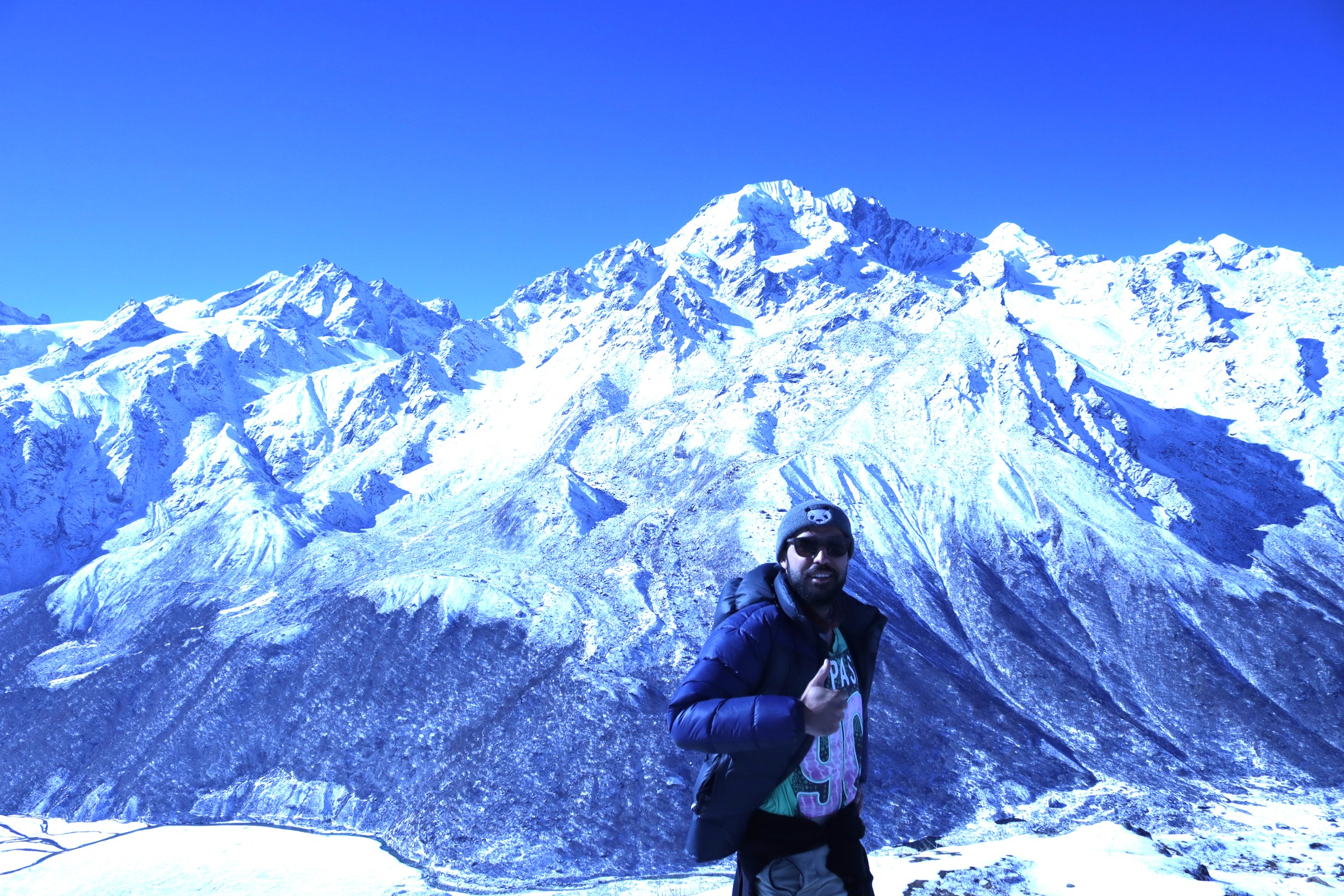
Day 6: Explore Kyanjin Gompa— Morning Hike to Tseko Ri (4,985m)
Walking Duration: Approximately 6–8 hours (round trip)
Maximum Elevation: 4,985m
Accommodation: Guesthouse at Kyanjin Gompa
Day six is the major highlight of the trek. You will begin the climb towards Tserko Ri, one of the best viewpoints in the Langtang region, early in the morning.
The trail gradually ascends through rocky terrain, alpine grasslands, and exposed mountain slopes. Due to altitude and steep sections, the trail is quite a bit demanding. But the summit makes it worth your while as you see beautiful panoramic views. You will also encounter beautiful glaciers, snow-covered ridges, and the surrounding Himalayan landscape.
From Tserko Ri, you can enjoy views of:
Langtang Lirung (7,227m)
Langtang II (6,586m)
Yala Peak (5,732m)
Langshisha Ri (6,427m)
Dorje Lakpa (6,966m)
After taking in all the beauty Tserko Ri has to offer, you will begin descending back to Kyanjin Gompa, where you’ll spend the night.
Note: The Tserko Ri hike is physically demanding. An additional acclimatization day at Kyanjin Gompa is advisable before attempting the summit, particularly for trekkers without previous high-altitude experience.
Day 7: Kyanjin Gompa to Lama Hotel (2,470m)
Walking Duration: Approximately 6–7 hours
Trekking Distance: Approximately 18–21 km
Accommodation: Guesthouse at Lama Hotel
After the completion of the Tserko Ri excursion, you will begin your return journey towards Lama Hotel.
After breakfast, you will retrace the same trail back through Langtang Valley. Although the route is familiar, the return journey has a different perspective to offer. Once you descend through alpine meadows, yak pastures and traditional settlements, you will reach Langtang Village.
From there, the trail continues towards Ghodatabela, where you can stop, take a rest, and have lunch while enjoying the surrounding beauty.
After a short break, you will start descending towards Lama Hotel. The majority of the day involves downhill walking, albeit some sections include short uphill climbs and uneven terrain.
Upon reaching Lama Hotel, you can relax at your guesthouse, enjoy dinner, the warmer air, and recover from the long day of trekking.
Highlights:
Retracing the beautiful Langtang Valley trail.
Enjoying different perspectives of the Himalayan mountains.
Walking through alpine meadows and traditional settlements.
Descending through rhododendron and bamboo forests.
Day 8: Lama Hotel to Thulo Syabru ( Approx. 2,210)
Walking Duration: Approximately 6–7 hours
Trekking Distance: Approximately 12–15 km
Accommodation: Guesthouse in Thulo Syabru
You will descend through the beautiful, lush forests of Langtang National Park towards Thulo Syabru.
The trail follows forested sections and river valleys, passing through familiar landscapes from your earlier trekking days.
Upon arrival, you can relax at your guesthouse and enjoy your final evening in the Langtang region.
Day 9: Thulo Syabru to Kathmandu(1,400m)— 7 hours drive
Driving Duration: Approximately 6–8 hours
Transportation: Private 4WD vehicle
Accommodation: Standard Hotel in Kathmandu
After breakfast, you will leave Thulo Syabru and drive back towards Kathmandu via Dhunche, Betrawati and Trishuli Bazaar.
The journey offers beautiful views of mountain villages, terraced hillsides, and the Trishuli River.
Upon reaching Kathmandu, you will be taken to your hotel. You can spend the evening strolling around Thamel, relaxing and/or enjoying a farewell dinner.
Day 10: Final Departure— Transfer to Tribhuvan International Airport
Day 10 marks the end of your Langtang Valley Trek.
Depending on your flight schedule, a representative of Mountain Rock Treks and Expedition will take you to Tribhuvan International Airport for your departure.
If you have additional time in Nepal, you can extend your stay, explore Kathmandu, visit Pokhara, or take up a different Himalayan adventure.
Estimated Trekking Duration at a Glance
Day | Destination | Elevation | Activity |
1 | Kathmandu | 1,400m | Arrival |
2 | Thulo Syabru | 2,210m | 4WD drive |
3 | Lama Hotel | 2,470m | 6–7 hours trek |
4 | Langtang Village | 3,430m | 5–6 hours trek |
5 | Kyanjin Gompa | 3,870m | 3–4 hours trek |
6 | Tserko Ri | 4,985m | 6–8 hours hike |
7 | Lama Hotel | 2,470m | 6–7 hours trek |
8 | Thulo Syabru | 2,210m | 6–7 hours trek |
9 | Kathmandu | 1,400m | 4WD drive |
10 | Departure | — | Airport transfer |
Travel to Langtang Valley: Help Local Communities
Langtang is a small, secluded valley just north of Kathmandu, accessible by road within a couple of hours from the capital but worlds apart in spirit. From rhododendron and bamboo forests to yak pastures, stone-built villages and the white peaks of Langtang Lirung, the valley is home to Tamang communities who have been living in Langtang for generations, managing the guesthouses, kitchen and trails used by trekkers.
However, this is more than just a trek. In Langtang, you lodge in a family-owned guesthouse, have meals prepared by the same community that grew the food, and hire local guides and porters who know every inch of the trail. Your expenses will go into paying for your basic needs – a bed to sleep in, a meal to be had, a day's work. For many households in the valley, this money is their lifeline. The high-altitude villages in Nepal do not have any sources of income other than tourism. It is not easy to cultivate at such heights, with long winters and being far away from the nearest village, which can take many days to reach. On the other hand, tourism in the valley is its source of income, and the absence of tourists is felt in every household.
Lots of families will benefit from your travels, which will eventually help them survive a bit better after having lost almost everything in the floods. You don’t have to donate; just travel through the villages, gain experience, and make memories. Simply planning a trip there and exploring will help people there more than you think.
Guaranteed Departures
We, Mountain Rock Treks and Expedition, have guaranteed scheduled departures for Spring 2027 ( March, April, and May) every other Monday of each month. We also have group departures for all months excluding June, July, and August. The group departure will also happen every Monday of each week of each month.
For the detailed departure schedule, visit our website: weekly departures.
Highlights of Langtang Valley Trek
The drive from Kathmandu to Thulo Syabru offers breathtaking vistas of remote villages, rivers, terraces, and forested mountains.
Stunning mountain views, including those of Langtang Ri, Langtang Lirung Glacier, Dorje Lakpa, Langshisha Ri, Langtang Himal, Ganesh Himal, and many others.
Discover the community's Tibetan-influenced culture and way of life in Langtang village.
Trekking through the Langtang National Park is an opportunity to experience the variety of the local wildlife and way of life.
Visit the renowned yak cheese factory while exploring Kyanjin Gompa, the oldest Buddhist monastery.
Travel to Kenjing Ri, the best viewpoint.
Going for a walk through a beautiful rhododendron woodland.