Top 5 Reasons why April is the Best Month for Manaslu Circuit Trek
Reason 1: Stable Weather and Clear Mountain Views
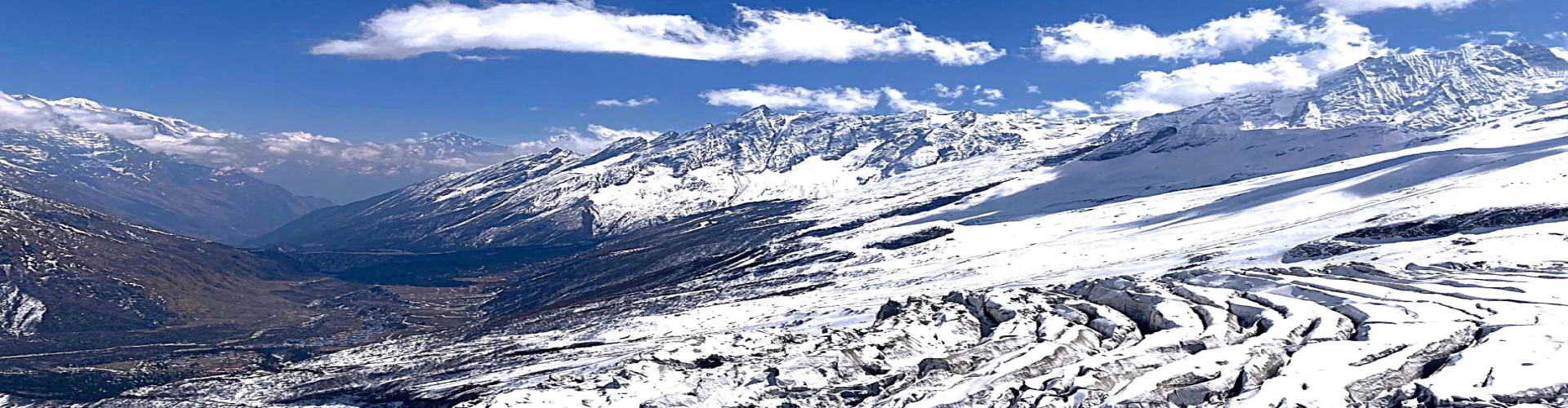
April generally can be a more dependable month as the weather settles down following winter. If it's a clear day, the mountain views, including Manaslu, Himalchuli and Ganesh Himal, will be equally good. The snow is also fast melting below 4000m, which makes walking comparatively easier than in winter.
Reason 2: Peak Spring Scenery with Rhododendron Bloom
Most trekkers also mention that by mid-spring, most of the trekking routes and passes are already open, and groups are already moving on the trail, which is a safety factor.
Reason 3: Safer and More Reliable Larke Pass Crossing
April is considered to be a better option to cross the Larke La Pass because the winter snow and ice have melted considerably. The route becomes clear with good traction and visibility.
Many trekkers' reviews suggest that high passes in early spring are unreliable, but in April, the conditions of high passes are stable, and the success rate is high.
Reason 4: Comfortable Trekking Temperatures
April offers moderate trekking temperatures because the low-lying areas remain at around 15-20°C during the day, and the high-altitude regions remain cool and pleasant. Even though the nights remain very cold at high altitudes, the overall trekking conditions remain pleasant compared to winter.
Reason 5: Good Trekking Atmosphere with Active Trails but Not Extreme Crowds
By April, the teahouses are fully operational, and the villages are bustling. You'll find the logistics of the trek surprisingly easy. The trail has moderate crowds, which is good for safety and a social atmosphere, but they're still nowhere near as high as other popular routes like Everest or Annapurna. This is part of what makes the Manaslu trek special; you'll get company when you need it, but the solitude is also a big part of the experience.
How is the weather on the Manaslu Circuit Trek in April?
Date | Sunrise | Sunset | Morning Temp (°C) | Afternoon Temp (°C) | Evening Temp (°C) | Night Temp (°C) | Wind Condition |
April 1 | 05:55 | 18:21 | 2 | 12 | 7 | 2 | Mild breeze |
April 2 | 05:54 | 18:21 | 2 | 12 | 7 | 2 | Mild |
April 3 | 05:53 | 18:22 | 3 | 13 | 7 | 2 | Mild |
April 4 | 05:52 | 18:22 | 3 | 13 | 8 | 3 | Mild |
April 5 | 05:51 | 18:23 | 3 | 13 | 8 | 3 | Mild |
April 6 | 05:50 | 18:23 | 3 | 13 | 8 | 3 | Mild |
April 7 | 05:49 | 18:24 | 3 | 14 | 8 | 3 | Mild |
April 8 | 05:48 | 18:24 | 4 | 14 | 9 | 4 | Mild |
April 9 | 05:47 | 18:25 | 4 | 14 | 9 | 4 | Mild |
April 10 | 05:46 | 18:25 | 4 | 14 | 9 | 4 | Mild–Moderate |
April 11 | 05:45 | 18:26 | 4 | 15 | 9 | 4 | Moderate |
April 12 | 05:44 | 18:26 | 4 | 15 | 9 | 4 | Moderate |
April 13 | 05:43 | 18:27 | 5 | 15 | 10 | 5 | Moderate |
April 14 | 05:42 | 18:28 | 5 | 15 | 10 | 5 | Moderate |
April 15 | 05:39 | 18:29 | 5 | 15 | 10 | 5 | Moderate |
April 16 | 05:38 | 18:29 | 5 | 15 | 10 | 5 | Moderate |
April 17 | 05:37 | 18:30 | 5 | 15 | 10 | 5 | Moderate |
April 18 | 05:36 | 18:30 | 5 | 15 | 10 | 5 | Moderate |
April 19 | 05:35 | 18:31 | 6 | 15 | 10 | 6 | Moderate |
April 20 | 05:34 | 18:31 | 6 | 15 | 10 | 6 | Moderate |
April 21 | 05:33 | 18:32 | 6 | 15 | 10 | 6 | Moderate |
April 22 | 05:32 | 18:32 | 6 | 15 | 10 | 6 | Moderate |
April 23 | 05:31 | 18:33 | 6 | 15 | 10 | 6 | Moderate |
April 24 | 05:30 | 18:34 | 6 | 15 | 10 | 6 | Moderate |
April 25 | 05:29 | 18:34 | 6 | 15 | 10 | 6 | Moderate–Strong (high areas) |
April 26 | 05:28 | 18:35 | 6 | 15 | 10 | 6 | Moderate–Strong |
April 27 | 05:27 | 18:35 | 6 | 15 | 10 | 6 | Moderate–Strong |
April 28 | 05:26 | 18:36 | 7 | 15 | 10 | 7 | Moderate–Strong |
April 29 | 05:26 | 18:36 | 7 | 15 | 10 | 7 | Moderate–Strong |
April 30 | 05:25 | 18:37 | 7 | 15 | 10 | 7 | Moderate–Strong |
April 1
Early April still retains the character of the late spring transition period. Mornings remain very cold, particularly above 3,000m altitude. Skies remain clear on most days.
Temperatures at the lower altitudes reach 15-18°C during the day.
April 2
Stable weather conditions continue with clear mornings and possibly some clouds in the afternoons. Some snow appears above 3,500m altitude, but remains easily crossable.
Spring foliage appears in full force in the lower altitude sections of the trek. Rhododendron forests begin to show signs of early bloom.
April 3
Weather conditions ease somewhat as the temperature increases.
Morning frost remains at some of the high-altitude lodges, and some wind appears in exposed ridge tops.
The snow on the route becomes firmer and easier to walk on as it consolidates.
April 4
The low altitude regions now have an early summer character, with high-altitude camps remaining very cold.
Some signs of softening of the snow on the Larkya Pass begin to appear.
The temperature difference between sun and shade becomes quite marked; therefore, layers of clothing become very important.
April 5
Stable conditions continue on the trekking route. The mid-altitude villages have pleasant temperatures. Tea houses operate in full swing as the number of trekkers increases steadily.
April 6
The day is dominated by spring patterns. There is warm sunshine by day and a considerable drop in temperatures by night. The afternoon clouds tend to clear by evening, making for good stargazing. The difference in temperatures between day and night can be as much as 20-25°C.
April 7
The overall weather is more comfortable, making for easier trekking. The snow is also more compact and easier to trek through. This is considered by many trekkers to be the best time to trek through these routes.
April 8
The day is typical of the spring season in the Himalayas. There is a considerable drop in temperatures by morning and warm sunny days. This is the time when trekking activity is at its peak.
April 9
The temperatures are rising gradually. The mid-elevations are very comfortable. The rhododendrons are now in full bloom at 2,500-3,500 meters.
April 10
The days are dry with a hint of haze in the afternoon. This marks the end of early April. The patterns are becoming more stable and predictable.
April 11
The trekking rhythm is now ideal. The mornings are clear and sunny, and the afternoons are mild. The Larkya Pass is now in the best condition. The snow is consolidated and easy to trek through.
April 12
Spring trekking comfort levels remain at their highest at lower elevations with rhododendrons in full bloom and very visible.
Temps at places like Samagaon and Samdo will be around 10-12°C during the day.
April 13
There might be some slight increases in weather variability, but overall, it remains stable.
April 14
There will be some noticeable temperature differences between the sun and the shadow. Sunscreen with high SPF will be required as the sun becomes much stronger.
April 15
This period in mid-April is generally the most favourable for trekking. This day is statistically one of the best days to cross the Larkya Pass.
April 16
Clear blue skies with some increased wind in the afternoons. The weather at this point is very predictable.
April 17
The weather remains stable with snow only on the high passes. The trails at the lower elevations will be completely dry.
April 18
Temps will rise at this point. Hydration will become very important at this point. Therefore, carry at least 2-3 litres of water with you at all times.
April 19
Spring mountain clarity is strong, with occasional light showers possible but rare. The high altitude regions are completely dry, with no chance of rain.
April 20
This is one of the most comfortable periods for trekking, with moderate temperatures that reduce exhaustion. Trekkers describe this period as when they feel their strongest.
April 21
The weather is still predictable, with clear views of the sun rising over the mountains. The best time of day is still in the morning, when the winds are light and the visibility is crystal clear.
April 22
The nights at high altitudes are still freezing, but the days are somewhat milder. You may notice more water running through streams and rivers, probably due to melting.
April 23
The trails are much easier, with less ice exposure on steeper sections. The combination of dry trails, predictable weather, and warm temperatures makes this a great time for trekking, regardless of your level of experience.
April 24
Spring is now fully established, with green and colourful valley scenes. The change from winter's barren landscape to spring's greenery is one of the trek's highlights.
April 25
Slight increase possible in moisture levels in valleys, but high-altitude areas continue to be dry and cold. This is the beginning of the pre-monsoon season.
April 26
Warm days in lower altitudes and mid-altitude villages are offering very comfortable trekking conditions. The temperature can rise up to 15-18 degrees Celsius.
April 27
The pre-monsoon shift in the atmosphere is possible, but it is still dry. The mornings are beautiful and clear, so it is better to cover long distances before noon.
April 28
The weather is still very favourable for trekking, and snow is limited to high-altitude areas. It is also important to note that UV radiation is high, so it is important to use sunscreen every 2-3 hours and wear good sunglasses.
April 29
The humidity levels are increasing, but they are still low. The afternoon is slightly less crisp than earlier, and there is a slight increase in moisture levels.
April 30
The end of April is showing a rise in temperature, and pre-monsoon clouds are possible. It is still a great time to trek the Manaslu Circuit, and many trekkers find it more comfortable than earlier.
April Manaslu Circuit Trek Cost 2027
The cost for the April Manaslu Circuit Trek 2027 varies from $850 to $2,200 per person for a 14 to 15-day standard trek. Since April falls during the peak season for the Manaslu Circuit Trek, the cost will be slightly higher than the off-season but will be slightly lower than the peak season, which is October or November. The peak season for the Manaslu Circuit Trek includes the spring season (March, April, and May) and the autumn season. This is the season when the guides and porters earn their money; therefore, the cost will be pretty high during the peak season.
The cost for the Manaslu Circuit Trek 2027 will include the necessary permits such as the Manaslu Restricted Area Permit for the first week at $70 and $10 per day after the first week, the MCAP permit for 14 days at $23, and the ACAP permit for 14 days at $23; the necessary guide services; teahouse accommodations; meals such as breakfast, lunch, and dinner; and round-trip transportation from Kathmandu.
The cost will also include airport transfer from and to Kathmandu; hotel stay in Kathmandu; Transport (Jeep/Bus) to/from the trailhead; meals and stay during the trek; necessary permits; and the necessary guide and porters’ services.
A licensed guide (mandatory) costs about USD 25-40/day, and porters (optional but often required) about USD 20-30/day, which makes it a total of USD 700-1,000+ for the guide and porter together for ~14-16 days of trekking.
A basic 14-16 day April trekking trip package in April 2027, which includes basic gear costs, insurance costs, and other expenses such as hot showers, Wi-Fi, and tips for service providers, may cost anywhere from USD 1,200-1,800 per person for decent services.
Read More: Autumn 2027 Manaslu Circuit Trek Guide
How Difficult Will the Manaslu Circuit Trek Be in April?
In April, the Manaslu Circuit Trek is considered moderately difficult. It is a high-altitude trek, but the trails below 3,500 meters are dry, firm, and well-defined. The tea houses are functioning at full capacity, making the daily walks smoother. The Manaslu Circuit Trek is moderately difficult as most of the days involve long walks, 6-8 hours a day, over uneven terrain. There are steep climbs and descents along the route.
Crossing Larkya La Pass at 5,160 meters is the most difficult part of the Manaslu Circuit Trek. It is not a technically difficult climb, but the high altitude makes it a challenge. In April, the snow is already gone, making the route clearer. Therefore, crossing Larkya La Pass is moderately difficult. There are still chances of snow, making the terrain slippery. The thin air at high altitudes makes the climb more difficult. There are no extreme weather conditions, making the Manaslu Circuit Trek moderately difficult. However, high winds are expected, along with a drop in temperature, near Larkya La Pass. Therefore, proper clothing is a must.
Pro Tip: It is best to start Larkya La early in the morning, just before dawn, as the snow is more likely to be firm, making the climb much safer.
No of Guide and Porter Requirements to Trek Manaslu Circuit in April
Guide Requirements
It is required that you hire a government-licensed trek guide to trek in the Manaslu Circuit (i.e., you cannot trek in the Manaslu Circuit without a guide) according to a law by the Nepal government due to the Manaslu Circuit being a restricted region. If you plan to trek to Manaslu Circuit in April, your trek guide must be licensed by the Nepal Mountaineering Association (NMA) or the Trekking Agencies Association of Nepal (TAAN) and have an appropriate level of experience.
When you apply for your trekking permits, your guide’s licensing information will be registered with your trekking agency.
Guides are checked along the Manaslu circuit at various checkpoints, including but not limited to Jagat, Samagaun, and Dharapani; therefore, you cannot trek in the Manaslu Circuit without a guide.
If you are travelling in a large group, it is common to be assigned a guide per 10 to 12 trekkers. However, some tour agencies argue that having a guide for every 6 to 8 trekkers is best, especially when traversing the challenging Larkya La Pass. When travelling in a group of more than 8 trekkers, it is advisable to book an assistant guide to help in times of emergencies.
The cost of using a guide on Manaslu will average $20-40 and include accommodation, food, insurance and equipment. For higher price points, you can hire an experienced English-speaking guide familiar with the Manaslu area who will help you in your trekking experience. Some individuals will acquire a "ghost" permit by obtaining two permits or finding someone who is going at the same time to accommodate the group's required number. A certified guide must accompany you if you want your permits/entry to be issued legally.
The use of a "ghost" permit, which involves registering a false second person to fulfil the group size requirement and/or making false statements about the details of the person who is going on the trek, is considered illegal and an unofficial practice in Nepal.
Porter Requirements
A porter can be hired in addition to many other responsibilities. When trekking to the Manaslu Circuit, a steward will help transport all of your heavy gear for you while allowing you to carry a lighter pack that weighs only about 10-15 lbs. This will alleviate some of the fatigue and risk of injury.
The trek will be a physically challenging adventure with steep climbs and long periods of trekking. As such, it is common for all trekkers to have at least one porter for every two trekkers that accompany them. The daily rate for hiring a porter will range between $20-25 (this includes meals, sleeping accommodations, and insurance).
How Crowded is the Manaslu Circuit in April?
April sees a surge in the number of trekkers on the Manaslu Circuit, even though it is significantly less crowded than the Everest Base Camp or Annapurna Circuit, where there are tens of thousands of trekkers. The fact that there is a restricted area permit system means that the number of people allowed on the circuit is historically only around ~6000 total per year, and that there are many fewer people trekking on the circuit in April.
April does not feel like a mass tourism route due to restricted access rules and a required guide; while there will be more hikers than in quieter times, many trekkers report being able to walk long sections of the trek without seeing anyone. However, tea houses at the popular stopping points (Samagaon, Samdo, Dharamsala) can be quite lively and reasonably full; this is especially true in mid-April when more people are visiting due to the arrival of good spring weather.
Most days along the trek will be quiet and spread out, with only a few people in the areas around lodges and main viewpoints.
Accommodation is likely to be sold out at the higher stops if they are not booked in advance.
Unlike the trekking routes of Everest or Annapurna, where trekking on most days will be with a small number of groups, the remoteness and serenity of this trek will continue to exist.
All Festivals That Happen in April in the Manaslu Circuit Area
Chaite Dashain (Spring Dashain)
Dates in 2027: ~April 4–5, 2027 (approximated by Nepali calendar Chaitra Shukla Ashtami/Navami)
Dates in 2027: Varies but around early April by lunar calendar.
When: Early April (lunar date: Chaitra Shukla Ashtami & Navami)
Where: Observed nationally in Nepal (Hindu communities) – also seen in the lower villages of the Manaslu trek.
Activities: Pujas at village temples, prayers for protection & prosperity.
Feel: Smaller and more intimate than Dashain in autumn.
Chaitra Dashain is observed by many Hindus in Nepal, especially in the rural communities of the Manaslu Trek. Activities that are common include performing puja at temple places and praying for a prosperous year and for the continued protection of loved ones.
For those who experienced Dashain in the Fall, this is similar but smaller, quieter and more intimate in nature. Chaitra Dashain commemorates Lord Rama's triumph over evil and includes the worship of both Lord Rama and Goddess Durga. Although not as showy as you may find in larger cities, many of the trekkers will be able to see this day as they pass through the villages to the trail; they will likely witness various blessings and smaller gatherings as they near local temples and gompas.
Spring Agricultural & Local Ritual Days (Regional/Local Celebrations)
Typical Timing: Through April (variable)
Activities: Field blessings, rice planting rituals, mani stone blessing ceremonies, offering to mountain deities.
Where: Lower villages like Machha Khola, Namrung, Shyala.
Locals throughout the Manaslu region have traditional field blessing ceremonies as well as what they call "prayers for the upcoming harvest year" prior to planting (this takes place in the spring). Trekkers will often observe spontaneous singing, offerings at smaller chortens, and invitations to enjoy butter tea/food with villagers after their religious ceremony. Unlike larger national celebrations, these types of events represent more intimate and authentic cultural experiences versus large formal celebrations.
Nepali New Year Celebrations
Date in 2027: 14 April 2027 (approx.)
Date in 2027: Mid-April (similar).
When: Mid-April (Nepali New Year – Baisakh 1)
Where: Celebrated nationwide, including the lower parts of the trek route.
Activities: New Year blessings, small feasts, special local offerings.
While not a major temple or Buddhist festival, the Nepali New Year (Baisakh 1) is celebrated by most villagers and trekkers with the sharing of food, wishing for a successful future, and gathering together. In the Manaslu Circuit area, it is common for local guides to take time during their trips to meet travellers and share food with them along the hiking trails or close to teahouses.
Manaslu Circuit Trek in April Departure Dates 2027
In Nepal, you can trek the Manaslu Circuit in April at its best during the year. Arriving in Kathmandu on your selected departure date, you will meet with other trekkers and your guide during a brief pre-trip meeting before embarking on your exciting adventure around Mount Manaslu. Therefore, throughout the trek, you’re not only going to have a stunning view, but you will also have all the necessary comforts to make this an incredibly enjoyable trek. Below are the April Group departure dates you can choose from.
Below are the April 2027 departure dates:
April 3rd, April 6th, April 9th, April 11th, April 12th, April 15th, April 17th, April 20th, April 23rd, April 26th, April 28th, April 30th.
Below are the April 2028 departure dates:
April 2nd, April 5th, April 10th, April 13th, April 15th, April 17th, April 19th, April 21st, April 24th, April 27th, April 29th, April 31st.
Wifi and Electricity on the Manaslu Circuit in April
Electricity Availability
When trekking the Manaslu Circuit, you will see a decline in electricity availability as you climb higher. The lower altitude villages (Soti Khola and Machha Khola) typically have a stable supply of electricity provided by the national grid. By the time you reach Jagat, it will be rare for a teahouse to be connected to the grid; most rely on solar panels and micro-hydro generators for their power.
April represents the pre-monsoon time of year with longer daytime hours and more sunlight as you trek. These two factors make the condition ideal for the production of solar electricity. Most teahouses can provide electricity in the evening for 2-4 hours, usually from 6 PM to 10 PM. Some lodges are also able to charge devices during daytime hours when there is adequate sunlight for solar power generation.
Charging Costs: Between 200 and 500 NPR ($1.50-$4) will be charged for charging one device per charge. As elevation increases, the cost will also increase, and you could end up paying 500-600 NPR per charge in either Samagaon or Samdo. Many teahouses will allow you to charge your device for free if you want to eat and sleep at their establishment, but this is becoming less common. There are solar setups available for charging devices through Samdo; however, due to no solar charging options above Samdo (such as at the Dharmashala), you should consider the use of a power bank.
WiFi Connectivity
WiFi is often unreliable and dispersed throughout the Manaslu Circuit. The lowest sections of the circuit (up to Philim) generally offer basic WiFi through Ncell or Nepal Telecom; however, the speed is extremely slow, and the connection drops continually.
Between Bihi Phedi and Lho, WiFi is practically non-existent. There are a few teahouses that advertise WiFi, but it is not consistently available. If WiFi is available, expect to pay 300-500 Nepalese Rupees (NPR) for an hour pass, and 500-800 NPR for a daily pass. The connection is strong enough to allow you to use messaging apps like WhatsApp, but you cannot stream video or conduct video calls with this connection.
Pro Tips:
1. Always have a portable power bank that is fully charged before your trek and has at least 20,000mAh capacity.
2. Get offline maps, music and entertainment downloaded to your phone or electronic device before you leave for your trek.
3. You can purchase a local SIM card from Ncell or Nepal Telecom when you arrive in Kathmandu, to have a little bit of coverage while trekking through lower villages.
4. Bring multiple charging cables and a universal adapter.
5. You may want to bring a solar charger as a backup; however, remember that April has a lot of clouds, which will limit its effectiveness.
6. Charge your electronic device whenever you have access to electricity, regardless of how much power is remaining on the battery.
7. Contact your friends and family prior to leaving so they are prepared for limited communication over the next 12-14 days.
Drinking Water Availability Status During April Nepal Manalsu Trekking
For the April Manaslu Circuit trek, reports suggest there is still sufficient water for trekking despite it being the end of the dry season. There are rivers in the Budhi Gandaki and its tributaries that are flowing constantly throughout the year, and plenty of springs exist in the bottom half of the circuit and even into the middle sections. Many of the villages situated along the circuit, such as Lho, Samagaon, and Samdo, also have established reliable spring water sources. Water becomes more scarce as you approach Larkya La Pass (5160m) as streams start to freeze over during the nights to early mornings.
Purification and Costs
In smaller towns, teahouses typically sell boiled water for 100-200 NPR per litre, while up in the higher elevations, the price of boiled water rises to 200-400 NPR per litre. If you are on a 12-day trek and drinking 3-4 litres daily, you can expect to pay 21,600-43,200 NPR (approximately $160-$320) for boiled water. You could also choose to purchase purification tablets for 1,500-2,000 NPR (approximately $11-$15) or get a reusable filter such as a LifeStraw or Sawyer Mini for 2,500-6,500 NPR (approximately $20-$50).
Pro Tips:
Don't drink water that hasn't been treated. Bring purification tablets and a filtering device as a backup.
Fill your water bottles every night because there will be places to get boiled water at higher camps that freeze overnight.
Use an insulated bottle for extra protection against freezing overnight.
Check the colour of your urine; pale yellow means you are hydrated. Once you reach 3,500m, you will need to add electrolyte powder to your water and drink heavily before crossing Larkya La Pass.
What Should I Pack for the Manaslu Circuit in April?
The weather in Manaslu Circuit becomes more spring-like in April, bringing higher minimum and maximum daily temperatures, but the weather can still be unpredictable. During the day, maximum temperatures are usually about 15-20 degrees Celsius in the lower villages, but they can range from -5 to 5 degrees Celsius at higher elevations. At night, the average temperature near the Larkya La Pass will be about -15 degrees Celsius or lower.
Essential Clothing
Base Layers: 2-3 sets of thermal top and bottom layers that wick moisture (either merino wool or man-made)
Mid Layers: Fleece jackets and insulated down jackets (recommended 800 fill)
Outer Shell: Waterproof and windproof jacket and pants (must be made of Gore-Tex or a material that is equivalent to it)
Trekking Pants (2 pairs): convertible and/or quick-dry pants. Undergarments: 4-5 sets of moisture-wicking underwear and sports bras
Socks: 4-5 pairs of merino wool trekking socks and one pair of heavy, warm thermals for sleeping
Gloves: light-weight liners and heavy thermals (waterproof)
Footwear: Ankle-supportive, broken-in, waterproof trekking boots; camp shoes/sandals.
Technical Gear
Backpack: 50-65L with cover for protection Sleeping Bag: -15°C to -20°C (not good enough for teahouse blankets at altitude)
Trekking Poles: Must have for your knees, plus for going down Larkya L
Headlamp: With additional batteries, as electricity is limited for charging. Sunglasses: Category 4 U.V. protection for glare off snow/glaciers
Water Bottles: Need to have at least two 1-litre insulated bottles
Water Purification: Will need a filter (Sawyer or LifeStraw) with additional purification tablets
Personal Items
Sun Protection: To protect yourself from the sun, you must have SPF 50+ sunscreen and lip balm (the sun will be very strong in April)
First Aid Kit: Must have medication for altitude sickness (Diamox), blister treatment, pain medications, other medications for diarrhoea, and antibiotic medications.
Toiletries: Biodegradable soap, hand sanitiser, wet wipes, toilet paper, and items for menstrual hygiene.
Power: Minimum of 20,000mAh power bank with cables/plugs that will work universally.
Documents: Passport, permits, travel insurance, and emergency contact information should be placed in a waterproof container.
Quality Gear/Equipment: If you think you will need the gear for your trip, bring it. There are many "safe" places to rent gear if you do not want to buy it or do not have access to good-quality second-hand gear. You should bring more than you might expect to get use from by being able to use all your gear until you are sure your choice is adequate.
Key Tips to Help You Prepare for the Manaslu Circuit Trek in April
Availability of Clean, Hot Water: Most teahouses provide hot water, electric lighting, and Wi Fi; however, all of these services may be less available after leaving Samdo and/or Dharamsala in late March/early April.
Carry a Camping Mattress or Sleeping Pad: Using a camping mattress atop your teahouse mattress is commonly recommended, as the offsetting on teahouse mattresses tends to vary greatly (some are extremely thin and/or cold).
Carry First Aid & Altitude Medications: Do your planning in advance by bringing along a basic first-aid kit or the altitude sickness medicines you wish to use (Diamox, for example). Even in April, there is a high likelihood of suffering from altitude sickness, so you will want to have these on hand.
Size of Group: The size of a group can greatly affect the ease of managing space in teahouses to support each other through difficult, long days, so keeping your group size between 3 and 6 is optimal.
Comfort Gear: It will be much easier to enjoy your daily life on the trail with some equipment such as blister pads, extra batteries, additional layers of clothing (based on weather), and even a string/soap for washing your clothes.
Expect Variable Trail Snow Near Larkya La: Even as late as April, you may encounter heavy snow at high elevations (specifically around the original Larkya La). Several trekkers have found there was snow on the original trek, and in fact, they had difficulty crossing through it or around it on their way to the original pass.
Limited Vendors on Trail or Limited Snack Availability: Unlike on the Annapurna/Everest trekking routes, where candy and chip-type snacks are available in many stores along the way, there is a very limited supply of candy and chips available to purchase along the Manaslu Circuit, with the prices being very high as well. Some guides recommend bringing all snacks from Kathmandu to the trekkers rather than relying on the Manaslu Circuit for snacks.
Cultural Customs and Guidelines Matter: Guides encourage you to become familiar with the cultural customs of the area. Examples of these include: remove your shoes before entering homes/monasteries; ask permission before taking a photo; greet using your right hand; etc. Being respectful to others while interacting with the community makes a positive difference in your experience.
Plan for Additional Day Routes: Researching day routes, such as Serang Gompa or Manaslu Base Camp, allows you to create a richer trekking experience; however, you must notify your travel agency about these plans in advance of your departure.
Tea House Safety Precautions: To reduce the risk of injury, avoid gas-heated showers in poorly ventilated huts and make sure to check that all enclosed hot shower rooms have adequate ventilation prior to using them.
Carry 2 Headlamps or Other Backup Lighting: Experienced trekkers will always carry 1 additional headlamp just in case. It can be challenging to find adequate lighting in the evening on your trek or at a high mountain camp that does not offer electricity.
Long Journey to Trailhead plan: The jeep/bus ride to Machha Khola (starting point for trekking) can often be very rocky & bumpy, which may not suit people who haven't travelled on this type of road before so you should make sure that you prepare yourself mentally & pack anything that may help you with motion sickness, should you need them during your travels.
Local SIM Card for Emergencies: There will be limited network with large villages (e.g. Samagaon and Samdo) providing Ncell connectivity, but most of this journey will have little or no coverage. Having a local SIM card will allow you to have better chances of being connected during an emergency.
Nasal Spray for High Altitude Relief: Many trekkers have found that using a nasal spray helps them to reduce the discomfort of their cold/altitude sickness while trekking at high altitudes.