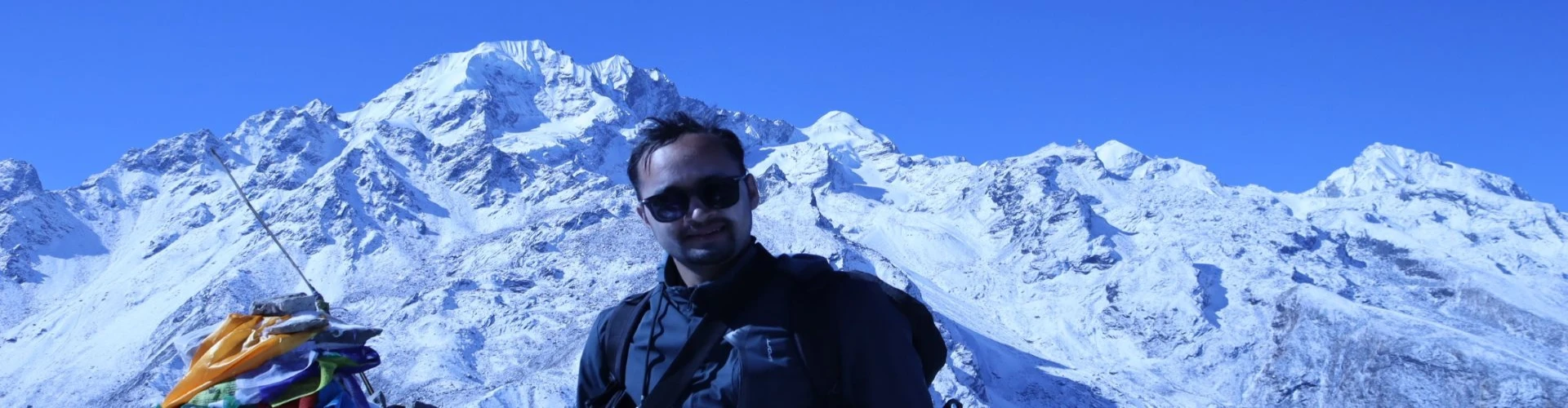
Langtang Valley Trek from December to May
Our Langtang Valley Trek runs from December to May, on a weekly basis every Monday from Kathmandu, in groups. Arrive on Sunday (or even earlier), meet your team, and then go on Monday morning.
Weekly Langtang Valley Trek Departures Every Monday
Our departure every Monday is on the same 10-day tour program. You come to Kathmandu on Day 1, leave Kathmandu on Day 2, and come back to Kathmandu on Day 9, with an entire additional day before going out on Day 10.
Langtang Valley Trek departure dates, December 2026 to May 2027
Month | Monday departures from Kathmandu |
December 2026 | 7, 14, 21, 28 |
January 2027 | 4, 11, 18, 25 |
February 2027 | 1, 8, 15, 22 |
March 2027 | 1, 8, 15, 22, 29 |
April 2027 | 5, 12, 19, 26 |
May 2027 | 3, 10, 17, 24, 31 |
Arrive in Kathmandu a day before your trekking trip begins (on Sunday). The dates indicated are the Mondays falling in the months; we will make sure that you book your preferred week.
Our Langtang Valley Trek will operate during the months of December to May. A trekking trip departs every Monday from Kathmandu. You will arrive in Kathmandu on Sunday and depart from Kathmandu to the mountains every Monday.
All Monday departures have the same 10-day journey. Day 1 is your arrival in Kathmandu (Sunday); day 2 is the start of your journey on Monday and return to Kathmandu on day 9 (the following Monday); the tenth day (Tuesday) will be for your airport transfers.
The monthly tables below indicate all departure days.
How to read the tables below
Column | What it means |
Day 1 (Sunday) | Arrive at Kathmandu International Airport, transfer to the hotel |
Day 2 (Monday) | Trek departure: 4WD drive from Kathmandu to Thulo Syabru via Dhunche |
Day 9 (Monday) | Return by 4WD jeep from Thulo Syabru to Kathmandu |
Day 10 (Tuesday) | Transfer to the airport, or onward program |
Day 6 will always be the Friday of the departure week, when the team ascends Mount Tsergo Ri (4,985m) from Kyanjin Gompa.
December 2026 Departures
There are four Monday departures that commence in December 2026 and end in January 2027.
Departure | Day 1: Arrive (Sunday) | Day 2: Trek starts (Monday) | Day 6: Tsergo Ri (Friday) | Day 9: Back in Kathmandu (Monday) | Day 10: Depart (Tuesday) |
1 | 6 Dec 2026 | 7 Dec 2026 | 11 Dec 2026 | 14 Dec 2026 | 15 Dec 2026 |
2 | 13 Dec 2026 | 14 Dec 2026 | 18 Dec 2026 | 21 Dec 2026 | 22 Dec 2026 |
3 | 20 Dec 2026 | 21 Dec 2026 | 25 Dec 2026 | 28 Dec 2026 | 29 Dec 2026 |
4 | 27 Dec 2026 | 28 Dec 2026 | 1 Jan 2027 | 4 Jan 2027 | 5 Jan 2027 |
For instance, if you register for the 7 December group, you will be arriving on 6 December Sunday, the walk will commence on 7 December Monday, you will come back to Kathmandu on 14 December Monday and leave on 15 December Tuesday.
January 2027 Departures
There are four Monday departures starting from January 2027 and ending in February.
Departure | Day 1: Arrive (Sunday) | Day 2: Trek starts (Monday) | Day 6: Tsergo Ri (Friday) | Day 9: Back in Kathmandu (Monday) | Day 10: Depart (Tuesday) |
1 | 3 Jan 2027 | 4 Jan 2027 | 8 Jan 2027 | 11 Jan 2027 | 12 Jan 2027 |
2 | 10 Jan 2027 | 11 Jan 2027 | 15 Jan 2027 | 18 Jan 2027 | 19 Jan 2027 |
3 | 17 Jan 2027 | 18 Jan 2027 | 22 Jan 2027 | 25 Jan 2027 | 26 Jan 2027 |
4 | 24 Jan 2027 | 25 Jan 2027 | 29 Jan 2027 | 1 Feb 2027 | 2 Feb 2027 |
January is the coldest month, so pack warmly and use a sleeping bag for the winter months.
February 2027 Departures
There are four Monday departures which begin in February 2027 and end in March.
Departure | Day 1: Arrive (Sunday) | Day 2: Trek starts (Monday) | Day 6: Tsergo Ri (Friday) | Day 9: Back in Kathmandu (Monday) | Day 10: Depart (Tuesday) |
1 | 31 Jan 2027 | 1 Feb 2027 | 5 Feb 2027 | 8 Feb 2027 | 9 Feb 2027 |
2 | 7 Feb 2027 | 8 Feb 2027 | 12 Feb 2027 | 15 Feb 2027 | 16 Feb 2027 |
3 | 14 Feb 2027 | 15 Feb 2027 | 19 Feb 2027 | 22 Feb 2027 | 23 Feb 2027 |
4 | 21 Feb 2027 | 22 Feb 2027 | 26 Feb 2027 | 1 Mar 2027 | 2 Mar 2027 |
The first February departure will begin on Monday, 1 February, arriving in Kathmandu on Sunday, 31 January.
March 2027 Departures
There are five Monday departures which begin in March 2027. The last one ends in April.
Departure | Day 1: Arrive (Sunday) | Day 2: Trek starts (Monday) | Day 6: Tsergo Ri (Friday) | Day 9: Back in Kathmandu (Monday) | Day 10: Depart (Tuesday) |
1 | 28 Feb 2027 | 1 Mar 2027 | 5 Mar 2027 | 8 Mar 2027 | 9 Mar 2027 |
2 | 7 Mar 2027 | 8 Mar 2027 | 12 Mar 2027 | 15 Mar 2027 | 16 Mar 2027 |
3 | 14 Mar 2027 | 15 Mar 2027 | 19 Mar 2027 | 22 Mar 2027 | 23 Mar 2027 |
4 | 21 Mar 2027 | 22 Mar 2027 | 26 Mar 2027 | 29 Mar 2027 | 30 Mar 2027 |
5 | 28 Mar 2027 | 29 Mar 2027 | 2 Apr 2027 | 5 Apr 2027 | 6 Apr 2027 |
The 29 March departure is the final one of the season and ends on Tuesday 6 April.
April 2027 departures
These are the four Monday departures that start in April 2027 and end in May 2027.
Departure | Day 1: Arrive (Sunday) | Day 2: Trek starts (Monday) | Day 6: Tsergo Ri (Friday) | Day 9: Back in Kathmandu (Monday) | Day 10: Depart (Tuesday) |
1 | 4 April 2027 | 5 April 2027 | 9 April 2027 | 12 April 2027 | 13 April 2027 |
2 | 11 April 2027 | 12 April 2027 | 16 April 2027 | 19 April 2027 | 20 April 2027 |
3 | 18 April 2027 | 19 April 2027 | 23 April 2027 | 26 April 2027 | 27 April 2027 |
4 | 25 April 2027 | 26 April 2027 | 30 April 2027 | 3 May 2027 | 4 May 2027 |
May departures 2027
These are the weekly Monday departures in May 2027. They end at the beginning of June 2027.
Departure | Day 1: Arrive (Sunday) | Day 2: Trek starts (Monday) | Day 6: Tsergo Ri (Friday) | Day 9: Back in Kathmandu (Monday) | Day 10: Depart (Tuesday) |
1 | 2 May 2027 | 3 May 2027 | 7 May 2027 | 10 May 2027 | 11 May 2027 |
2 | 9 May 2027 | 10 May 2027 | 14 May 2027 | 17 May 2027 | 18 May 2027 |
3 | 16 May 2027 | 17 May 2027 | 21 May 2027 | 24 May 2027 | 25 May 2027 |
4 | 23 May 2027 | 24 May 2027 | 28 May 2027 | 31 May 2027 | 1 June 2027 |
5 | 30 May 2027 | 31 May 2027 | 4 June 2027 | 7 June 2027 | 8 June 2027 |
Trekking Langtang Valley in Winter
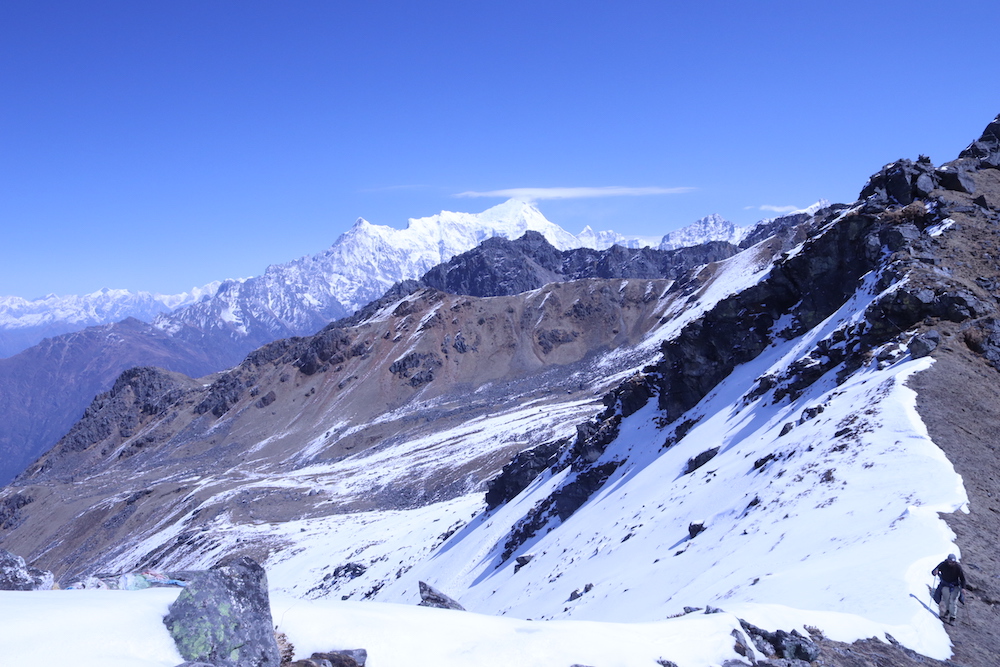
A winter trip to the Himalayan region gives you an exclusive and unusual travel experience, although the weather is extremely cold. The air is dry and cold, whereas the sky is usually clear and blue, showing sharp contrasts of snow-covered peaks, and the trails are almost empty, as in autumn, so your only companion in the valley would be valley inhabitants.
As far as winter conditions are concerned, they require special equipment and clothing.
What to Expect from December to May
- Bright mornings. The best views of mountains are mostly in the morning, before clouds form in the afternoon.
- Cold nights. The temperatures in Kyanjin Gompa can drop below freezing at night.
- Empty paths. There will be less traffic on the paths and more interaction with the local people.
- Short days. There is not much daylight, so we have to start early and arrive at our destinations by afternoon.
- Snow at high altitude. It is likely to have some snowfall at Kyanjin Gompa and Tsergo Ri, especially in January.
Winter Weather and Trail Conditions in Langtang
The months of December and May tend to be the more pleasant months, with moderate temperatures and the beginning of springtime in March, you’ll get a chance to see blooming rhododendrons, while the month of May will start pre-building towards monsoon. The colder months are January and February, and there could possibly be snow or ice in the upper areas. Our guides constantly monitor the status of the trails through local sources, and we change the schedule accordingly, so that you will only walk in places that are safe. About 80 percent of the roads in this area have already been cleared out, and this makes the trip to and from the trailhead a manageable journey.
Why Choose Langtang Valley Trek This Winter?
When it comes to trekking near Kathmandu, Langtang is a wonderful choice for its proximity, cultural richness, scenic beauty, and practical benefits to the local communities, particularly in wintertime.
Experience the Beautiful Langtang Himalayas:- Langtang Lirung (7,227 m), together with a range of snow-capped peaks, forms the boundaries of the valley and creates one of the best views during winter due to the dry climate. During sunrise, from Kyanjin Gompa you get an impression of being embraced by mountains colored in orange tones. Also, Tsergo Ri offers a view over the whole valley.
Support Local Tourism Through Your Trek:- By spending every day in local guesthouses, eating in local village cafes, and having a tour conducted by local guides, money goes directly into the local community. There are no intermediaries involved in between, and this makes the process of contributing more efficient.
No Donation Is Needed – Your Visit Will Make a Difference: Some visitors would like to help after a disaster but do not know how. In this case, there is an easy solution. It is not necessary to make any donations. By visiting, walking, and staying in the villages, you are already providing local families with what they need most – work, income and an incentive to rebuild. If you would like to help more, you are very welcome to bring any useful stuff or give tips to your guides and hosts. But this is completely optional. The hike itself is your donation.
Travel With a Purpose: Travel with a purpose does not mean sacrificing comfort or adventure. You will have beautiful views of mountains, local cuisine, comfortable guesthouses, and a good guide. But you will also be sure that your visit will really help people who depend on tourists for their livelihood.
How Tourism Supports Langtang Valley Communities
The economic life of the Langtang Valley revolves around tourism. Knowing how the money flows will help you appreciate the importance of your trekking here.
Local Families Depend on Tourism
The majority of the families in the valley earn their livelihoods through trekking in some form or another. While one family runs a guest house, another cousin acts as a guide, someone from the neighbourhood may be carrying loads, while a relative of yours is selling materials. When there are few tourists, everyone suffers.
After the recent earthquake, it is getting tough for many families to deal with the repairs and the lean period. The arrival of each group of visitors makes a visible difference.
Supporting Local Guides and Porters
Guides and porters are among the most important stakeholders of the trekking economy. They carry loads, navigate the trails, take care of emergency situations, and represent the culture of the valley. Employing the locals provides them with steady employment for the duration of the season.
Supporting Teahouses, Hotels, and Restaurants
Teahouses and guesthouses dot the route from Thulo Syabru to Kyanjin Gompa. Most of these establishments are run by families that require a constant stream of guests in order to pay for maintenance, wood, food, and salaries. By staying in and dining at these places, you help sustain them.
Helping Small Local Businesses Recover
Apart from the above, trekkers aid many small local businesses:
Bakeries and small stores along the route
Local farmers who sell vegetables, potatoes, and dairy products
Yak herders and cheese makers near Kyanjin Gompa
Jeep drivers and mechanics working between Kathmandu and the route
Craftsmen selling woolen items, prayer flags, and other mementos
Every Trekker Contributes to the Local Economy
The contribution amounts add up quickly. As shown in the table below, the revenue earned from trekkers contributes to the following in a mountain community such as Langtang.
Where you spend | Who benefits |
Guesthouse stays | Family owners, cooks and staff |
Meals and tea | Local kitchens and farmers |
Guide and porter services | Local guides, porters and their households |
Jeep transport | Drivers and roadside businesses |
Local shops and crafts | Small traders and artisans |
Permits and fees | National park and local management |
None of these treks alone transforms the valley. However, an uninterrupted flow of trekkers every Monday, week after week during winter, is precisely what it takes to enable these people to rebuild their lives.
Langtang Valley Trek Safety
Safety is our top priority in all our plans. The paths we follow have been carefully crafted to make treks safe and are continuously monitored together with local authorities, the Nepal Army, and national park control.
Is Langtang Valley Safe for Trekking?
Yes, with proper planning, local information and preparations. No mountain trek is without risk, and winter has its own specifics, but Langtang Valley is a known trekking destination with experienced guides. Our trek itinerary involves only maintained parts of the trail, moderate daily ascents and a complete acclimatization day at Kyanjin Gompa.
Safety Coordination With Local Authorities
Prior to each season and within the season itself, we coordinate with the local authorities in the region of Langtang. They inform us regarding the trail conditions, repairs and the parts of trails that should not be used. We take into consideration their recommendations and plan our trekking stages and stop using their recommendations rather than old maps.
Coordination With Nepal Army and Local Security Teams
The treks are made according to the safety requirements of Nepal Army, and we coordinate with them and with local security units regarding the conditions of the trails and movement through the region. Thus, our team gains another way to obtain current information.
Langtang National Park Safety Measures
The Langtang Valley is a protected area, and it falls under the jurisdiction of Langtang National Park. We use the registered route through the checkpoint system operated by the park administration; this way, the authority knows about our whereabouts in the area. The presence of national park control is one of the factors that ensure safety of our visitors and the environment.
Local Guides and Trail Condition Monitoring
The experience of our guides and familiarity with trails give an advantage in spotting various changes in the environment that visitors can easily ignore. For example, there could be washed-out areas, wet and slippery parts of the trail or sudden weather changes. The guides maintain communication with fellow guides and local hosts along the trail to know about the conditions of the trails.
What Trekkers Should Know About Winter Safety
A well-prepared trek is a successful trek. The following aspects are important, especially during winter trekking:
Elevation. Obey the instructions of your guide regarding pace, drinking water and resting, and inform them immediately if you experience headaches, nausea or exhaustion.
Temperature. Wear several layers of clothes, take care to keep your hands and feet warm and dry, and add more clothes as soon as you stop moving.
Light. The days are shorter in winter; therefore, we begin our day early and end the walk in the afternoon.
Ice and snow. In higher and shaded areas, move slowly and use trekking poles. The guide might recommend using microspikes in case of ice.
Insurance. Take travel insurance covering trekking up to 5,000 m and emergency evacuation.
Medical problems. Let us know if you suffer from any diseases before reserving the tour.
We always plan everything carefully and control the situation, but things may still change due to the weather and trail conditions. Your guide decides about your safety and makes the final decision for the day.
Our Safer Langtang Valley Trek Routes
Routes do not only refer to lines drawn on the map but also to decisions on where to trek, rest and whom to collaborate with along the way.
Carefully Selected Trekking Routes
This trek begins with a 4WD drive from Kathmandu to Thulo Syabru, through Dhunche, as against traditional routes to Syabrubesi. From Thulo Syabru, we trek to Lama Hotel, and then to Langtang, and finally to Kyanjin Gompa on the same corridor back. The stages we have selected use the maintained trekking trails, established lodge facilities and keep the rise in altitude of daily climbs within manageable limits.
Working With Local Communities
The route planning process takes place in collaboration with the people who reside along this route. The information about which lodges are prepared to take in trekkers and which are still not ready to welcome them is shared by us with the local lodge owners, guides and community.
Checking Trail Conditions Before Departure
Prior to the start of each trek, our group makes sure that the trail and road conditions have been verified with our local associates. The roads have become clear by about 80%, and we make use of the available portions. In case there is some portion which is unsafe, the plan will be revised prior to your departure from Kathmandu.
Responsible Trekking in Langtang National Park
We adhere to all regulations of the national park in terms of permits, litter, sound and animal interaction. All our guides inform each group about walking responsibly, which includes taking back non-biodegradable litter and following trails only.
Langtang Valley Trek Itinerary
This is the 10-day Langtang Valley trek itinerary.
Day | Route | Altitude | Overnight |
1 | Arrive at Kathmandu International Airport, transfer to hotel | Kathmandu | Hotel |
2 | Kathmandu to Thulo Syabru via Dhunche by 4WD | Thulo Syabru | Guesthouse |
3 | Thulo Syabru to Lama Hotel | 2,470 m | Guesthouse |
4 | Lama Hotel to Langtang Valley | 3,430 m | Guesthouse |
5 | Langtang Valley to Kyanjin Gompa | 3,870 m | Guesthouse |
6 | Explore Kyanjin Gompa, morning climb to Tsergo Ri | 4,985 m | Guesthouse |
7 | Kyanjin Gompa to Lama Hotel | 2,470 m | Guesthouse |
8 | Lama Hotel to Thulo Syabru | Thulo Syabru | Lodge |
9 | Thulo Syabru to Kathmandu by 4WD jeep | Kathmandu | Standard hotel |
10 | Transfer to Kathmandu International Airport or onward program | Kathmandu | None |
Day 1: Arrival in Kathmandu
Our team will receive you at Kathmandu International Airport and transfer you to the hotel where you will stay during your visit to Nepal. Take a rest, do a bit of exploring in Thamel if you have some energy left, and then we will introduce you to your guide with a short briefing.
Day 2: Kathmandu to Thulo Syabru via Dhunche
Departure from Kathmandu takes place on Monday morning in a 4x4 vehicle to reach Thulo Syabru in the northern parts of Dhunche via mountain roads. The scenic beauty of the terraced valleys, mountains and rivers makes up a huge part of this journey, which may take longer based on road and weather conditions.
Day 3: Thulo Syabru to Lama Hotel (2,470 m)
This is our first day of hiking, where we walk in the forest and over hills to reach Lama Hotel, which is a small village situated in the valley of the Langtang River. Time for today’s trekking is expected to be around six to seven hours, some parts of which will be easy and some parts of which will have ascents.
Day 4: Lama Hotel to Langtang Valley (3,430 m)
The trail from Lama Hotel will ascend through oak and rhododendron forest to reach the pastures where the valley becomes wider with an impressive view of Langtang Lirung. The trek will take about six hours today, with the journey done slowly while taking rests from time to time. Overnight at a guesthouse.
Day 5: Langtang Valley to Kyanjin Gompa (3,870 m)
We hike a short distance of about three to four hours on stone-walled fields, yak pastures and chortens to reach Kyanjin Gompa, which is a monastery village enclosed between mountains. We take the time to rest and have an easy walk around the village. Overnight at a guesthouse.
Day 6: Explore Kyanjin Gompa and Climb Tsergo Ri (4,985 m)
This is the main attraction of this trek. We will start early in the morning and climb Tsergo Ri for sunrise and amazing views of the Langtang range. The climb is steep and cold so that you can move at your own pace. In the afternoon, we have some free time in Kyanjin Gompa to explore the monastery, taste the local yak cheese and spend time with our hosts. Overnight in Kyanjin Gompa.
Day 7: Kyanjin Gompa to Lama Hotel
We begin our journey back and descend with easy breathing and fresh views of the valley that we climbed. It is a long walking day, so we will start early and stay overnight in Lama Hotel.
Day 8: Lama Hotel to Thulo Syabru
We will trek back to Thulo Syabru through the forest and thank the families we met on the way. Overnight in a lodge in Thulo Syabru.
Day 9: Thulo Syabru to Kathmandu
A 4x4 jeep will take us back to Kathmandu. We will stay in a normal hotel, shower and have some time left for celebrating in the form of a final dinner.
Day 10: Departure from Kathmandu
Transfer to Kathmandu International Airport for onward journey by air, or continue to next program in Nepal. You can also extend your trip by visiting other destinations like Kathmandu Valley or Pokhara.
Duration of walks is only an approximation and can vary according to weather conditions, trail conditions and speed of the group.
What Makes Langtang Valley Trek Special?
The Langtang Valley combines mountain landscapes, vibrant culture and serene forest treks all in one short trek. One of the few Himalayan treks starting in just a day’s journey from Kathmandu.
Spectacular Himalayan Mountain Views
From the moment the view opens up on your first clear morning in the mountains to watching the sunrise at the summit of Tsergo Ri, stunning views will continue to develop. Snow-capped peaks tower above the valley walls, glaciers cling to ridge lines and the mountain lighting changes through every hour of the day. The clear air during winter means some of the best visible views in the year.
Langtang Lirung and the Langtang Range
This towering peak of Langtang Lirung at 7,227 m dominates the valley, serving as a landmark of the trek itself. Other snow-covered summits around it form part of the border with Tibet. You can get up close and personal at Kyanjin Gompa, where you will be able to see the ice, rocks and shadows on the mountainsides.
Kyanjin Gompa and the Himalayan Landscape
Kyanjin Gompa is the ultimate destination and the centerpiece of the trek itself. It is a small village featuring a monastery, some guesthouses, a tradition of producing cheese from yaks and grazing fields which are surrounded by mountains. Most tourists have trouble leaving it. It is a location that allows for walks to the observation points, visiting a monastery and watching everyday activity happening 3,870 meters above sea level.
Tamang Culture and Mountain Communities
The population of the Langtang region consists largely of Tamang – people from the Himalayas with their own culture, including unique language, clothes, music and traditions. Prayer flags, carvings of mani stones and stone houses can be found in the area, while your hosts may be willing to tell you about themselves, their family and hopes for the valley.
Buddhist Monasteries and Local Traditions
Being Buddhists, locals use monasteries, chortens and long walls carved with manis during the trip, and there is one rule you have to follow while traveling there – respect the holy places by passing them on the left side quietly, without taking pictures without asking permission of the monks.
Forests, Rivers, and Himalayan Wildlife
Langtang National Park includes many different ecosystems, from subtropical forests at lower levels of the valley to alpine grasslands and rocky areas. During a walk around the park, trekkers can enjoy seeing rhododendron, oak, bamboo plants, fast-moving glacial rivers and, if they are fortunate, animals such as langurs, tahr or mountain birds. In addition, there are rare species of animals in the national park, including red pandas, although they are rarely seen by trekkers.
Langtang Valley Trek Difficulty
The difficulty level of the Langtang Valley Trek is considered moderate. It is not technical but includes several days of walking in winter weather conditions at high elevation.
Is Langtang Valley Trek Suitable for Beginners?
Yes, it is good for beginners who are physically prepared and experienced enough. You don't need to have any mountaineering skills, but it is advisable to be ready to walk for 5 to 7 hours per day on the difficult trails with stairs and uphill parts. If hiking for more than several hours isn't something you've ever done, you must prepare yourself physically beforehand.
Daily Walking Hours and Distance
Day | Section | Approximate walking time |
3 | Thulo Syabru to Lama Hotel | 6 to 7 hours |
4 | Lama Hotel to Langtang Valley | About 6 hours |
5 | Langtang Valley to Kyanjin Gompa | 3 to 4 hours |
6 | Tsergo Ri and Kyanjin Gompa | 6 to 8 hours round trip |
7 | Kyanjin Gompa to Lama Hotel | 6 to 7 hours |
8 | Lama Hotel to Thulo Syabru | 5 to 6 hours |
Altitude and Acclimatization
The highest altitude where we will be sleeping is Kyanjin Gompa at 3,870 m, while the highest altitude we will reach is Tsergo Ri at 4,985 m. The oxygen content is lower at these altitudes, which may cause altitude sickness for some individuals. The trekking program will make it easier for you through gradual ascent, spending two nights at Kyanjin Gompa and reaching the highest altitude in just one day.
Help your body adapt:
Walk slowly and steadily, especially above 3,000 m
Hydrate yourself with plenty of water and warm drinks
Do not drink alcohol when at altitude
Report your symptoms immediately to your guide
Do not take worsening symptoms lightly; descent is the remedy
Physical Preparation for Langtang Trek
It is advisable that you start preparing yourself at least six to eight weeks prior to the departure date. Walking, hiking with a loaded backpack, stair climbing, and cardiovascular exercise such as cycling and swimming are some of the ways to prepare yourself. Strengthen your legs and core muscles and try to practice walking downhill because it is hard on the knees than one would think.
Responsible and Sustainable Tourism in Langtang
Trekking With Respect for Local Communities
You are a visitor to another person's valley. Say hello to everyone with a smile and a namaste, ask permission before taking pictures, and wait politely when facilities are not available. Pay a fair price without negotiating hard, as little things go a long way in such places.
Choosing Local Accommodation and Services
Our guest houses, guides and suppliers are all local, whenever possible. This is the most direct way of helping. When you purchase any souvenirs, snacks or additional tea on the trek, do so from local sources.
Reducing Plastic and Waste on the Trail
Bring a reusable water bottle and drink purified or boiled water instead of buying plastic bottles.
Clean up after yourself and remove any non-degradable waste you produce
Use biodegradable toiletries and avoid disposable items
Do not burn plastics or litter the trails with garbage
Respecting Local Culture and Traditions
Wear appropriate clothes in villages and temples
Pass around the left of chortens and mani walls
Always seek permission to enter the temple premises or any other private premises.
No public display of affection or boisterous behavior around the religious sites
Do not touch religious items without being invited
Protecting Langtang National Park
Follow the designated trails, never collect plants or disturb wildlife and do not make fires in the open. Our team of experts briefs the tourists about this park policy and sets a good example. By conserving the forest and rivers of the valley, we conserve the landscape that attracts tourism here.
Langtang Valley Trek Accommodation and Meals
The trip includes accommodation in cozy mountain teahouses. The accommodation is modest, but it is welcoming and colorful.
Staying in Local Teahouses
Teahouses on the Langtang trail provide twin-bedded rooms with blankets and mattresses, a communal dining area, and communal bathrooms. In Kathmandu, you’ll be accommodated in a hotel before and after the trek, where you can relax in the hot shower. Rooms in the teahouse along the trail are not heated, so the dining area, usually heated by the fireplace, is the place where everybody gathers in the evening.
Supporting Locally Owned Teahouses
Our group uses mostly locally-owned and operated guesthouses. It means that your money will help people who actually need it. The family provides you with food, hospitality, and guides you through local culture; they will also be happy to tell you about their valley and its reconstruction.
Food Available During the Trek
Simple yet nutritious menus include:
Dal bhat - the main dish of rice, lentils and vegetables in Nepal, usually available with free refills
Noodle soups, momos, fried rice and pasta
Eggs, pancakes, porridge and Tibetan bread for breakfast
Cheese and dairy products from yaks in the local area, mainly around Kyanjin Gompa
Drinks – tea, coffee, ginger lemon and hot chocolate
Meals for vegetarians can be arranged. Inform us about your dietary preferences.
What to Expect From Winter Accommodation
In winter, it is quite chilly at night, and the choice of menu at some guesthouses may be limited since there are fewer supplies and fewer staff. The rooms are unheated, so sleeping bag is very important. Common areas will be the warmest place where you will spend your evenings. There will be less hot water, and devices will be charged separately.
What to Pack for Langtang Valley Trek in Winter
The secret to making the trek in winter conditions comfortable is packing right, which involves layering clothes and ensuring that you stay dry on your feet and are warm while you sleep.
Warm Clothing and Layering
Layer | What to bring |
Base layer | 2 thermal tops and 2 thermal bottoms (merino or synthetic) |
Mid layer | Fleece jacket and a light insulated vest |
Outer layer | Down jacket (rated for well below freezing), waterproof shell jacket and trousers |
Trekking trousers | 2 pairs of quick-dry trekking trousers |
Head and hands | Warm hat, sun hat, buff, insulated gloves, thin liner gloves |
Sun protection | Sunglasses with UV protection, sunscreen, lip balm |
Trekking Boots and Socks
Pack well-worn, waterproof trekking boots with proper ankle support. These should have been used for several weeks prior to the trek. Pack four or five pairs of warm trekking socks along with one pair of thick socks and camp shoes or sandals for use at the guesthouse. Gaiters and microspikes could be useful in the winter.
Sleeping Bag and Cold-Weather Gear
A sleeping bag suitable for around minus 15°C in winter when the rooms will not be heated would work well. The sleeping bag liner can help with staying warm and clean. Sleeping bags may either be hired or bought in Kathmandu if you do not want to bring your own. Trekking poles are highly recommended, along with a headlamp and extra batteries.
Water, Snacks, and Personal Essentials
Reusable water bottles (at least 1 litre, preferably insulated)
Water purification tablets or filter
Snacks like nuts, chocolate and energy bars
Quick-dry towel and toiletries
Power bank (cold weather discharges batteries quickly)
Passport, permits and money in Nepali rupees, copies of documents
A daypack (25-30 litres) for the daily walk
First-Aid Kit and Personal Medication
Take a small first-aid kit with blister plasters, painkillers, antiseptics, bandages and rehydration salts and your personal medications. Talk to your doctor about altitude sickness medications before you leave. Your guide carries a group first-aid kit, but you must carry your personal first-aid kit.
Langtang Valley Trek Permits
We take care of your trekking permits as part of our package, so you won’t have to stand in long queues in Kathmandu. We will require your passport information and passport-size photographs before you leave.
Langtang National Park Entry Permit
It is mandatory for anyone visiting Langtang National Park to acquire a permit. This will be verified at the park checkpoint, and the fee charged towards the permit will help towards the management and conservation of the park. The fees will depend on the prevailing situation at the time of booking.
TIMS Card and Trekking Requirements
Trekkers' Information Management System (TIMS) Card documents the trekkers in Nepal for security purposes and is required along with the park permit depending on prevailing regulations. Other permits from other authorities may also be necessary in addition to the TIMS card. We take care of everything for you prior to your departure.
Why Trekking Permits Matter
A permit is much more than just a piece of paper. Authorities know who is out there trekking because of permits, and this helps in case of emergency situations; they also provide funding towards the management of the parks and their facilities. You also trek legally and in a safe manner with permits.