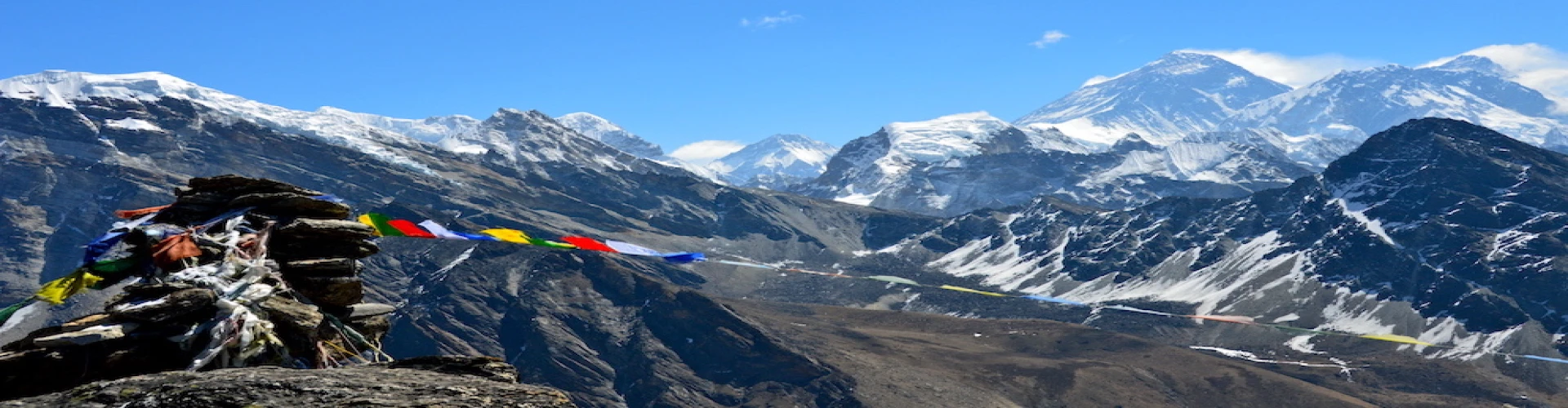
Quick Facts About Gokyo Valley Trek
Particulars | Details |
Destination | Everest Region, Nepal |
Duration | 13 Days |
Maximum Altitude | 5,360m (Renjo La Pass) |
Gokyo Ri Elevation | 5,357m |
Starting Point | Kathmandu |
Ending Point | Kathmandu |
Trekking Grade | Moderate to Challenging |
Accommodation | Hotels and Mountain Teahouses |
Transportation | Kathmandu–Lukla–Kathmandu flights |
Best Seasons | Spring and Autumn |
Major Attractions | Gokyo Lakes, Gokyo Ri, Renjo La Pass, Ngozumpa Glacier |
Trekking Style | Guided Teahouse Trek |
Why Choose the Gokyo Valley Trek?
The Gokyo Valley Trek is an excellent option for trekkers who want to experience the beauty of the Everest region beyond the traditional Everest Base Camp route.
Here are some reasons why this trek deserves a place on your Nepal trekking bucket list.
1. Explore the Beautiful Gokyo Lakes
The six glacial lakes of Gokyo are among the most beautiful natural attractions in the Everest region. Their turquoise and emerald-blue waters create a striking contrast against the surrounding snow-covered mountains and rocky landscapes.
The lakes are especially beautiful during spring and autumn when the weather is generally clearer, offering excellent opportunities for photography.
2. Enjoy Panoramic Himalayan Views from Gokyo Ri
Gokyo Ri forms one of the best viewpoints in the Khumbu region. For one to reach Gokyo Ri, one has to engage in an arduous journey, but the views of Everest, Lhotse, Makalu, and Cho Oyu are worth it.
This point offers a view of the Ngozumpa glacier and some Gokyo Lakes, making it one of the most memorable parts of the hike.
3. Experience a Quieter Everest Region
The Gokyo Valley trek sees less traffic than the popular trek to Everest Base Camp. Once past Namche Bazaar, you will notice that there are fewer crowds and that you get to appreciate the beautiful scenery of the Himalayas at peace.
4. Walk Along the Ngozumpa Glacier
The trek takes you alongside the Ngozumpa Glacier, the longest glacier in Nepal. The massive glacial landscape, rocky moraines and surrounding mountain peaks create a unique trekking environment.
5. Cross the Adventurous Renjo La Pass
At approximately 5,360 metres, Renjo La Pass is one of the major highlights of the extended Gokyo Valley circuit.
The crossing offers magnificent mountain views and connects Gokyo with the remote Bhote Koshi Valley through Lungden and Thame.
6. Experience Sherpa Culture and Hospitality
From Namche Bazaar to Thame, the journey passes through traditional Sherpa settlements where you can experience local culture, monasteries, mountain lifestyles and warm hospitality.
Gokyo Valley Trek Itinerary: 13 Days
Mountain Rock Treks and Expedition has designed a 13-day itinerary that combines the major attractions of the Gokyo region with adequate acclimatisation opportunities.
Your journey will include a visit to Namche Bazaar, an excursion to the exceptional Gokyo Ri, exploration of the eye-soothing Gokyo Lakes, and the crossing of Renjo La Pass.
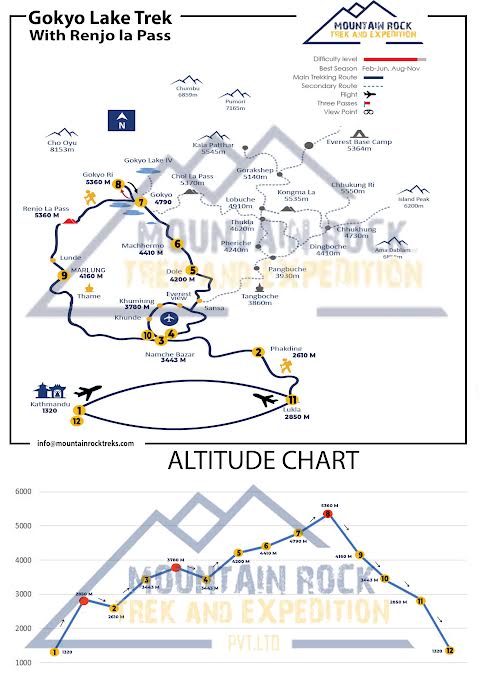
The following is the detailed day-by-day itinerary.
Day 1: Arrival in Kathmandu (1,320m)
When you arrive at the Tribhuvan International Airport, a representative of Mountain Rock Treks and Expedition will welcome you, pick you up, and drop you off at your hotel in Kathmandu.
After checking in, you may relax after your tiring flight. Depending upon your time of arrival. You may take a stroll around Thamel, visit local markets, enjoy local Nepali cuisine, or simply just take a rest at your hotel.
Your trekking guide will also provide an introductory briefing about the journey, including the itinerary, required equipment, and necessary preparation.
Overnight: Hotel in Kathmandu
Day 2: Fly from Kathmandu to Lukla 92,840m) and Trek to Phakding (2,610 m)
Your mountain adventure begins with an early morning flight to Lukla. The approximately 30-minute flight offers spectacular views of the Himalayan landscape before landing at Tenzing-Hillary Airport.
After meeting your trekking crew and organising your luggage, you will begin walking towards Phakding.
The trail initially descends through beautiful mountain landscapes, passing small settlements, prayer wheels, mani walls, and suspension bridges along the Dudh Koshi River.
After approximately three to four hours of walking, you will reach Phakding, a peaceful Sherpa settlement surrounded by green hills.
Walking Duration: 3–4 hours
Overnight: Teahouse in Phakding.
Day 3: Trek from Phakding to Namche Bazaar (3,443m)
After breakfast, you will continue the journey along the Dudh Koshi River towards Namche Bazaar, the famous gateway to the Everest region.
The trail passes through Monjo, where you enter Sagarmatha National Park. You will cross several suspension bridges, including the famous Hillary Suspension Bridge, while enjoying beautiful views of the surrounding forests and mountains.
The final section involves a challenging uphill climb through forested trails towards Namche Bazaar.
Namche is a vibrant Sherpa town featuring bakeries, restaurants, trekking shops, and traditional mountain lodges. On clear days, you may also catch your first glimpse of Mount Everest.
Walking Duration: 5–6 hours
Overnight: Teahouse in Namche Bazaar.
Day 4: Acclimatisation Day at Namche Bazaar (3,443m)
This day is dedicated to acclimatisation, allowing your body to adjust to the increasing altitude.
Instead of remaining inside the lodge throughout the day, you will take a short acclimatisation hike towards Khumjung or the surrounding viewpoints.
Khumjung is a traditional Sherpa village known for its monastery, stone-built houses and beautiful mountain scenery.
You can also explore the Sherpa Culture Museum or visit the Everest View Hotel area for spectacular Himalayan views.
After the hike, you will return to Namche Bazaar and spend the afternoon relaxing.
Walking Duration: Approximately 3–4 hours
Overnight: Teahouse in Namche Bazaar.
Day 5: Trek from Namche Bazaar to Dole (4,200m)
Leaving Namche Bazaar, you will gradually move away from the main Everest Base Camp trail and follow the route towards Gokyo Valley.
The trail initially climbs towards Sanasa, a small settlement and trail junction in the Everest region between Namche bazaar and routes leading towards Gokyo Valley and Everest Base Camp before continuing through beautiful rhododendron and alpine forests.
As you gain elevation, the landscape gradually becomes more open, with fewer trees and expansive mountain views. You will also pass traditional grazing areas where yaks can often be seen.
The final section involves an uphill walk towards Dole, a small mountain settlement surrounded by beautiful Himalayan scenery.
Walking Duration: 5–6 hours
Overnight: Teahouse in Dole.
Day 6: Trek from Dole to Machhermo (4,470m)
On this day, you get further into the high-altitude landscape of the Gokyo Valley.
The trail gradually ascends through open mountain terrain, passing small settlements and yak grazing areas. Along the way, you can enjoy impressive views of Cho Oyu and the surrounding Himalayan peaks.
Compared to the previous day, the walking distance is relatively short, providing additional time for rest and acclimatisation.
After reaching Machhermo, you can explore the village and enjoy the beautiful mountain surroundings.
Walking Duration: 3–4 hours
Overnight: Teahouse in Machhermo.
Day 7: Trek from Machhermo to Gokyo (4,790m)
Today is one of the most exciting days of the trek as you finally reach the beautiful Gokyo Valley.
The trail gradually climbs through rocky terrain and glacial landscapes, offering impressive views of the surrounding mountains.
You will pass the first and second Gokyo Lakes before reaching the third and largest lake, Dudh Pokhari, beside which Gokyo Village is situated.
The turquoise lake, colourful mountain reflections and surrounding snow-covered peaks create an unforgettable landscape.
After reaching Gokyo, you can explore the lakeside area and enjoy the peaceful atmosphere of this beautiful Himalayan settlement.
Walking Duration: 4–5 hours
Overnight: Teahouse in Gokyo.
Day 8: Excursion to Gokyo Ri (5,357m)
This day is dedicated to climbing Gokyo Ri, one of the most spectacular viewpoints in the Everest region.
You will start early in the morning to reach the summit before the clouds begin covering the surrounding peaks.
The ascent is challenging, involving steep uphill sections and rocky trails. However, the breathtaking views from the summit make the effort worthwhile.
From Gokyo Ri, you can enjoy panoramic views of Mount Everest, Lhotse, Makalu and Cho Oyu, alongside the Ngozumpa Glacier and the beautiful Gokyo Lakes.
After spending some time enjoying the scenery and taking photographs, descend to Gokyo Village.
The afternoon is reserved for rest and recovery before the challenging Renjo La Pass crossing the following day.
Walking Duration: 5–6 hours
Overnight: Teahouse in Gokyo.
Day 9: Trek from Gokyo to Lungden (4,380m) via Renjo La Pass (5,360m)
This day is one of the most challenging and rewarding days of the entire trek.
You will leave Gokyo early in the morning and begin ascending towards Renjo La Pass.
The climb involves steep and rocky sections, and depending on the season, snow and icy trails may make the crossing more demanding.
Once you reach the top, you will be rewarded with spectacular views of Everest, Lhotse, Makalu, Cho Oyu and the Gokyo Lakes below.
After enjoying the scenery, begin descending towards Lungden through the remote Bhote Koshi Valley.
The descent is steep in certain sections and requires careful footing, particularly when the trail is covered with snow.
Upon reaching Lungden, settle into your teahouse and enjoy a well-deserved rest.
Walking Duration: 8–9 hours
Overnight: Teahouse in Lungden.
Day 10: Trek from Lungden to Namche Bazaar (3,443m) via Thame
After breakfast, you will begin descending towards Namche Bazaar through the beautiful settlement of Thame.
Thame is an important Sherpa village known for its traditional culture, historic monastery and connection with famous Everest climbers.
The trail gradually descends through the Bhote Koshi Valley before reconnecting with the main Khumbu trekking route.
After several hours of walking, you will reach Namche Bazaar, where you can enjoy the comfort of a familiar mountain town.
Walking Duration: 7–8 hours
Overnight: Teahouse in Namche Bazaar.
Day 11: Trek from Namche Bazaar to Lukla (2,840m)
Today is your final trekking day.
After breakfast, retrace your steps along the Dudh Koshi River, passing through Jorsalle, Monjo and Phakding.
You will cross several suspension bridges and walk through familiar Sherpa settlements before reaching Lukla.
After arriving in Lukla, you can celebrate the completion of your trekking adventure with your guide and trekking crew.
Walking Duration: 6–7 hours
Overnight: Teahouse in Lukla.
Day 12: Fly from Lukla to Kathmandu
After breakfast, you will be heading towards Lukla Airport for your return flight to Kathmandu.
The short mountain flight offers another opportunity to enjoy the magnificent Himalayan landscape from above.
Upon arrival in Kathmandu, you will be transferred to your hotel. You can spend the remainder of the day relaxing, shopping or exploring the city.
Flights from Lukla are highly dependent on weather conditions. During certain seasons, flights may operate through Manthali Airport in Ramechhap, requiring an additional road journey to Kathmandu.
Flight Duration: Approximately 30 minutes
Overnight: Hotel in Kathmandu.
Day 13: Final Departure
Your Gokyo Valley Trek officially concludes today.
A representative from Mountain Rock Treks will transfer you to Tribhuvan International Airport according to your international flight schedule.
We hope you leave Nepal with wonderful memories of the Gokyo Lakes, spectacular Himalayan landscapes, and the warm hospitality of the local mountain communities.
Gokyo Valley Trek Cost for 2027/2028
The Gokyo Valley Trek cost depends on several factors, including group size, transportation, accommodation, meals, trekking staff, permits, and additional personal expenses.
Gokyo Valley Trek Package Cost
Group Size | Cost Per Person |
Solo Trekker (without shared porter) | USD 1,450 |
2–6 Trekkers | USD 1,350 |
7 or More Trekkers | USD 1,250 |
The package includes all the necessary trekking arrangements such as accommodation, meals during the trek, a professional trekking guide, required permits, domestic transportation, and airport transfers.
Whilst planning a trek, it is always cost-effective if you travel in a group, as you can share certain expenses like guide arrangements and accommodation. Travelling in a group is always on a cheaper side as opposed to travelling solo. When you travel solo, you’ll have limited shared services available.
What Factors Affect the Gokyo Valley Trek Cost?
Understanding your travel expenses, the factors that affect the cost are really important. It helps you draw a realistic budget, if not help you guide the estimated cost you need to meet before you travel.
Some major expenses associated with the Gokyo Valley Trek are:
Lukla Flight Cost
One of the biggest expenses you need to consider for the Gokyo Valley Trek is the expense of the Lukla Flight.
The flight journey is a short distance; it is a domestic flight from Kathmandu to Lukla, followed by a return flight at the end of the trek. The return airfare can account for a substantial portion of the overall package, depending on the season and the flight arrangements.
Flights may typically operate from Manthali Airport in Ramechhap instead of Kathmandu during the peak trekking seasons, i.e spring and autumn. If the arrangement is so, you will have to travel by road from Kathmandu to Ramechhap to board the flight.
We, Mountain Rock Treks and Expedition will arrange the necessary transportation and flight connection as a part of the package.
Accommodation Cost
Accommodation during the Gokyo Valley Trek mainly consists of traditional teahouses and lodges.
In lower settlements, you will find comparatively comfortable accommodation with basic facilities i.e in places like Phakding and Namche Bazaar. However, when you move towards the higher settlements like Dole, Machhermo and Gokyo, accommodation options get limited.
Most teahouses provide simple twin-sharing rooms with basic bedding and shared bathroom facilities. At higher elevations, you may have to pay extra charges for facilities such as hot showers, Wi-Fi and electronic charging.
There’s only a handful of lodges in Gokyo and Lungden, making advance accommodation arrangements essential, especially during bus trekking seasons.
Food and Meal Expenses
Another important component to consider for your trekking budget is food. Most trekking packages include breakfast, lunch, and dinner during the trekking days.
Common meals available along the routes include:
- Dal Bhat (rice, lentils, and vegetables).
- Tibetan bread.
- Vegetable and chicken noodles.
- Fried rice.
- Momos.
- Pasta and spaghetti.
- Soups and porridge.
- Pancakes and eggs.
As you gain elevation, you’ll find yourself seeing the hike in price of food. This is because the supplies must be transported to remote mountain settlements either by porters or helicopters.
Hot drinks, bottled water, snacks, chocolate and additional beverages may also increase your personal expenses.
Trekking Guide and Porter Cost
For a safe and organized trek to the Gokyo Valley, hiring an experienced guide is quite important. A professional guide will help you navigate the routes, arrange accommodation, monitor altitude and help you with local communication.
You can make your journey more comfortable with hiring a porter. A porter will help you carry your main luggages, allowing you to walk with a lighter backpack, with ease.
Guide and porter expenses depend on the duration of the trek, group size and service arrangements.
We, Mountain Rock Treks and Expedition, provide professional trekking staff as a part of our guided trekking package. However, you must confirm porter arrangements whilst booking.
Trekking Permit Cost
The Gokyo Valley Trek passes through Sagarmatha National Park and the Khumbu Pasang Lhamu Rural Municipality. Thus, trekkers need an applicable national park entry permit and local area permit.
The published permit costs are:
Permit | Approximate Cost |
Sagarmatha National Park Permit | NPR 3,000 |
Khumbu Pasang Lhamu Rural Municipality Permit | NPR 2,000 |
Total | NPR 5,000 |
Permit fees may vary according to the nationality and applicable government regulations. We, Mountain Rock Treks and Expedition, will assist you with the necessary permit arrangements before and during the trek.
Travel Insurance and Emergency Expenses
Travel insurance is vital while planning a high-altitude trek.
The Gokyo Valley reaches elevations above 5,000metres, where altitude sickness and unexpected weather conditions can create a very serious challenge.
Whilst buying insurance, check if it covers the following things:
- High-altitude trekking up to at least 6,000 metres.
- Emergency helicopter evacuation.
- Medical treatment and hospitalisation.
- Trip cancellation and interruption.
- Flight delays and unforeseen travel disruptions.
Without appropriate travel insurance, helicopter evacuation if needed will cost you a fortune, Therefore, arranging a proper travel insurance before your arrival in Nepal is highly and strongly recommended.
What is Included and Excluded in the Gokyo Valley Trek Package?
Before booking your trek, checking the inclusions and exclusions of the services is important.
Services Included
- Airport pickup and drop-off in Kathmandu.
- Two nights of hotel accommodation in Kathmandu with breakfast.
- Round-trip domestic flights between Kathmandu and Lukla, including applicable taxes and transfers.
- Transportation to Manthali Airport when flights operate through Ramechhap.
- Teahouse accommodation during the trek.
- Breakfast, lunch and dinner during the trekking days.
- Professional English-speaking trekking guide.
- Required trekking permits and applicable government taxes.
- Sleeping bag, duffel bag and down jacket on a refundable basis.
- Trekking map.
- First-aid medical kit.
- Pulse oximeter for monitoring oxygen saturation and heart rate.
- Assistance with emergency rescue arrangements.
- Pre-trek briefing.
- Farewell dinner in Kathmandu.
- Luggage storage.
- Trekking achievement certificate, if required.
Services Excluded
- International airfare.
- Nepal entry visa fees.
- Travel and medical insurance.
- Emergency helicopter evacuation expenses.
- Personal medical expenses.
- Extra hotel nights in Kathmandu.
- Lunch and dinner in Kathmandu.
- Personal trekking clothing and equipment.
- Personal snacks and beverages.
- Bottled or boiled drinking water.
- Wi-Fi, charging and hot shower expenses.
- Personal shopping and laundry.
- Tips for trekking guides and porters.
- Optional porter service, if not included in the confirmed package.
- Additional expenses caused by unforeseen circumstances, including flight delays.
Major Highlights of Gokyo Valley Trek
The Gokyo Valley Trek is a rollercoaster adventure that leaves you spellbound with exquisite, one-of-a-kind scenic beauty of the Himalayan landscapes, culturally rich traditional villages, jaw-dropping turquoise glacial lakes, and challenging viewpoints.
Some major attractions you’ll encounter on your journey are:
Lukla
Lukla: the main gateway to the Everest region, the starting point of the Gokyo Valley Trek.
Lukla is a small mountain town, quite famous for Tenzing-Hillary Airport, which is surrounded by steep mountain terrain, situated at an elevation of approximately 2,840metres.
The scenic flight from Kathmandu to Lukla is a classic introduction to the Himalayan adventure.
At Lukla, you will find several teahouses, restaurants and trekking shops where one can prepare for the journey they are about to commence.
Namche Bazaar
Namche Bazaar: one of the most important settlements in the Khumbu region. It serves as a major trading centre and important acclimatisation destination for trekkers, heading towards Everest Base Camp and Gokyo Valley.
Located at approximately 3,443metres, this town offers a combination of both traditional Sherpa culture and modern trekking facilities. At Namche Bazaar, you can explore local markets, visit the Sherpa Culture Museum, enjoy mountain-view cafes, and take a short hike towards nearby viewpoints if you please.
Gokyo Lakes
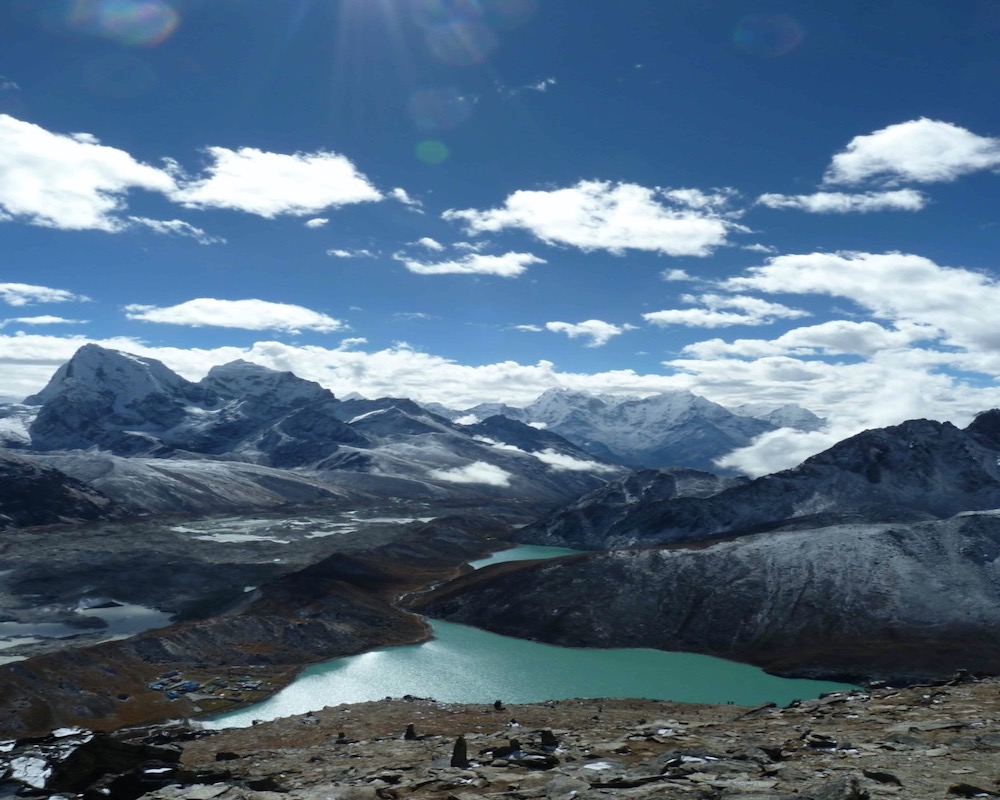
The most beautiful attractions in the Everest region are the Gokyo Lakes.
There are six glacial lakes in the Gokyo Valley, each surrounded by dramatic Himalayan mountains and massive glacial landscapes.
All the lakes have a striking blue and turquoise leaving you stunned with the beauty it radiates. Dudh Pokhari, the third lake, is more renowned than the others, as the Gokyo Village resides along its shoreline.
The peaceful atmosphere and incredible mountain reflections make this one of the most memorable destinations of the trek.
Gokyo Ri
Standing at approximately 5,357metres, Gokyo Ri is one of the finest viewpoints in the Everest region.
The summit requires a challenging uphill from the Gokyo Village, but the view you get after reaching the top will leave you bewitched. From the top you will see panoramas of Mount Everest, Lhotse, Makalu, and Cho Oyu. You will also witness an impressive perspective of the Nqozumpa Glacier and the surrounding Gokyo Lakes.
For many trekkers, Gokyo Ri becomes the defining moment of the entire journey.
Difficulty Level of Gokyo Valley Trek
The Gokyo Valley Trek is generally considered a moderate-to-challenging high-altitude trekking adventure.
This trek is a physically demanding trek, even if it does not require technical mountaineering skills. The increasing elevation, steep ascents, long walking days and changing, unpredictable weather conditions make this trek a definitive challenge.
The maximum elevation this trek reaches is at 5,360m at Renjo La Pass, while Gokyo Ri stands at 5,375m.
Spending several consecutive nights at an altitude of above 4,000m makes acclimatisation particularly important.
Major Challenges of Gokyo Valley Trek
High Altitude
One of the major challenges of Gokyo Valley Trek is the altitude. As you move above 3,000m, you’ll start noticing the reduced availability of oxygen, making physical activities more demanding.
Some trekkers might face Acute Mountain Sickness(AMS). Some of the symptoms include headaches, nausea, dizziness, fatigue, and trouble sleeping.
With every gradual elevation gain, proper acclimatization is important.
Long Walking Hours
Depending on the route and elevation, you may have to walk for 4-7 hours straight, daily. You may even have to walk for 8-9 hours straight while crossing the Renjo La Pass.
Thus, good stamina and endurance are necessary.
Challenging Renjo La Pass
One of the most physically demanding sections of the trek is the crossing of Renjo La Pass.
The trail to cross Renjo La Pass involves steep ascents, rocky terrain and potentially snowy or icy conditions. One must be prepared for changing weather and follow their guide’s instructions throughout the crossing.
Basic Accommodation Facilities
Accommodation becomes increasingly basic, and facilities get limited as you move towards Gokyo and Lungden, unlike Namche Bazaar, where one can find comfortable lodges.
Hot showers, charging facilities, and Wi-Fi may also be unavailable or require additional payments, especially at higher settlements.
Unpredictable Weather
Weather conditions rapidly change in the Everest region, making it impossible to predict the weather. Strong winds, snowfall, rain and poor visibility can affect trekking conditions and Lukla Flights. A flexible itinerary with sufficient contingency time is thus recommended.
Who Can Do the Gokyo Valley Trek?
For individuals who are physically fit, have good walking endurance, and are comfortable with multi-day trekking, this trek is absolutely suitable. Because the route includes several days at an elevation of 4,000m and above, if you have previous high-altitude trekking experience, it will be very beneficial to you.
If you are a beginner with little to no trekking experience but are in perfect health, have perfect physical fitness, endurance and for long walking days, with proper guidance and preparation, you can consider undertaking this challenge. However, this trek is not the ideal choice for someone unfamiliar with the environment of higher altitudes.
People with existing medical conditions should consult a healthcare professional before undertaking the journey.
Preparation for Gokyo Valley Trek
For comfort and safety, proper preparation is really essential.
Since the journey involves high-altitude walking, changing temperatures, and several demanding trekking days, you should prepare both physically and mentally before arriving in Nepal.
1. Physical Fitness and Training
Start preparing at least 8–12 weeks before your departure.
Focus on activities that improve cardiovascular endurance, leg strength, and overall stamina.
Recommended exercises include:
- Hiking on uneven terrain.
- Walking uphill and downhill.
- Stair climbing.
- Jogging and cycling.
- Squats and lunges.
- Strength and endurance training.
Try to complete longer walks while carrying a lightweight backpack to simulate actual trekking conditions.
2. Essential Trekking Equipment
Packing appropriate equipment is important for dealing with cold temperatures and unpredictable mountain weather.
Here are some essential items:
Category | Recommended Equipment |
Clothing | Thermal base layers, fleece jacket and down jacket |
Outerwear | Waterproof and windproof jacket and trousers |
Footwear | Comfortable, waterproof trekking boots |
Accessories | Warm gloves, woollen socks and trekking hat |
Head Protection | Sunglasses and sun protection |
Equipment | Trekking poles, backpack and headlamp |
Sleeping | Sleeping bag suitable for cold conditions |
Personal Care | Sunscreen, lip balm and toiletries |
Medical | Personal medication, first-aid supplies and blister protection |
Documents | Passport, permits, insurance and flight tickets |
Mountain Rock Treks also provides certain trekking equipment, including a sleeping bag, duffel bag and down jacket on a refundable basis.
3. Acclimatisation and Altitude Preparation
Acclimatisation is one of the most important aspects of high-altitude trekking.
Your body needs sufficient time to adjust to lower oxygen levels as you gain elevation.
The itinerary includes an acclimatisation day at Namche Bazaar before continuing towards Dole and higher settlements.
During the trek:
- Walk slowly and maintain a comfortable pace.
- Drink sufficient water.
- Avoid excessive physical exertion.
- Follow your guide's instructions.
- Avoid alcohol during acclimatisation.
- Inform your guide immediately if you experience symptoms of altitude sickness.
Never ignore worsening altitude-related symptoms. Descending to a lower elevation is essential when altitude illness becomes serious.
4. Mental Preparation
High-altitude trekking requires patience, determination and flexibility.
Some days may involve long walking hours, cold temperatures, basic accommodation and physically demanding ascents.
Preparing yourself mentally for these conditions will help you enjoy the experience rather than focusing only on the challenges.
It is also important to remain flexible because weather conditions can affect the itinerary, particularly during the Renjo La crossing and Lukla flights.
Best Time for Gokyo Valley Trek
Undoubtedly, the best seasons for the Gokyo Valley Trek are spring and autumn.
Both seasons offer favorable weather conditions, relatively stable trekking trails, and mountain visibility.
Spring(March, April and May)
Spring is one of the most popular seasons for trekking in the Everest region. During spring, you will find comparatively warmer temperatures, see rhododendrons bloom in the forests, and see the mountain landscapes with clear visibility.
April and May are especially popular because of the generally favorable trekking conditions and excellent opportunities to enjoy Himalayan scenery.
Autumn(September, October and November)
Autumn is another excellent season for the Gokyo Valley Trek. After the monsoon, the skies become clearer, offering spectacular mountain views.
October is a particularly popular month of autumn for this trek because of its relatively stable weather and comfortable trekking conditions. November too is suitable, although temperatures start dropping so it's a tad bit colder, especially at higher elevation.
Winter and Monsoon
Winter trekking is possible but not recommended. Due to heavy snowfall, freezing temperatures and icy trails, the already challenging trail becomes more demanding and rigorous.
Similarly, monsoon season brings rainfall, cloudy skies and potential flight disruption along with natural disasters such as floods and landslides destroying trails and roads. Thus, trekking during the monsoon should be a big no.
But amidst all the difficulties and challenges, if you are an experienced trekker with a flexible schedule, you may consider the trek with appropriate preparation.
Why Choose Mountain Rock Treks and Expeditions for Gokyo Valley Trek?
For any trek no matter the intensity of difficultiness, choosing an experienced local trekking company can make a significant difference to your overall Himalayan trekking experience.
Mountain Rock Treks and Expedition has years of experience organizing trekking adventures throughout Nepal, including the Everest region.
Our Gokyo Valley Trek itinerary is designed to provide a balanced combination of adventure, acclimatisation and cultural exploration.
Here are some reasons to choose us:
- Experienced Local Guides: Our professional trekking guides have extensive knowledge of the Khumbu region, local culture and mountain trails.
- Carefully Planned Itinerary: We provide sufficient time for acclimatisation and avoid unnecessarily rushing through high-altitude sections.
- Small Group Experience: Smaller groups allow our guides to provide better individual attention and support.
- Transparent Pricing: We provide upfront package prices and explain the services included and excluded.
- Safety First: Our guides monitor trekkers' health and oxygen saturation and carry essential first-aid equipment.
- Accommodation Arrangements: We coordinate with local teahouses to arrange accommodation along the trekking route.
- Flexible Trekking Packages: We can customize the itinerary according to your preferences, available time and trekking experience.
Whether you are an experienced trekker or an adventure enthusiast looking for a quieter alternative to Everest Base Camp, our team is ready to help you explore the beautiful Gokyo Valley.
Book Your Gokyo Valley Trek with Mountain Rock Treks
The Gokyo Valley Trek is more than just a high-altitude walking adventure. It is an opportunity to experience the natural beauty, cultural heritage and remarkable landscapes of Nepal's Everest region.
From the turquoise Gokyo Lakes and breathtaking views from Gokyo Ri to the adventurous crossing of Renjo La Pass, every section of the journey offers something unique.
With a carefully planned itinerary, experienced local guides, and proper acclimatisation, you can explore this beautiful Himalayan destination with confidence.
Ready to explore Gokyo Valley?
Contact Mountain Rock Treks & Expedition to book your 13-day Gokyo Valley Trek or customize your adventure according to your preferences.