Why Is March the Best Time for the Manaslu Circuit Trek?
Stable, Post-Winter Weather and Clear Skies
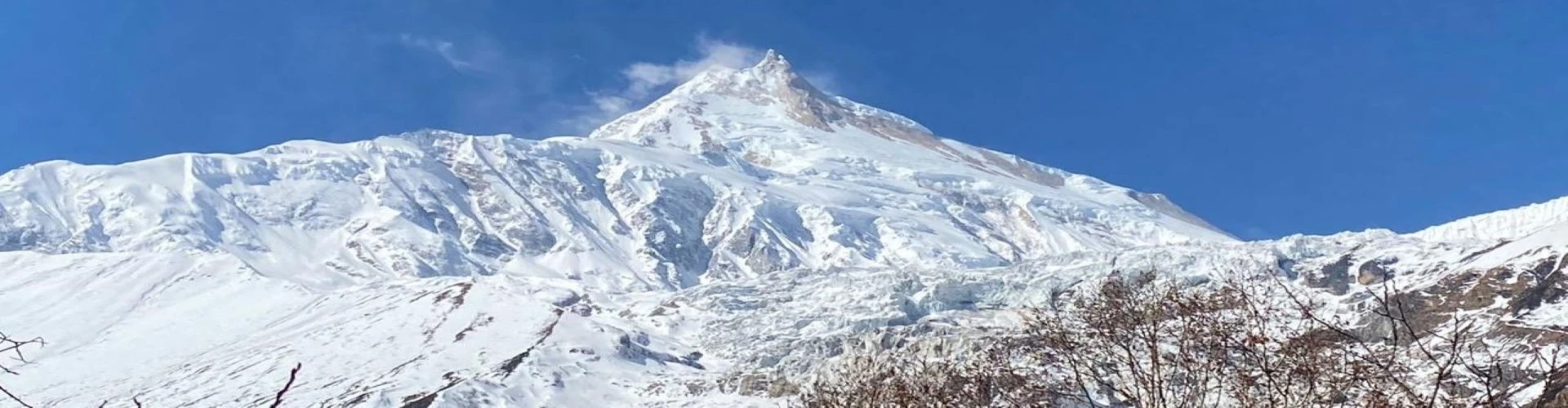
March is a stable transition from winter to spring with stable weather conditions, fewer storms, and less rain than the winter months. Many trekkers will see clearer skies on an almost daily basis, providing a clearer view of Mt. Manaslu, Ganesh Himal, and Himalchuli. The dry air in March allows for long-range mountain views, making it one of the best months for photography and panoramic views of the mountains.
Pleasant Daytime Temperatures
The daytime temperatures will be pleasant during the day this month because it is warmer than it has been since winter. Daytime temperatures in the lower and middle elevations will be milder and much more pleasant than they were during the coldest part of the winter months.
Although the nights will remain quite cold, particularly at elevations above 3,500m, the daytime temperatures will make it much easier to walk from one teahouse to another on long treks.
Enhancing the Conditions of Trails
Trails at low elevations are much firmer and drier with less mud and slipperiness after the winter’s snow has melted in March. The weather makes it much safer and less physically demanding to trek through the Larkya La Pass by having less snow covering the trails when compared to January and February.
Photography and Clear Mountain Views
With dry weather and few clouds in March, the views of the mountains are exceptionally clear for trekkers to take wonderful pictures at higher elevations of the many snow-covered peaks.
New Plants and Wildlife
Rhododendrons and wildflowers will start to show up along the lower valleys in January, marking the first signs of spring. These plants will be a great contrast to the many snowy peaks of the Himalayas.
Many birds and animals will be active during this month, adding to the enjoyment of trekkers along the trails.
Weather and Temperature On Manaslu Circuit Trek in March 2027
Date | Sunrise | Sunset | Morning Temperature (°C) | Afternoon Temperature (°C) | Evening Temperature (°C) | Night Temperature (°C) | Wind Condition |
March 1 | 06:07 | 18:07 | 2 | 12 | 6 | 2 | Mild to Moderate |
March 2 | 06:07 | 18:08 | 2 | 12 | 6 | 2 | Mild |
March 3 | 06:07 | 18:08 | 3 | 13 | 7 | 3 | Mild |
March 4 | 06:07 | 18:08 | 3 | 13 | 7 | 3 | Mild |
March 5 | 06:07 | 18:09 | 4 | 14 | 8 | 4 | Mild |
March 6 | 06:07 | 18:09 | 4 | 14 | 8 | 4 | Mild |
March 7 | 06:07 | 18:09 | 4 | 15 | 9 | 5 | Mild |
March 8 | 06:07 | 18:10 | 5 | 15 | 9 | 5 | Mild |
March 9 | 06:07 | 18:10 | 5 | 15 | 9 | 5 | Mild |
March 10 | 06:06 | 18:10 | 6 | 16 | 10 | 6 | Mild |
March 11 | 06:06 | 18:11 | 6 | 16 | 10 | 6 | Mild |
March 12 | 06:06 | 18:11 | 6 | 16 | 10 | 6 | Mild |
March 13 | 06:06 | 18:11 | 6 | 16 | 10 | 6 | Light |
March 14 | 06:06 | 18:12 | 7 | 17 | 11 | 7 | Light |
March 15 | 06:06 | 18:12 | 7 | 17 | 11 | 7 | Light |
March 16 | 06:05 | 18:12 | 7 | 17 | 11 | 7 | Light |
March 17 | 06:05 | 18:13 | 8 | 18 | 12 | 8 | Light |
March 18 | 06:05 | 18:13 | 8 | 18 | 12 | 8 | Light |
March 19 | 06:05 | 18:13 | 8 | 18 | 12 | 8 | Light |
March 20 | 06:05 | 18:14 | 9 | 18 | 12 | 9 | Light |
March 21 | 06:04 | 18:14 | 9 | 19 | 13 | 9 | Light |
March 22 | 06:04 | 18:14 | 9 | 19 | 13 | 9 | Light |
March 23 | 06:04 | 18:15 | 10 | 19 | 13 | 10 | Light |
March 24 | 06:04 | 18:15 | 10 | 19 | 13 | 10 | Light |
March 25 | 06:04 | 18:15 | 10 | 20 | 14 | 10 | Light |
March 26 | 06:03 | 18:16 | 10 | 20 | 14 | 10 | Light |
March 27 | 06:03 | 18:16 | 11 | 20 | 14 | 11 | Light |
March 28 | 06:03 | 18:16 | 11 | 20 | 14 | 11 | Light |
March 29 | 06:03 | 18:17 | 11 | 21 | 15 | 11 | Light |
March 30 | 06:02 | 18:17 | 12 | 21 | 15 | 12 | Light |
March 31 | 06:02 | 18:17 | 12 | 21 | 15 | 12 | Light |
March 1
The month starts with early spring weather. Lower areas enjoy pleasant weather during the day and negligible rainfall. The weather remains dry, and there are excellent views of the surrounding peaks. In higher areas, mornings and nights are cold with chances of frost and snow.
March 2
Today, trekkers can feel the shift from winter to spring. Low-range areas are comfortable in the sunshine, while in the mid-altitude regions, the temperatures begin to fall significantly after the sun sets. Cold winds are felt at heights near Samagaon or above.
March 3
The weather remains dry and mostly clear, which is great for trekkers and photographers. The warmth in the daytime hours in the low-altitude regions helps trekkers recover from the initial days of the journey. At heights above 3,000m, nights and early mornings are cold.
March 4
The low-altitude regions in the valley are comfortable in the sunshine, making it possible for trekkers to walk for long hours. At heights, the temperatures begin to fall early in the day, as the sun sets behind the Himalayas. There is a possibility of snow on the trails near the high pass regions.
March 5
Trekkers can enjoy clear mornings, providing spectacular views of the Himalayas, which are usually hidden in clouds. There is a significant difference in temperatures between the low-altitude regions and the higher altitudes. Cold nights are felt at heights.
March 6
The trails at lower altitude sections are pleasant and dry, with very low humidity. The mid-altitude passes may be quite cold even in the sun due to the wind chill. The higher altitudes remain cold.
March 7
The days have become a bit longer than those of February. This has resulted in warmer days. The mid- and low-altitude trekkers have more time for their activities. The wind is not a problem at this time. However, the temperatures drop at night, particularly at the higher altitudes.
March 8
The dry weather continues in March. The weather remains stable with minimal rainfall and snowfall at lower altitudes. The mid-altitude passes receive a cool breeze. The higher altitudes remain cold.
March 9
The days start cold. However, the weather clears up and becomes warmer. The weather is dry, and the trails remain dry and hard. The nights remain cold at the higher altitudes.
March 10
Today, the trekkers will venture into the mid-altitude region. The weather is cold at the higher altitudes. The nights remain cold. The trekkers need to wear more clothes.
March 11
The weather has become slightly warmer than at the start of March. The days are warmer and clearer. The views of the Manaslu and other peaks are clear. However, the nights remain cold at the higher altitudes.
March 12
The dry weather continues in March. The views of the mountain peaks dominate the region. The lower and mid-altitude passes remain pleasant. The weather is cold at the higher altitudes. The temperature is near freezing.
March 13
The first half of March is generally marked by minimal humidity, making it comfortable for long days of trekking on the trails. Frost in the mornings is also a common occurrence in the alpine regions. Nights are bitterly cold, especially around passes or in camps.
March 14
The days in March are mild in the lower regions, making it a good time to continue trekking. Trekking in mid-altitude regions can be a welcome change, although it is chilly without any sunshine. The high-altitude passes like Larkya La are also snow-covered.
March 15
As March progresses into the second half of the month, rhododendrons and other signs of early spring start to bloom in the lower regions. This adds a welcome splash of color to the otherwise dry landscapes. Nights in the high-altitude regions continue to be bitterly cold, requiring full winter gear.
March 16
The mountain climate continues to remain favorable, with clear blue skies dominating most of the day. The lower regions continue to enjoy the warmth of the sun. However, the high-altitude regions continue to remain cold until well into the afternoon.
March 17
Trekking in March makes one realize the change of season more prominently. The cold nights and cold days are a welcome change from the otherwise cold nights and cold days of winter. The dry season also makes trekking easier. The high-altitude winds continue to remain strong and invigorating.
March 18
The mid-month sunshine will help melt snow on trails, but there will be frosting at night. The lower valley areas will be quite pleasant during the afternoon.
Higher elevations will still be cold, with nights below zero.
March 19
The visibility will remain excellent for panoramic photography. The dry weather will provide crisp views of mountain peaks.
Nighttime will remain very cold at higher elevations.
March 20
The warmth will be slightly greater at the lower trail areas as the sun climbs higher in the sky. The mid-elevations will be moderate for trekking, with a light breeze. The alpine areas will require insulated clothing to stay warm.
March 21
The pleasant weather at lower elevations will provide trekkers with much-needed energy. The mid-elevations will be refreshing. Nighttime will again get very cold as you ascend to higher elevations.
March 22
The morning will be typical, with excellent views of the sunrise. The lower to mid-elevations will be pleasant. The high elevations will be frigid both at night and during the day.
March 23
The mountain ridges will be visible during the daytime. Hydration and sun protection will be necessary at lower elevations. The nighttime temperatures will be well below freezing at high elevations.
March 24
The trekkers will continue to enjoy the dry weather and little rainfall. The clear weather will provide excellent trail navigation.
March 25
Days get warmer as they progress towards the base and middle trail sections. In mid-March, there might be flowers along some valleys, indicating growth due to spring. However, it is still cold at higher altitudes above 3,500m with a sharp drop at night.
March 26
There is a morning chill along the camps at higher altitudes, which requires heavy insulation before dawn. As one goes lower on the trail, the days get warmer. Nights remain freezing at higher altitudes.
March 27
There is some moderate warmth at midday, which helps trek through long days at higher altitudes. It is low humidity along the trail, which makes it feel breezy. Nights remain freezing at higher altitudes.
March 28
Towards the end of March, there is a feel of spring along the lower sections of the trail at midday. The sun is able to penetrate through to the trail even earlier in the morning. Nights remain very cold with snow around.
March 29
Clear weather continues through dawn and dusk. There is some warmth while trekking through mid-altitude sections. Nights remain freezing at higher altitudes.
March 30
Towards the end of March, it is dry and stable along the trails at lower and mid-altitude sections. There is some warmth while trekking through these sections. At higher altitudes, there is a strong wind chill and cold weather.
March 31
March comes to a close with a familiar pattern of warm weather along the lower valley sections and cold nights with sub-zero temperatures at higher altitudes. It is clear with dry trails, which makes for easy trekking. March is a good month for the Manaslu Circuit trek.
What the Crowds Look Like in March?
March marks the start of the spring trekking season in the Manaslu region, and the crowds are generally medium to low when compared to the peak seasons of April, May, and the autumn season in October and November. At the start of March, the atmosphere is generally quiet and less crowded, especially when the March weather is considered in relation to the Annapurna and Everest region treks.
This gives trekkers a quieter trail, and the extra capacity along the way and in tea houses. However, though spring has begun to play its side, and conditions become clearer, more trekkers have set out on the trek in the end of March. This means that you will witness more people along the Manaslu Circuit Trek Route and in the tea houses, although the overall density is still lower than the peak season. This means that you will not feel overcrowded at any point.
How Difficult Is the Manaslu Circuit Trek Really in March?
The Manaslu Circuit is rated as a challenging to strenuous trek, especially in March. You will be required to walk for 6-8 hours per day for 14-18 days, traversing altitudes above 5,100 meters, including the Larkya La Pass.
In addition, the month of March is particularly difficult since you will be required to cross snow and ice on the mountain. During this time, you will also need to be physically and mentally prepared for the cold nights, especially since the trail is not predictable in March.
The most challenging part of the Manaslu Circuit is the Larkya La Pass, which is rated as one of the most challenging passes in the region. It is located at an altitude of 5,160 meters, and in March, you can expect deep snow, ice, and cold temperatures, ranging from -15°C to -20°C at night. It takes about 8-10 hours to cross the pass from high camp, and you will start early at 3-4 AM to avoid weather changes in the afternoon, even though the pass is open in March.
Strategy and Tips for Crossing Larkya La Pass in March
For the Larkya La Pass day, it is recommended that one leave early in the morning, between 3:30 and 4:30 am. This is because the early morning hours provide the most stable weather conditions before the winds pick up in the afternoon or clouds develop. In fact, the wind chills in the afternoons can be quite extreme for anyone above 5000m.
3:30-4:30 am: Wake up, have breakfast, and prepare gear.
4:30-6:00 am: Start climbing in stable weather conditions.
6:00-9:30 am: Steep climb in softer snow conditions; take short breaks.
9:30-11:00 am: Try to reach the summit of Larkya La Pass before winds pick up.
11:00 am-3:00 pm: Controlled descent towards Bimthang/downhill teahouses.
Manslu Circuit Trek in March Itinerary 2027
This 15-day Manaslu Circuit itinerary is created with March in mind, providing those all-important rest days for dealing with the winter's last throws. You'll begin in Kathmandu, driving to Machha Khola and climbing gradually through Jagat, Deng, and Namrung over five days while your body acclimatizes.
Day 1: Arrive in Kathmandu
Morning/Afternoon: Airport pickup, hotel check-in
Evening: Briefing and gear check (2 to 3 hours)
Preparation: Start early the next day
Day 2: Drive to Soti Khola and onto Machha Khola
03:00 to 04:00: Wake and breakfast
04:00 to 12:00: Drive from Kathmandu (7 to 8 hours)
12:00 to 15:00: Lunch and relax in Machha Khola
Evening: Early dinner and sleep
Day 3: Machha Khola to Jagat (1,410m)
06:30 to 07:00: Breakfast and depart
07:00 to 12:00: Trekking 5 hours through the trails of Budhi Gandaki
12:00 to 13:00: Lunch en route
13:00 to 15:30: Continue trail to Jagat
Evening: Lying down early and getting accustomed to the altitude
Day 4: Jagat to Deng (1,860m)
06:30 to 08:00: Breakfast and start
08:00 to 12:30: Up, up and away (4 to 5 walking hours)
12:30 to 13:30: Lunch in Deng
14:00 to 16:00: Walk to the village, check in
Day 5: Deng to Namrung (2,630m)
06:30 to 07:30: Morning prep and breakfast
07:30 to 12:30: Trek uphill (4 to 5 hours)
12:30 to 13:30: Lunch break
13:30 to 16:30: Continue to Namrung
Day 6: Namrung to Shyala (3,575m)
06:00 to 07:00: Early breakfast (Higher and colder in the mountains)
07:00 to 11:30: Trek (4 to 5 hours)
11:30 to 12:30: Lunch and acclimatize
Afternoon: Brief tour plus early sleep
Day 7: Shyala to Samagaon (3,520m)
06:30 to 07:30: Breakfast and depart
07:30 to 12:00: Moderate/Incline (easy walking to an easy trail forest plus alpine meadows grade 1 path)
12:00 to 14:00: Lunch, acclimatize, walk to town
Evening: Rest and hydration
Day 8: Acclimatization day at Samagaon (3,520m)
08:00 to 12:00: Optional hike to Manaslu Base Camp or Birendra Tal (up trail and back)
Afternoon: Rest, hydration, stretching
Day 9: Samagaon to Samdo (3,875m)
06:30 to 07:30: Breakfast and pack
07:30 to 12:30: Trek (3 to 4 hours)
12:30 to 13:30: Lunch
Afternoon: Rest and a short local hike for acclimatization
Day 10: Samdo (3,875m) – Rest Day
Day 11: Samdo to Larkya Phedi/Dharmasala (4,460m)
06:00 to 07:00: Early breakfast
07:00 to 11:30: Gentle to moderate uphill walking (3 to 4 hours)
12:00 to 13:00: Lunch at Dharmasala
Afternoon: Pass day equipment check, bed early
Day 12: Trek to Bimthang (3,590m) via Larkya La pass (5,160m) - Acute Mountain Sickness Alert Day (The longest day)
03:30 to 04:00: Waking up and a high-energy breakfast (porridge)
04:00 to 06:30: Ascend in cold twilight to pass (an early start is key for hard snow)
06:30 to 10:00: Gradual climb to the Larkya La Summit (peak before late morning)
10:00 to 12:30: Walk down (caution with steps, microspikes if necessary)
12:30 to 14:00: Lunch on the trail
14:00 to 17:00: Continue descent to Bimthang
Evening: Relax and rest up. You just won your hardest day.
Day 13: Bimthang to Dharapani/Tilje (1,963m)
06:30 to 07:30: Breakfast
07:30 to 12:30: Long descent (5 to 6 hours)
12:30 to 13:30: Lunch
Afternoon: Proceed to Tilje or Dharapani, rest early
Day 14: Jeep/Bus from Besisahar to Kathmandu
06:00 to 07:00: Pack and breakfast
07:00 to 12:00: Jeep ride to Besisahar
12:00 to 13:00: Lunch
13:00 to 20:00: Bus to Kathmandu
Day 15: Depart Kathmandu
How Much Does the Manaslu Circuit Trek Cost in March?
The Manaslu Circuit Trek is priced between $950 and $2,000 in March. However, several factors affect this cost as it is the beginning of the spring trekking season in March. The cost of permits ranges from $75 for the Restricted Area Permit, valid from December to August, covering 7 days. The cost increases by $10 each day. The MCAP costs $30, and another $30 is required as an ACAP fee. The total cost of permits ranges from $135 to $160, depending on the number of days.
March has higher tea house costs compared to the previous months. The accommodation costs $5-10 each night. The daily food costs increase to $30-40. However, these costs are 15-20% lower compared to peak season, from October to November. March has higher transportation costs compared to other months. The jeep costs $150-200 from Kathmandu to Machha Khola. The cost of returning from Manaslu is $100-150. The cost of public transport is $10-15 each way. However, this option is less comfortable.
The cost of hiring a guide is $30-50 each day. The cost of hiring porters ranges from $25 to $ 35 per day. The prices are higher in March, but tour agencies can negotiate better rates. The costs can be lower by joining group treks and sharing costs. The costs can be higher when trekking alone and hiring guides.
Group Join Departure Dates of Manaslu Circuit Trek in March 2027 and 2028
The Manaslu Circuit Trek is an excellent way to start planning your adventure to the Himalaya soon, with fixed departure dates in early March 2027 and March 2027. The confirmed date for your Manaslu trek begins when you arrive in Kathmandu on the same date that you meet your guide and other group members, as well as complete a briefing meeting, so you are completely ready to begin your trek around Manaslu.
Everything for your trip is planned out, so it is easy and hassle-free for the traveler.
The March 2027 departures are on dates: March 1, March 4, March 7, March 9, March 13, March 15, March 18, March 21, March 23, March 26, and March 31.
The March 2028 departures are also on the following dates: March 1, March 3, March 6, March 10, March 12, March 14, March 19, March 20, March 22, March 25, March 30.
To secure your place on this amazing adventure, all you need to do is choose which one of those dates works for you. Regardless of which date you choose, they will all provide the same trek with the same itinerary, same services, same permits, and sufficient trekking support throughout your journey.
Manaslu Circuit Trek in March Festivals
Maha Shivaratri (Great Night of Shiva)
The most important festival that you may encounter is in early March. In 2027, Maha Shivaratri is on February 26. So if you're trekking in early March, you're likely to encounter the after-effects of the festival. In 2028, it is on March 17. So if you're trekking in mid-March, you're likely to encounter the celebrations. You can expect an increase in pilgrims visiting monasteries and temples in the region. You're likely to encounter a lot of pilgrims in the region of Samdo and Samagaon.
Losar (Tibetan New Year)
In 2027, the Losar celebrations are from March 1-3. In 2028, the celebrations are from February 18-20. The Manaslu region has a strong Tibetan Buddhist tradition. So in the region of Samagaon, Samdo, and Lho, you can expect the locals to celebrate the Tibetan New Year by flying prayer flags and performing dances.
Holi (Festival of Colours)
In 2027, the festival will be observed on March 14. In 2028, it will be observed on March 3. It is a Hindu festival and is celebrated with more gusto in the villages of lower elevations like Jagat and Soti Khola. You may witness some coloured powder celebrations along the trail.
Toran Lha (Thakali New Year & Ancestor Festival)
Toran Lha is a three-day festival of ancestor worship celebrated particularly by the Thakali people in the Mustang region and other areas in the Himalayas along the Manaslu trail. In 2027, it is celebrated from March 2 to 4th (around the time of the full moon for the Hindu festival of Holi). In 2028, it will be celebrated from March 22 to 24th. Traditional food, communal celebrations, archery competitions, and ancestor worship will be particularly lively in areas inhabited by Thakali people.
Electricity, Charging, and WiFi Situation on Manaslu Circuit Trek in March
Service | Availability in March | Cost | Reliability |
Electricity | Available up to Samdo; limited/solar beyond | Free in rooms (sometimes) | Moderate - occasional outages |
Device Charging | Most tea houses offer charging stations | $2-5 per device per charge | Good below 3,500m; spotty above |
WiFi | Available up to Samagaon; rare beyond | $3-8 per day or per hour | Slow and unreliable at altitude |
Mobile Network | Ncell/NTC works up to Namrung sporadically | SIM card: $3-5 + data packs | Very limited above 3,000m |
Power Banks | Highly recommended to bring | - | Essential above Samdo |
Electricity and Charging
In the lower villages (Machha Khola to Deng), there is reliable hydroelectric power with a daily outage of 2-4 hours. In the higher villages (Namrung to Samagaon), there is solar power and generators, but only intermittently and during midday. Above Samdo, electricity is extremely limited or non-existent due to solar power and cloud cover in March.
The cost of charging is $2-3 in the lower villages and $4-5 in the higher villages. Heating is a priority in March lodges, so charging is delayed. Power banks of 20,000-30,000 mAh are essential for this trek because charging opportunities do not exist above Samdo. Solar chargers are useless due to the March weather.
WiFi and Connectivity
WiFi is available up to Samagaon for $3-5 per day but is painfully slow (1-3 Mbps). Only messaging apps are possible. Video calls and uploading photos are impossible. Above Samagaon, WiFi is rare, and at Samdo, it costs $8-10 for spotty service at best. No WiFi from Larkya Phedi onwards.
Mobile phone service (Ncell/NTC) is available sporadically up to Namrung but disappears at elevations above 3,000m. The cost of a SIM card is $3-5, and data packs are $10-15.
Drinking Water Conditions on the Manaslu Circuit Trek in March
In March on the Manaslu Circuit Trek, drinking water is available, but it has to be managed well. Bottled water is available for purchase at most of the teahouses in villages along the trail, but it becomes costly and contributes to pollution further up on the trail.
Boiled water from teahouses and purified water using tablets, drops, or filters are the most common and recommended choices because tap, spring, and river water are not potable without treatment due to unsanitary conditions. Be sure to purify your drinking water before consumption because untreated drinking water can cause sickness.
There are taps available at most of the lodges and villages for refilling drinking water, so bring refillable bottles and refill frequently. It is recommended that you drink at least 3-4 liters of drinking water daily to remain well hydrated in cold and dry mountain air.
What to Pack for Manaslu Circuit Trekking in March?
March is at the tail end of winter, and thus you will encounter snow, ice, and freezing temperatures at high altitude while experiencing milder spring weather at low-lying villages. Your packing list must be able to handle this range.
Clothing:
3 sets of thermal base layer, top, and bottom
2 trekking pants plus 1 fleece trousers
1 down jacket plus 1 fleece jacket
1 down parka (minus 20 degrees Celsius, heavyweight)
1 waterproof shell jacket and 1 pair of waterproof pants
High-camp pants (vital in March)
5 pairs of wool plus liner socks
Lightweight gloves plus insulated mittens
Fleece beanie, sun hat, neck gaiter
Footwear:
Gear:
Minus 20 degrees Celsius rated sleeping bag (non-negotiable)
Trekking poles
Crampons/microspikes (mandatory for Larkya La)
Headlamp with extra batteries
50 to 65 liter backpack plus 20 to 30 liter daypack
Water bottles (insulated)
Essentials:
SPF 50 plus sunscreen, chapstick, lotion
First aid kit with Diamox
Water purification tablets
20,000 plus mAh power bank
Sunglasses (Category 4)
Toiletries, toilet paper
Passport, permits, cash (NPR)
Travel insurance documents
Optional:
March-specific essentials: Down pants, gaiters, crampons, winter sleeping bag, and powerbank.
Permits You Need for Manaslu Circuit Trekking in March Month
Four permits are required for the Manaslu Circuit Trek, which cost about $135-160 in total in March.
Restricted Area Permit (RAP)
This is your main permit for entering the restricted area of the Manaslu Circuit. Cost: $75 for the first 7 days (Dec to Aug), then $10 per day thereafter. For Sept to Nov, it is $100 per week. You cannot go alone and must hire a guide. This permit is easy to arrange in Kathmandu in 1-2 days.
Manaslu Conservation Area Permit (MCAP)
Needed for environmental conservation. Fees: $30 (NPR 3,000). Difficulty Level: Very Easy - can be obtained from Nepal Tourism Board or agencies. It takes minutes if you have copies of your passport.
Annapurna Conservation Area Permit (ACAP)
Needed since the trail goes out through the Annapurna region. Fees: $30 (NPR 3,000). Difficulty Level: Very Easy - can be obtained from Nepal Tourism Board in Kathmandu or Pokhara, or from agencies.
Local Area Permits
Permits from various village development committees are collected at checkpoints such as Jagat and Dharapani. Fees: $5-10. This can be obtained directly at the checkpoints on your way to the trek. Total time required is 2-3 days via agencies, which take care of everything, making it a hassle-free process in March.
Dos and Don'ts During Your March Manaslu Trekking
DO's for March Trekking
Do make the crossing on Larkya La at 3-4 AM to avoid weather changes and ensure a safe crossing under stable weather.
Do carry crampons and gaiters; snow and ice are non-negotiables in March.
Do carry a -20°C rated sleeping bag; the nights at high camps are extremely cold.
Do take two days of acclimatization at Samagaon and Samdo; the cold weather in March makes altitude sickness a serious concern.
Do charge your devices whenever possible; power supply is scarce above 3,500m.
Do carry a 20,000+ mAh power bank; this will come in handy on days without electricity.
Do carry your devices inside your jacket; batteries will drain faster due to the cold.
Do carry hand and foot warmers on the day of the pass crossing.
Do be flexible with your itinerary; the weather in March can cause delays on the crossing.
DON'Ts for March Trekking
Don't underestimate the cold: March is not spring at high altitudes; it's winter.
Don't skip layers; every layer counts when trekking above 4,000m.
Don't trek solo without a guide in the March weather.
Don't use solar chargers: March weather will not allow it.
Don't trek in bad weather; avalanche risk is very real in March.
Don't assume good internet connectivity. Plan your digital detox after Samagaon.
Don't trek in cotton; it will not dry in cold weather.
Don't ignore altitude sickness. Descend immediately if symptoms are severe.
Also, don't rush the acclimatization process; it's better to take an extra day. In Manang, your body finally gets a chance to adjust.
And don't forget travel insurance that covers up to 6,000m, a helicopter rescue can cost thousands.
Final Say
The month of March is an excellent time to visit the Manaslu Circuit. The weather will be stable and clear, allowing for excellent views of the Himalayan range. In addition, you will be able to enjoy the early rhododendron blossoms in the lower regions, making for a beautiful contrast to the snow-capped peaks. March will also provide you with excellent views of Mt. Manaslu, Ganesh Himal, and Himalchuli.
These views will be ideal for photographers. In addition, you will be able to enjoy your trek because there will be fewer crowds. The trek will provide you with an opportunity to experience Tibetan culture. At Mountain Rock Treks, we will help you have a memorable and safe March trek. Contact us today.