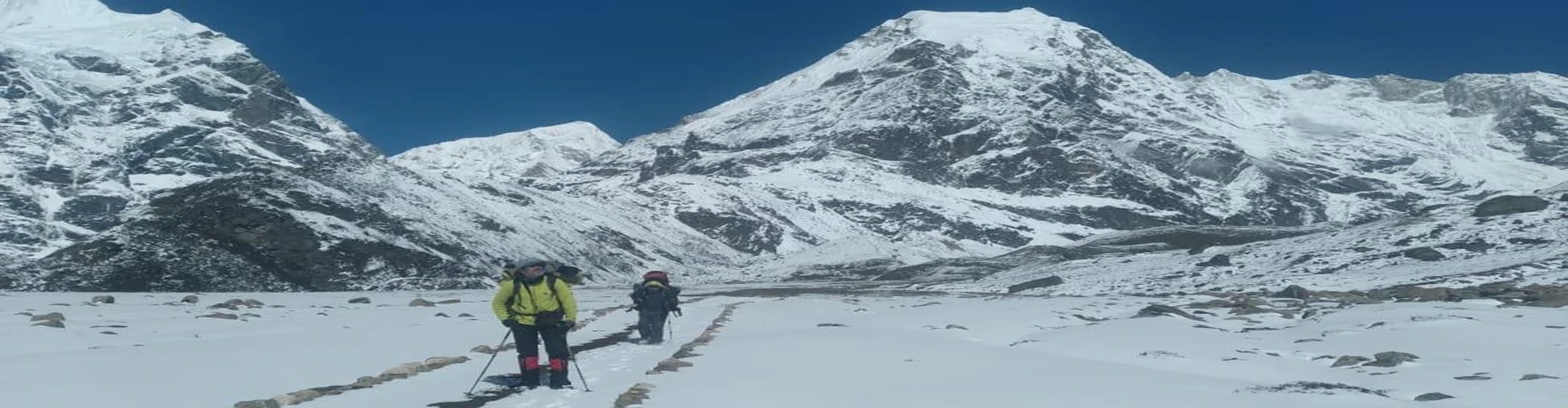
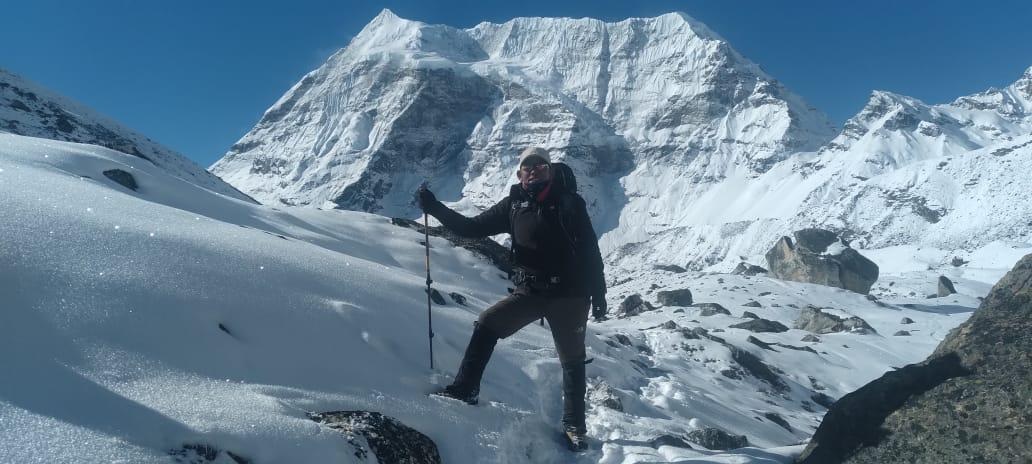
When someone first reaches the Barun Valley on a Makalu Base Camp trek, it is an experience that continues to be discussed by many people who have completed the journey. As you hike along the trail to the valley, it is as though there is no one else there, except for two red pandas watching you from their sanctuary in the bamboo stalks.
The view at Makalu (the world's fifth-highest peak) is so expansive that you will have to really tilt your head back to see the peak itself; you will feel tiny compared to the enormity of this great mountain. Having spent over many years guiding and documenting trekking experiences in the Himalayas and on the Makalu Base Camp Trek, we can say with absolute certainty that there is nothing like it anywhere else on this planet.
The current state of trekking is fascinating. For years, Makalu was a hidden treasure in Nepal's mountainous region. Only the most daring trekkers and climbers knew of this destination. That is beginning to change.
Each season, more and more trekkers from Europe, Canada, Australia, and Asia are opting out of the crowded trails of Everest and are now choosing to hike to Makalu. When you find out why they are doing this, you will appreciate their story much more.
Statistics tell the story: trekking permit records at Makalu Barun National Park show a steady increase in visitation over the past 5 years. Travel publications and adventure websites are now listing this area as one of Asia's top emerging trekking areas. Photos of Makalu being posted to social media accounts about Himalayan adventures are abundant, and many receive thousands of likes and shares every week.
Reasons for the Rise in Popularity of Makalu:
Less crowded than other trekking areas: You can walk for hours without seeing another trekking group; absolute solitude.
Unique wildlife: Red pandas, snow leopards, and more than 3,000 species of rare vegetation that cannot be found anywhere else.
Traditional villages: Rai and Sherpa living as they have for hundreds of years.
Epic mountain scenery: Get views of Makalu, Everest, Lhotse, and Kangchenjunga as part of one panorama.
The ultimate challenge: The trek that serious trekkers take after successfully completing the Trek to Everest Base Camp.
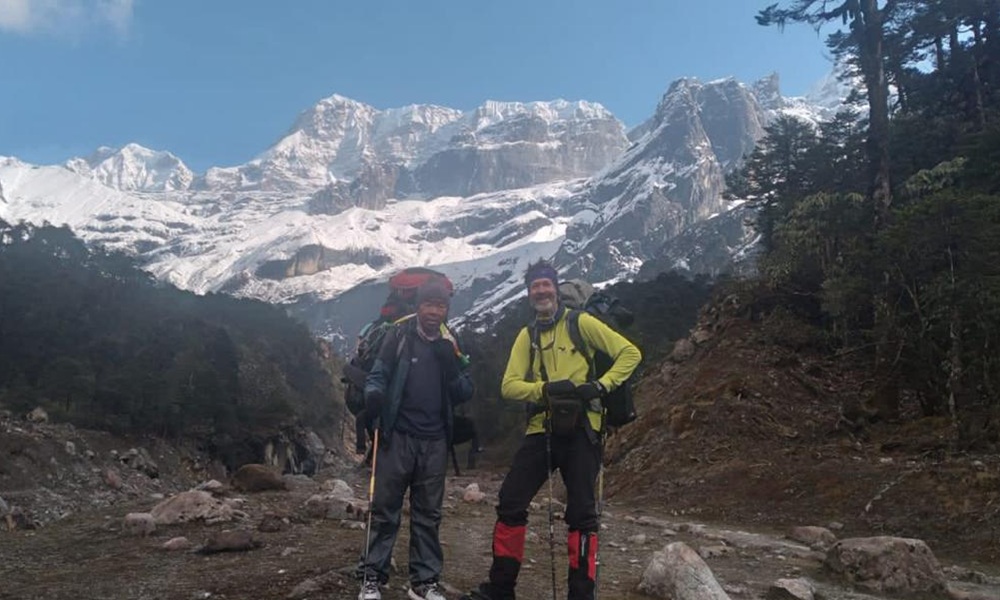
Mountain Rock Treks Team on Makalu Base Camp Trail
The Makalu Base Camp Trek is quickly becoming one of the most talked-about treks around the world, but it didn't happen overnight; it has taken years for a combination of factors to create a perfect fit with the desires of today's adventure travellers. We have had the honour of guiding hundreds of trekkers through Nepal, and the journey to this shift has been exciting - we have seen it all unfold in front of us.
The simple fact is that, while the Everest Base Camp Trek will continue to be incredible, things have changed since it started to receive more than 40,000 trekkers a year on the route. The trails have become increasingly congested with other trekkers, and the tea houses are filling up weeks to months in advance.
Because of this, the experience has become less of a wilderness trek and more of an organized group tour. Suddenly, more and more experienced trekkers have started asking each other (quietly at first) if there is a similarly beautiful, yet truly extraordinarily remote alternative, and the answer has always been the Makalu Base Camp Trek. It just took the rest of the world a while to catch on.
The Specific Triggers Behind the Popularity Surge
Social Media And The Discovery Of Makalu: Stunning Photographs, from early treks up Makalu by adventurous travellers and trekkers have made their way across the World Wide Web, and nearly instantly went viral on both Instagram and YouTube, leading to an attention-grabbing level of interest from virtually all over the world. For example, one photo of a red panda taken in Barun Valley received over 50,000 likes in less than 24 hours.
Travel Blogger Websites: Beginning around 2020 and extending through the year 2022, many popular adventure travel blogs began publishing detailed accounts of their trips to Makalu and "How-To" Articles.
Improved Access: Flight service to Tumlingtar and improvement of road access to Tumlingtar have made travel to the start of the Makalu trek much easier than it was 5 years ago.
Eco-Tourism Trend: The eco-tourism trend has placed emphasis on the environmentally friendly characteristics of product and service offerings, and Makalu has now established itself as a responsible tourism destination that provides an environmentally friendly, low-impact experience.
Post-Pandemic Adventure Reset: Because of COVID-19, many prospective trekkers have shifted their trip preferences to require a true wilderness experience over a travel destination that would be overcrowded otherwise.
Makalu Base Camp Trek vs Everest Base Camp Trek Comparison Table
Comparison Factor
Makalu Base Camp Trek
Everest Base Camp Trek
Annual Trekkers
Under 2,000 per year
40,000 plus per year
Trail Crowds
Very low, often empty
Very high, busy daily
Wildlife Diversity
Exceptional, red pandas, snow leopards
Limited
Cultural Authenticity
Deeply authentic Rai/Sherpa culture
Heavily touristic
Difficulty Level
Strenuous/challenging
Moderate to strenuous
Overall Wilderness Feel
Remote, raw, untouched
Well-developed infrastructure
Understanding What Makes Makalu Truly Special
The Makalu Base Camp Trek is incredibly special for a million reasons, both easy to explain and difficult to fully appreciate. It's incredibly easy to explain why the Makalu Base Camp Trek is so special, because everything about the trek's highlights is so special that you don't have to say much. It is also difficult to say how much it means or feels to stand there in Barun Valley with a large glacier in front of you and the southwest ridge of Makalu above you.
To help describe this further, the Makalu Barun National Park, which is the national park where the trek takes place, is one of the most biologically diverse national parks in the world. There are many wildlife and animals that have been studied and documented to be different from those you find in other parts of Nepal and even the world.
The journey between the base camp at 5,700 m (18,700 ft) and Num at 1,560 m (5,120 ft) encompasses five different climate zones (or life zones) (see above). You will begin at a warm, subtropical forest, complete with many species of orchids, ferns, and the sounds of animals living in the jungle; and lastly, you will end your journey at an icy alpine landscape (with glaciers and snowfields). The three zones you will walk through between them will be temperate forest, high forest, and alpine; each zone has its own distinct character, its own plants and animals, and its own environment.
As you walk along the trail, you will see many species of animals living there. Some of these include the following:
Red Panda: One of the world's smallest and most endangered animals lives in the bamboo and rhododendron forests of the area.
Snow Leopard: These animals are rarely seen, and it is less than once every 50 years that a person will see a snow leopard; however, if you are fortunate enough to see one, you will always have that moment to cherish.
Himalayan Black Bear: Although there are many Himalayan black bears living in the various forests of the region (especially those at intermediate elevations), please remain at least 100 yards (108 metros) away from them during your hike.
Himalayan Monal: You will notice the most colourful animal in Nepal (national bird) because of its spectacular plumage when you walk along the trail.
Musk Deer and Blue Sheep: These animals are common on the upper slopes of the mountains on the approach to the base camp.
More Than 3,000 Flowering Plants: In total, more than 3,000 flowering plants grow along the trail, including 48 types of orchids and 25 types of rhododendrons.
Makalu base Camp Trek climate zone with altitude range guide:
Climate Zone
Altitude Range
Key Characteristics
Subtropical Forest
Up to 1,000 m
Orchids, ferns, tropical birds, warm temperatures
Temperate Forest
1,000–2,000 m
Oak, maple, rhododendron, red pandas
High Forest
2,000–3,000 m
Birch, bamboo, Himalayan monal, bears
Alpine Zone
3,000–4,000 m
Meadows, dwarf shrubs, blue sheep, cold nights
Sub-Arctic / Glacial
4,000 m and above
Glaciers, snowfields, and near-zero plant life
Mountain Views That Rival Anything in the World
The views when hiking the Makalu Base Camp Trek are second to none as well. The Makalu Base Camp Trek is not just hiking to one mountain, but rather is a multi-peak trek with multiple iconic peaks of the world seen along the trail to base camp.
From certain points on the trail you will be able to see five of the fourteen 8,000m (26,246ft+) peaks in the world at one time: Makalu (8,485m/27,838ft), Everest (8,849m/29,029ft), Lhotse (8,516m/27,940ft), Kangchenjunga (8,586m/28,169ft), and Cho Oyu (8,188m/26,864ft). There is no other trek in Nepal that has this many of the world's highest peaks (over 8,000m (26,246ft) tall) located in one place. Nima Dorje, our senior trekking guide, enjoys seeing the expression on the trekkers' faces as they see these views for the first time.
At Makalu Base Camp, you will be able to see the breathtaking southwestern face of Makalu and experience the sheer size and scale of this vertical cliff of ice and rock ascending more than 3,000m (9,842ft) from your feet to the summit in a single sweep of the eye. Most of our trekkers describe this experience as one of the most awe-inspiring and unforgettable moments they have ever had in their trekking career, and there are no adequate words or photographs that can adequately portray it.
Is the Makalu Base Camp Trek Safe?
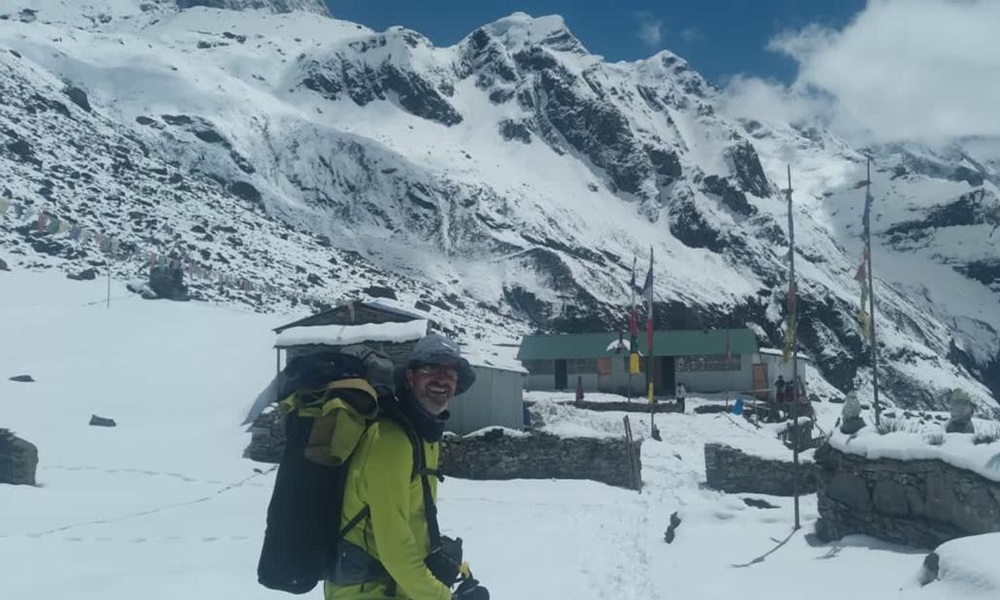
Mountain Rock Treks Team enjoying panoramic views at Makalu Base Camp
For your safety and preparation purposes, we would like to provide a full and honest understanding of what your upcoming trek may entail. One of the most frequently asked questions by trekkers before embarking on such an expedition is whether it is safe or not.
The Makalu Base Camp Trek is considered safe. However, it does require a great deal of respect, time to prepare, and willingness to be flexible in order to complete the trek. Based on our experience as guides in remote areas of the Himalayas throughout the years, we feel that providing trekkers with an honest account of their upcoming expedition is the best way for them to prepare for some sort of adventure.
The lower portion of the trek, from the start (Num) through the mid-altitude camps, is straightforward for the experienced trekker who has taken the time to prepare adequately and has access to a good local guide.
There are established paths along this portion of the trek, and there are tea houses available to support trekkers; the main challenges encountered are manageable gradients and traversing rivers.
Conversely, the upper portion of this trek, which consists of the upper Barun Valley and the approach to base camp, will be a very different experience due to its relative seclusion, remote high-altitude wilderness location with very limited rescue options, potential weather changes, and physical demands associated with the altitude.
Safety overview of each Makalu Base Camp trek section
Trek Section
Safety Level
Main Challenges
Recommendation
Num to Tashi Gaun
High
River crossings, trail erosion
Accessible with good fitness
Tashi Gaun to Khongma
Moderate
Steep ascents, altitude gain
Acclimatisation days advised
Barun Valley Approach
Moderate
Remote terrain, weather changes
Expert guide essential
Makalu Base Camp (5,700 m)
Requires care
Altitude, glacier hazards
Only with guide and preparation
Altitude illness is also an important health risk on this trek. The altitude of 5700m means that your body will need to make adjustments to the altitude of the air pressure, which will change drastically. You must plan how to travel to the higher elevations in a gradual manner. You should travel slowly, and if you begin to experience any of the symptoms of altitude illness (severe headache, nausea, difficulty walking, etc), you should stop ascending.
In addition, we add extra days to our itinerary to allow time for acclimatization, and our guides are also trained to recognize and treat altitude illness. One of our most experienced route specialists, Kiran Rai, has a full range of first-aid supplies, and he stays in radio contact with the team throughout the trek.
Safety Essentials for the Makalu Base Camp Trek:
To have a local guide to climb above 5700 meters, it is necessary to hire a licensed local guide because the local knowledge is invaluable and can save your life.
You need to take altitude medication and make sure that if your guide needs to administer it to you, he knows how to do so.
You need to have adequate travel insurance that will cover your evacuation via helicopter from high altitude.
You need to inform someone about your plan; register at the national park office and leave your plan with someone at home.
Be prepared to react to weather conditions during your trip; weather in Makalu can change quickly, and therefore changes to your plans may need to be made.
Essential Preparation and Fitness Tips
When it comes to preparing for the Makalu Base Camp Trek, we say the same thing to every trekker who asks: you should begin your preparations sooner than you think you will need. This trek is not a stroll through the woods; you're going to be trekking continuously for 18 to 22 days at high altitude, and a body that is truly fit and a mind that is resilient will ensure you complete this arduous trek. If you prepare wisely, almost anyone who is in good health will be able to make this trek.
The most important thing that you can do to prepare your body for this trek is to train on hills. Running on flat roads will not train your legs and lungs to handle the constant up and down of the Makalu trek. You should find the steepest hills that are near you and run up and down them while carrying a heavy backpack. This is the most effective way to develop your legs and lungs specifically for trekking. You should start training on hills at least 4 months before leaving for your trek.
Core Training Plan for Makalu Base Camp Trek:
Cardio Endurance: Get cardiorespiratory endurance training in the form of running, biking, and/or swimming about 4-5 times a week for ~ 60 minutes.
Hill Training: Hike weekly on steep terrain with 10-15 kg of body weight in a pack.
Leg Strength: Squats, lunges, step-ups, and calf raises performed to improve leg strength will also help build leg strength.
Core Stability: Do exercises such as planks, mountain climbers, and back extensions to build core stability of your spine and protect it when you are on the trail for long periods of time.
Mental Conditioning: On days when you train, work on your mental conditioning, for the mental training aspect is as important as the physical part.
Progressive 4‑phase high-altitude trek training plan
Training Phase
Duration
Focus | Details
Benefit | Outcome
Foundation Phase
Months 4–3 before trek
Cardio base / General fitness / Daily walks | 30–45 min/day, 4–5 sessions/week
Build aerobic capacity | Establishes base as VO₂ max improves ~10–15% in 8 weeks
Building Phase
Months 3–2 before trek
Hill hikes / Strength training / Stair climbing | 2–3 hikes/week with 500–800 m elevation gain
Trek-specific fitness | Leg endurance as quads/glutes handle 80% of trail load
Peaking Phase
Month 1 before trek
Long days with pack / Back-to-back hikes / Altitude simulation | 6–8 hr hikes with 8–10 kg loaded pack
Endurance and toughness | Mental resilience as back-to-back days mirror real trek conditions
Arrive fresh and recovered | Peak readiness as muscles repair fully within 10–14 rest days
Permit Arrangements for Makalu Base Camp Trekking
Our company believes that organizing your permits and logistics prior to leaving your home for the Makalu Trek is one of the best investments you can make on your trek. There is nothing worse than dealing with permit issues, transportation problems, or not knowing what you need to enter a country at the beginning of an adventure. We have guided hundreds of trekkers through this process, and as such, have made sure that it is completely streamlined by providing all of the steps you need to take.
To do the Makalu Base Camp Trek, you need two types of permits: the Makalu Barun National Park Entry Permit and the TIMS Card. You can get both permits prior to starting your trek in Kathmandu to have them inspected at each entry point into the national park. We can handle the permits for you, so there is no need to worry about them when you arrive at the trailhead.
Permits and Documents Required
Makalu Barun National Park Permit ($30)
TIMS Card (15-20 USD, agency vs independently issued card)
Passports and Copies
Travel Insurance (80–150 USD) for trek above 4500M and helicopter evacuation
Essential permit and document checklist for the Makalu Base Camp trek
Document / Permit
Validity
Requirement | Status
Approx. Cost | (USD)
Handled by MOuntain Rock Treks?
Important Tip | Detail
Passport
6+ months validity
Mandatory | No exceptions at any checkpoint
N/A | Traveller responsibility
No (traveller)
Carry original + 4–6 photocopies | Copies needed at every permit checkpoint
Nepal Visa
Valid for stay duration
Mandatory | Available on arrival at TIA
$30–$125 | 15-day $30 / 30-day $50 / 90-day $125
Assistance provided
Obtain on arrival in Kathmandu | Bring passport photo + USD cash
Makalu Barun National Park Permit
Entire trek duration
Mandatory | Checked at park entry gate
~$30 | SAARC nationals pay less (~$15)
Yes (included)
Must be arranged before entering park | No permit = no entry, no exceptions
Restricted Area Permit (RAP)
Based on itinerary (7+ days)
Mandatory | Makalu region is a restricted zone
$10–$20/day | Higher in peak season (Oct–Nov / Mar–Apr)
Yes (included)
Must be arranged via licensed agency only | Solo applications not accepted
TIMS Card
Entire trek
Mandatory | Trekkers' Information Management System
~$20 | Agency trekkers pay lower rate
Yes
Issued by TAAN or NMA in Kathmandu | Carries emergency contact + itinerary info
Licensed Guide Requirement
Entire trek
Mandatory by law | Enforced at all checkpoints
$30–$40/day | Guide fee + insurance included in package
Yes
Solo trekking not permitted without guide | Govt-certified guides only accepted
Passport Photos
Recent photos
Required for permits | Needed at 3–4 permit stages
Minimal | ~$1–2 per set in Kathmandu
No (traveler)
Bring 4–6 copies from home | Saves time at permit offices in Kathmandu
Suggested 18 to 22 Day Itinerary for Makalu Base Camp Trek
Why We Plan Each Step With Acclimatization First
When planning the Makalu Base Camp Trek, your most important decision will be your speed. From 1320 m in Kathmandu to 4870 m at Base Camp, that's a total ascending trek of just over 3500 m through very remote and physically challenging mountains. For your body to acclimatize at each stage during your ascent, you must schedule enough time to do so, and therefore, a trek that feels a little too slow for you should always be preferable to attempting a trek that is too fast for you and, as a result, will create problems for you.
The basic guideline that governs everything along this route is very simple: ascend to high altitude but stay at low altitude at night, and never rush. The required acclimatization day, which we will have scheduled, is on Day 7 at Kauma (3470 m), and you will be required to use this day for acclimatization; this is not negotiable. Even if you feel very healthy that particular day and have good energy, you should still take the full rest day; this individual day of rest can be the difference between a safe and enjoyable/successful summit and a potentially disastrous one for you. We plan to take a different route (Pakauwa, Bumling) back down from the summit, thus allowing you to experience a different view going back down from the summit, and have a much less severe final descent to Tumlingtar than going up via the normal ascent route.
Stage-by-Stage Highlights
On day one, you will arrive at Tribhuvan International Airport in Kathmandu and be transferred to your hotel so you can rest after your journey.
On day two, you will receive a full pre-departure briefing, have your permits checked, review your gear, discuss altitude safety, and potentially do a short tour of Kathmandu's historical sites.
On day three, you will fly to Tumlingtar and then drive through Khandbari to Num (the entrance to Makalu Barun National Park).
On day four, you will descend to the Arun River, cross the suspension bridge, and ascend to Seduwa (which is the last stop where hikers can register for the park).
On day five, you will hike through forests and villages along high ridges to Tashi Gaun, the last permanent village in the valley.
The ascent to Kauma will be your first major climb of this trek. This is the first time you will have climbed to a large elevation and have so much area around you to view.
On day eight, you will hike over ridges, through rhododendron forests, as well as over Ghungru La, and arrive at Mumbuk.
On day nine, you will have a mix of trekking through fir forests and trekking down the Barun Khola River toward Neha Kharka.
Day ten will be the most demanding hike so far, with a trek deep into the Barun Valley and up to Sherson.
Day eleven will conclude with your arrival at Makalu Base Camp; trekkers will be able to see the size of Makalu from Base Camp.
On day twelve, you will have time to explore and see just how large Makalu truly is.
Day thirteen, you will again be descending from the Barun Valley back to Neha Kharka.
On day fourteen, you will descend further to Mumbuk, then finally to Neha Kharka.
On day fifteen, you will descend to Kauma.
On day sixteen, you will complete your descent and return to Tashi Gaun.
On the seventeenth day, we will head off the main trail and take a side trail to Pakuwa.
On the eighteenth and nineteenth days, we will continue our descent to Bumling and Tumlingtar.
On the twentieth day, we will fly to Kathmandu.
The twenty-first day will be a free day for resting, shopping, or sightseeing.
Highlight Stops: Must-Experience Villages and Viewpoints of Makalu Base Camp Trek
Exploring the Makalu Valley Trail
In addition, what stands out is how naturally the whole journey unfolds according to your itinerary, from friendly, warm Rai villages to untamed alpine wilderness to the breathtaking, allusive beauty of Makalu itself. The mystique of this place lies in the very slow but beautiful transformation of the landscape; not only do you finally come to the Himalayan region, but you will also evolve into the region.
The trek actually begins at Num. This location delivers the first sense of remoteness from civilization. Num is situated above two deep valleys in an area of terraced fields, which allows the trekker to gain a perspective on rural living; there are no signs of recent modernization or development - the land remains authentic and unscathed by new mass tourism.
Trekking from Num down to Sedua, then up to TasGaon, builds both the physical rhythm and anticipation for the next section of the trek. The trek passes through many different terrains, including dense forest and cultivated land; along this route to TashiGaon, you will move in and out of the last two permanent settlements in the valley.
TashiGaon marks a major milestone not only in its geographical aspect but in its emotional impact. Once you leave this village, you'll soon find there's no longer the hustle and bustle of daily life along the trekking route, and instead you will be enjoying the peace and solitude of the beautiful, remote places. The trek from TashiGaon up to Kauma is perhaps the most stunning stretch of the trek, as you will start to notice that your surroundings are changing into completely different ones with fewer trees and huge mountains, and that you finally comprehend just how massive the Himalayan Mountain range is.
After Kauma, you will receive your first real glimpse of what it is like to be inside the Himalayas as the trail passes through Mumbuk & NehaKharka. The scenery becomes more rugged and embraces the wild nature of Mother Earth, thus creating a different atmosphere than in the lower villages cold, remote, and surrounded by silence, with enormous expanses of land will create an awesome effect within you on your way to Sherson.
As you approach Sherson, the temperature drops, the landscape turns into a glacial valley, and exposed ridgelines are present everywhere. You're getting closer to something truly incredible; thus, the anticipation continues to build in you.
The trekking route's defining highlight will occur when you reach Makalu Base Camp. This is where you will be enveloped by giant snow-capped mountains and traverse through the moraine to stand at the foot of one of the tallest complexes in the world. Not only will this serve as a lookout point, but it will also bring you an experience of what it must feel like to walk in the power of these magnificent and remote mountains. The beautiful Barun Valley that lies below Makalu BC adds even greater emphasis to the ruggedness of the Himalayas and their absolute lack of human presence on this earth.
Key Highlight Stops on Your Itinerary:
Num: Classic terraced landscapes at a remote hillside village; first true mountain atmosphere.
Sedua & TashiGaon: Cultural heart of the Trek; last permanent settlements.
Kauma: First expansive views of the Himalayas; high altitude acclimatization point.
Mumbuk & Neha Kharka: Quiet alpine zones with increasing wilderness.
Sherson: Exceptional high altitude access through glacial terrain.
Makalu Base Camp: Your ultimate destination surrounded by magnificent Himalayan peaks.
Signature viewpoints on the Makalu Base Camp trail
Stop / Viewpoint
Elevation
Key Highlight | Detail
Num
~1,560 m
First remote ridge views | Authentic Rai village life
Tashigaon
~2,100 m
Last permanent settlement | Cultural transition point
Kauma
~3,470 m
Acclimatization ridge | First big mountain exposure
Overcoming Makalu Base Camp Challenges: Cold, Remote Terrain, and Altitude
The trek is tough, and we want to be completely upfront with you about the challenges (so that you can prepare for them and enjoy the trek). The Makalu Base Camp Trek is not an easy trek. It involves long days, steep terrain, high altitude (over 4,000 m), and remote locations. However, through many years of guiding, we have learned that each of your accomplishments on this trek will be a part of your lifelong story.
The greatest challenge is the altitude, and it deserves the most amount of respect. As you ascend above 4,000 metres, the amount of oxygen in the air decreases significantly each time you inhale. As a result, your body has to work harder for everything: walking, sleeping, and digesting food. The key to a successful expedition is to never rush your ascent, drink more water than you think you will need, and inform your guide immediately if you feel uncomfortable.
safety challenges on the Makalu Base Camp trek
Challenge
Early Warning Signs
Immediate Action | Priority
Prevention | Effectiveness
Altitude Sickness (AMS)
Headache, Nausea, Dizziness, Fatigue
Rest 24 hrs, Hydrate 3–4 L/day | Descend 300–500 m if severe |
Darkening sky, Wind gusts >30 km/h, Temp drop >5°C, Thunder
Seek solid shelter, stop all exposed trekking, alert guide | No movement until clear |
Start by 5–6 AM daily, monitor forecast (Windy/IMD), carry rain shell always |
Early starts avoid ~80% of storm exposure
How to Stay Secure on the Trail?
As a travel operator on the Makalu Base Camp Trek, every decision revolves around safety and is made with safety at the forefront of my mind. This is not merely a marketing quote, but truly a principle we have lived by through many years of experience travelling through remote mountain environments and guiding others within these environments. Rest assured, by following the correct safety processes, you can spend much more time enjoying your experience simply because you have confidence that your knowledge and preparation will keep you safe.
The single most important safety choice you can make when trekking on this trail is to hire a licensed and qualified local guide. We do not recommend doing this because we want to give the local guides business; we recommend hiring a guide to navigate this remote and difficult region because the Upper Makalu Trail requires advanced navigation skills, an ability to read and interpret the weather, medical training, and expertise in responding to emergencies. These skills cannot be learned from a guidebook or Youtube video.
The breathtakingly isolated upper Makalu trail is both the greatest attraction and the most challenging aspect of this trek. There is no access to rescue services, no medical facilities along the way, and very limited phone signal on the upper Makalu trail. This is why it is absolutely mandatory for any experienced serious trekkers to hire a competent, experienced local guide before beginning their trek on the Makalu trail. Our guides will always be carrying satellite communication devices and a complete set of first aid supplies at all times during the trek.
Non-Negotiable Safety Rules for the Makalu Trek:
Always Trek with a Licensed Guide: Especially in the upper Barun Valley and base camp areas.
Check Your Health Everyday: Look for altitude symptoms before moving to a higher altitude.
Get Full Coverage Travel Insurance: Check your travel insurance policy for helicopter evacuation above 6000 metres.
Regular Communication: Use a satellite phone or GPS messenger to communicate with people in remote locations.
Start Your Day Early: Weather conditions are usually more stable in the morning than after lunch.
Drink at Least 4-5 Litres per Day: Dehydration can accelerate altitude sickness; therefore, protecting yourself with proper hydration will also protect you from altitude sickness.
Core safety practices on the Makalu Base Camp trek
Safety Practice
Why It Matters
How We Implement It
Licensed guide
Expert navigation, medical knowledge, emergency response
All our guides are government-certified
Weather monitoring
Makalu weather changes fast, advance warning is critical
Daily forecast checks + local contacts
Hydration protocol
Prevents altitude sickness and maintains energy
Guides remind trekkers every 30–60 minutes
Acclimatisation days
Allows body to adapt before gaining more altitude
Built into every itinerary we create
Emergency protocols
Enables fast response if someone becomes ill
Satellite phone, evac contacts pre-arranged
What to Expect: Daily Life, Teahouses, and Food on the Trail
There tends to be an overall pleasant rhythm to living in the neighborhoods of Makalu Base Camp after a few days' visit. You wake up to the sound of the wind and the distant sound of a river, but no light yet, because it is still early morning. Your day begins with breakfast consisting of simple food (breakfast will fill your stomach). You will then spend 7-8 hours walking through some of the most beautiful scenery in the world. You will arrive at the teahouse to eat a hot meal as the sun sets and then sleep soundly under cool mountain air. You will repeat this for 18 days, and when you return home, you will be a changed person.
The tea houses along the Makalu trail are much simpler than those along the Everest route; in general, this is a good thing. All of the rooms are made of wood and have thick blankets. There is a shared dining area that is heated by a wood-burning stove; when the sun goes down, you will find many trekkers congregating there for the evening. The physical warmth and friendliness of the teahouses at this location cannot be matched by any hotel or resort.
Daily Life Essentials on the Makalu Trail:
Morning: Get up early and drink some hot tea. Enjoy a simple yet filling breakfast before heading out for the day.
Trekking: Expect to trek 6 to 8 hours a day, including some time for enjoying the scenery.
Evening: Spend the evening in a teahouse, relaxing with others after sharing stories, enjoying a hearty dinner, and then going to bed early.
Food: Dal Bhat, noodle soup, Tibetan bread, vegetables, eggs, and hot drinks will be the only types of food you will eat along the way.
Water/Hygiene: You will need to carry purification tablets or filters with you; the tea houses will provide you with hot water for a fee.
Typical meals and nutrition tips on the Makalu Base Camp trek
Meal Type
Typical Options | Details
Altitude Consideration | Tip
Breakfast
Porridge / Eggs / Tibetan bread / Pancakes / Hot tea | ~400–600 kcal recommended before trek
Eat well as long day ahead | Never skip as energy burn: ~500 kcal/hr at altitude
Lunch
Noodle soup / Dal bhat / Fried rice / Trail snacks | Aim for warm, carb-heavy options
Quick stop, don't get cold | Stay under 30 min as body cools rapidly above 4,000 m
Dinner
Dal bhat / Pasta / Soup / Veg dishes / Momos | Dal bhat most reliable & filling option
Largest meal, essential for recovery | Eat hot as muscle repair needs 600–800 kcal post-trek
Hot Drinks
Tea / Coffee / Ginger honey lemon / Hot chocolate | Ginger lemon best for nausea relief
Order constantly, key for hydration | Avoid alcohol as target 3to 4 L fluid/day above 3,500 m
Snacks
Nuts / Energy bars / Chocolate / Biscuits | Pack 200–300 kcal per snack stop
Carry from Kathmandu, limited at altitude | Pack extra as availability drops ~90% above 4,500 m
Dipak starts to step up from porter, guide, and trekking leader to the company owner. Sometimes he share his experience with others as well as wrote in local travel news. Most of time he spend his time on mountain and his company.