Australia's ultimate adventure travel destination, Nepal, has become an epitome of an adventure travel destination for the Australian traveler in 2026. It has world-class and abundant Himalayan destinations that provide affordable and immersive cultural experiences. Nepal, which encompasses both India and Tibet, serves as the gateway to the Himalayas and has many iconic trekking routes (Everest Base Camp and Annapurna Circuit) that offer unparalleled trekking difficulty when compared to the terrain of the Australian landscape. Therefore, adventure-seeking Australians can indulge in high-altitude epic adventures; rafting, paragliding, and mountaineering are all possible in Nepal.
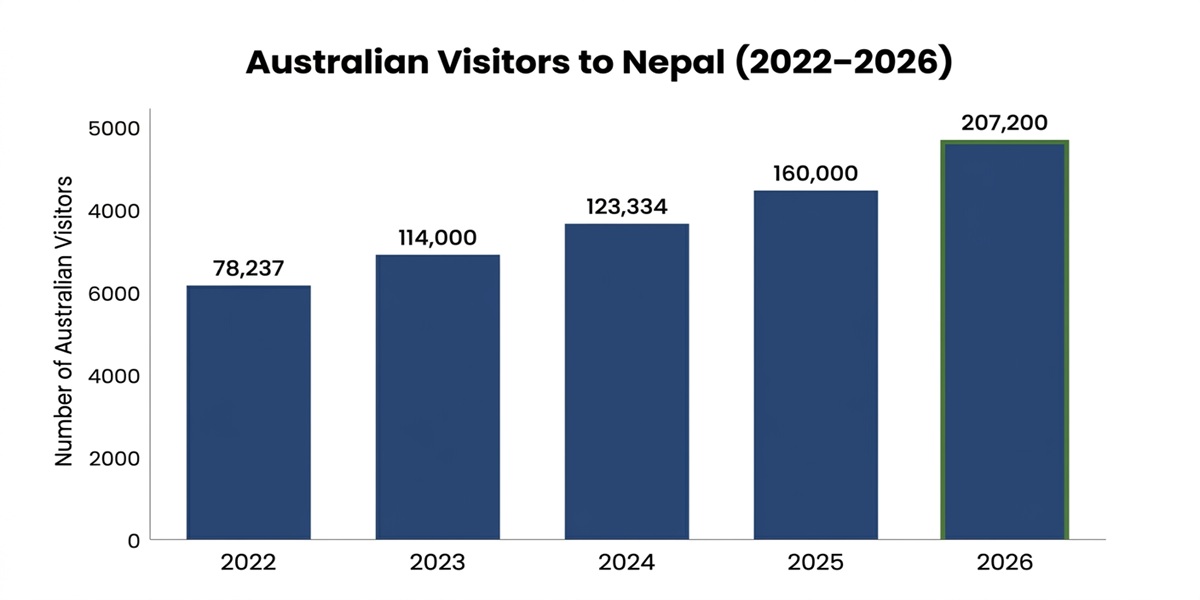
Nepal's tourism industry is experiencing unprecedented growth in the number of travelers visiting this country between 2022 and 2026. Factors contributing to this growth include improved air access from Sydney and Melbourne, increased infrastructure for trekking, and the increasing popularity of nature-based experiential travel. In addition to the abundance of adventure activities, Australia is attracted to the concentration of offerings that are complemented by a wealth of opportunities for exploration, interaction with local communities, and the opportunity to experience Nepal's deeper spiritual character. Finally, Nepalian hospitality offers very welcoming service.
Incredible value for longer, more meaningful trips compared to other global destinations. With incredible scenery (mountains to valleys), integrated with the outdoor passion of Australians, 2026 will create many wonderful memories combining adrenaline, authenticity, and natural wonder.
Why Nepal Appeals to Australian Adventure Travelers?
Australia has many great places to trek and climb mountains, but Nepal has two of the biggest mountains in the world: Mount Everest and Annapurna, which will provide an experience that can not be found in Australia’s lower mountains.
In addition to this, the terrain and extreme weather are much different in Nepal compared to Australia; this provides Australian travelers with a challenge beyond what they experience when they travel to other outdoor adventure destinations.
Considering that Australians enjoy outdoor activities, such as hiking and camping, it is only natural for Australians to want to travel to a place like Nepal where they can experience an adventure, such as climbing Mount Everest.
Nepal’s trekking options include everything from short, easy treks to extreme, high-altitude treks. Therefore, there will be an adventure for everyone in the country.
Nepal, by comparison, boasts cheap trekking packages, affordable lodgings, and cheap food compared with both Europe and New Zealand, so it offers good bang for the traveler's buck.
The trekking paths are very established, you have a guide with you, and teahouses to stay in along the way. So, there is no camping involved, for example. Thus, the balance between adventure and luxury is just right for travelers in this area.
Along with the adventure aspect of the country, Nepal has an in-depth cultural heritage with many temples and monasteries, as well as traditional villages found throughout the country.
Travelers to Nepal can expect to find experiences unique to Australia, such as Yak encounters, flights over the Himalayas, and high-altitude trekking.
Australian travelers will experience warm hospitality from the local people of Nepal, which makes them feel welcome and comfortable during their time in Nepal.
In addition to trekking, many adventure sports are available to travelers, such as white-water rafting, paragliding, and mountain biking, which will provide an added level of excitement.
The variety of landscapes in Nepal, including mountains and jungles, gives tourists the opportunity to see different types of terrain all within their visit to Nepal.
The moderate weather (especially in the trekking season) provides an idea and a break from the very hot climate of Australia. Many Australians who want to find a true adventure and a place that is less crowded enjoy discovering the many remote/untouched areas in Nepal.
Adventure, culture, price, and originality are all reasons why Nepal is such a popular destination for Australian adventure travelers.
How Many Australians Have Been Travelling to Nepal Each Year?
No of Australians Traveling to Nepal
Year
Number of Australian Visitors
2022
26,894
2023
38,799
2024
43,980
2025
49,357
2026*
Increasing trend (early growth seen)
In the last few years, there has been a gradual increase in the number of Australians traveling to Nepal and thus its rising attractiveness as a destination for adventure travel experiences. Based on statistics from tourism, it is estimated that around 26,894 Australians visited Nepal in 2022, increasing to 38,799 in 2023, 43,980 in 2024, and approximately 49,357 in 2025.
In 2025, official statistics indicate that approximately 37,550 Australians visited Nepal, making them one of the more significant Western markets for Nepal. The increase in the number of visitors, coupled with the recovery from the pandemic, indicates a significant increase in interest by Australians for the travel experiences offered in Nepal.
The appeal of adventure tourism is the most significant reason why Australians travel to Nepal; trekking in the Himalayas, mountaineering, and nature-based tourism are all significant contributors to the popularity of Nepal for Australian travelers. Furthermore, iconic routes such as the Everest Base Camp and Annapurna, combined with Nepal's unique blend of culture, mountains, and affordability, continue to attract Australians to visit.
Australians generally take longer holidays and spend more money; many Australians combine trekking with cultural tours, volunteering, or spiritual tourism. In addition, the majority of Australians visit during the peak trekking season (September - November) due to favorable weather and good visibility of the mountains.
How Affordable is Nepal Adventure Compared to Other Global Destinations for Australians?
Daily Adventure Costs in Nepal
Nepal is regarded as one of the cheapest places to go on an adventure (for Australians) in general. The average cost of trekking is USD 40 - USD 120 (approximately AUD 60 - AUD 180), depending on how comfortable you want to be. Budget travelers can expect to pay AUD 60 - AUD 90/day, whereas those on mid-range guided treks can expect to pay AUD 130 - AUD 180/day. All of these costs include accommodation, meals, permits, and a guide, which is typically bundled at this low a cost in other locations.
Total Trip Cost vs Global Destinations
The average 10 - 14-day trek in Nepal costs approximately AUD 900 - AUD 2,700. Nepal's multi-day trekking experiences are generally priced between Australian AUD 4,000 - AUD 7,000 (or higher) in other locations, such as New Zealand and Patagonia, and are often booked through international tour operators and travel agencies. As a result, Australians typically save up to about 50% - 65% on their trip to Nepal compared to a similar and/or even more well-known mountain experience (than what is found in New Zealand or Patagonia).
Why Nepal Offers Better Value for Australians
The main reason to visit Nepal is due to its very low cost of living, which is driven by its inexpensive, local teahouse system, and low price of guides. Daily costs (food $A15 to $A35; lodging $A5 to $A20) are well below those of Western countries, giving travelers high-altitude adventure at a fraction of prices available anywhere else in the world. As a result, Nepal is definitely one of the best value options for Australian tourists.
How Australians Can Travel Via Flights from Australia to Nepal?
Caption
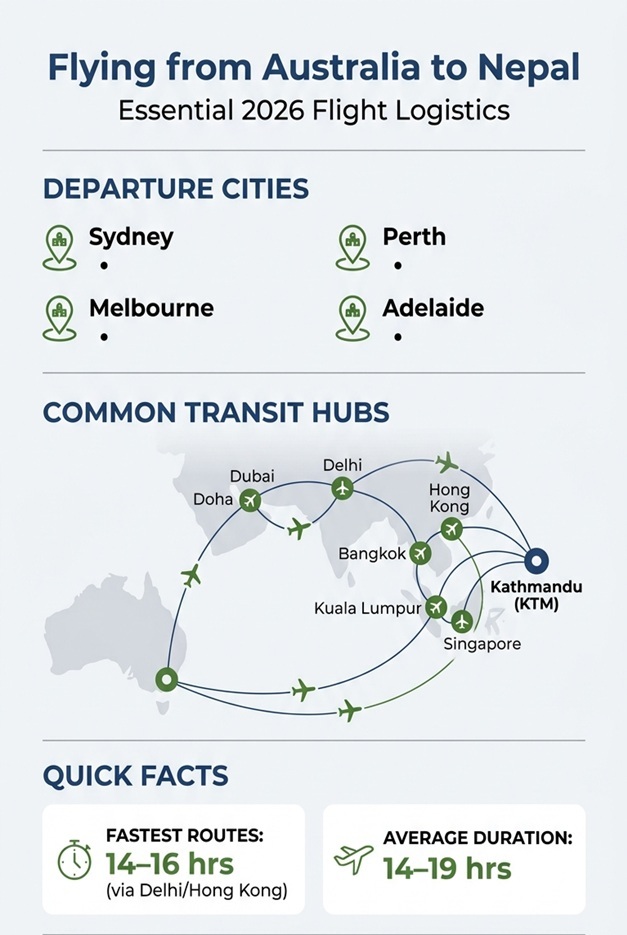
Traveling from Australia to Nepal is easy, but there are no direct flights, requiring flight connections between the two countries. Travel from Australia usually ends at Tribhuvan International Airport in Kathmandu; however, total travel time varies from 14 to 19 hours based on traveling with different airlines and layovers.
Major departure cities (Sydney, Melbourne, Brisbane)
Important Departure Points in Australia for Flights to Kathmandu (Commonly Departing Cities for International Flights are Sydney, Melbourne, and Brisbane). For most Australians, the beginning of their journey is usually from one of these three Australian cities - Sydney, Melbourne, or Brisbane, which have the greatest number of international connections to Kathmandu. Other cities like Perth and Adelaide frequently serve as starting points; however, they typically offer shorter travel distances because air travel from these cities to Nepal is most commonly routed through Southeast Asia.
Connecting flights to Kathmandu via Asia hubs
When traveling from Australia to Kathmandu, you will typically connect through one of the major Asian transit hubs, which generally are Singapore, Kuala Lumpur, Bangkok, Delhi, Hong Kong, Doha, or Dubai. Because of the proximity of these airports to Kathmandu and their ability to provide speedy connections onward to Kathmandu, you will find that, although Kathmandu is located in a difficult mountain area and there are no direct flights between Australia and Kathmandu, it is quite easy to get there using the extensive transit facilities provided by these airports.
Average flight duration and best airlines
When flying from Australia to Nepal, expect your total travel time to be approximately 14-19 hours. If you need to make any layovers along your journey, those layovers may add time to your overall travel time as well. Airlines that frequently operate between Australia and Nepal are: Singapore Airlines, Qatar Airways, Emirates, Air India, Malaysia Airlines, and Cathay Pacific, as they all provide reliable long-distance travel and good connections throughout Asia.
Common transit hubs for Australia–Nepal flights
Changi Airport in Singapore, Kuala Lumpur International Airport in Malaysia, Hamad International Airport in Doha, Dubai International Airport, Suvarnabhumi Airport in Thailand, and Indira Gandhi International Airport in New Delhi, India, are the most common airports where Australian travelers typically layover on their way to Nepal from Australia. These are also the main airports connecting Australia and Nepal, and they service multiple connections daily, providing you with flexibility when planning your travel.
No direct flights from Australia to Nepal (current situation)
There are no flights from Australia to Nepal that do not require one or more layovers, and this is standard for all airlines operating between Australia and Nepal in 2026 and is the most efficient way of traveling to Kathmandu from Australia.
Cheapest and most efficient flight routes in 2026
Some of the cheapest routes are through Singapore, Kuala Lumpur, or with both carriers, Singapore Airlines and Malaysia Airlines, having comparable fares and schedules. You can expect to pay between AUD 350 – 800 (USD 200-500 approx.) for a one-way flight, depending on when you purchase your ticket or what season it is.
Fastest flight routes from Australia to Kathmandu
If you want to get to Kathmandu quickly, your best option is to fly through either Delhi or Hong Kong, with your total flight time being 14 – 16 hours (including layover). If speed is more important than price, then these routes will work for you.
Airlines operating Australia to Nepal routes
Major airlines flying from Australia to Nepal are: Singapore Airlines, Qatar Airways, Emirates, Air India, Malaysia Airlines, and Cathay Pacific. All of these airlines have extensive worldwide networks and offer comfortable long-haul travel.
Flight costs from Australia to Nepal
Flight costs differ according to the time of year you're flying to, which airline you're flying with, and how far in advance you book your flight. On average, you'll find flight prices during different seasons to be:
Budget Airfares: $350-600 AUD (for those who book their flights early or use promotion codes)
Standard Airfares: $600-1200 AUD (the most popular and common)
Peak Season Airfares (Sep - Nov Trekking Season): $1200-1800 (or higher)
Overall, the average round-trip airfare between Australia and Nepal typically falls between $600-1800, but this could change based on the demand and your time frame for travel.
Nepal Visa Requirements for Australians in 2026
For Australian travelers visiting Nepal, you will find that it is generally simple to gain entry into the country, and most Australians who have an Australian passport are eligible for a Tourist Visa, whether applying upon arrival or through an online system (eVisa) prior to arrival. Generally, Nepal is quite welcoming of tourists, so it is very rare that anyone will be denied entry to the country as long as the visitor has the proper documentation.
Do Australians Need a Visa to Enter Nepal?
Yes, Australians must obtain a Tourist Visa (either on arrival or before arriving in Nepal) to be able to enter Nepal. However, there are no exceptions or "Visa-free" entrances allowed into Nepal from any country, and the requirements for getting your visa are simple and have been created for tourists, trekkers, and adventure travelers.
Nepal Visa Options: Visa on Arrival vs Online (e-Visa)
There are 2 ways that Australians can apply for their visa:
Apply for a Visa on Arrival at Kathmandu's Tribhuvan International Airport, or
Apply for a Visa Online (recommended) - eVisa prior to leaving for Nepal.
Although both options provide the same visa type, the waiting time on arrival will be shorter if the visa has been approved prior to departure.
How to Apply for a Nepal Tourist Visa Online (Official Website)
If you plan to travel to Nepal, you can complete the visa application online at the official Department of Immigration Nepal web page before leaving for Nepal. Once the visa form has been submitted, you will receive a receipt indicating that your application has been accepted and that you will require a copy of this receipt to present at the airport when boarding your flight.
Step-by-Step Guide to Getting a Visa on Arrival at Kathmandu Airport
If you have selected the option to get your visa on arrival:
Complete the visa application form upon arrival (either from the Kiosk at the airport or from the Online Tablet)
Pay the applicable visa fee at the relevant visa payment counter
Present your passport, receipt, and a passport-sized photo at the appropriate visa processing counter
Obtain your Nepal visa stamp and proceed to immigration
The entire process can take anywhere from 15 to 45 minutes, depending on the number of people in front of you at the time you arrive at the airport.
Official Help & Contact Information (Very Important)
If you have any questions or require clarification, you can contact the official authorities as follows:
Department of Immigration (N.K.T., Kathmandu) Phone: +977-01-4429660 Email: [email protected] / [email protected] Kalikasthan, Kathmandu.
Australian Embassy (only for Australian citizen services) Phone: +977-1-437-1678 Emergency: 61-2-6261-3305 (Australia) The Embassy does not issue Nepal visas, but is able to assist Australians with emergencies while they are in Nepal and/or provide assistance with entry to Nepal.
Alternative: Applying Before Departure in Australia
For Australians who want to secure everything in advance prior to leaving Australia, applying for a visa can be done by sending applications through the Nepalese Embassy in Canberra, where you apply first thing in the morning (9:30 am - 12:30 pm) and then pick up your passport later in the afternoon.
This method is ideal for individuals who are traveling to Nepal for the first time, especially during the busiest trekking season.
Required Documents for Australian Travellers
A valid passport (at least 6 months)
A passport-size photo (taken at a photo kiosk in the airport)
A completed visa form (completed online or at customs upon entering Nepal)
A receipt showing that the visa fee has been paid (cash or credit/debit, depending on how you pay for your visa)
Nepal Visa Fees for Australians
If you are an Australian looking to obtain a tourist visa, the approximate costs will be:
15-day tourist visa = ~USD $30
30-day tourist visa = ~USD $50
90-day tourist visa = ~USD $125
If you decide to extend your stay in Nepal beyond your initial visa, you have the ability to do so while inside Nepal.
Passport Validity Rules and Entry Conditions
You must have a passport that has:
6 months or more of validity remaining from the time you arrive in Nepal
At least 1 blank page to place the visa stamp on.
Can Australians Be Refused Entry to Nepal?
Very rarely. You will generally only be denied entry into Nepal when:
There are problems with your passport (i.e., the passport is damaged)
Your visa details not filled in accurately
You are a person whose immigration history causes security concerns
In most cases, Australians will have no problem entering Nepal.
What are the Entry Requirements for Australian Passport Holders in 2026?
In 2026, holders of an Australian passport will require a valid tourist visa to enter Nepal. One of them is the Visa on Arrival program at Tribhuvan International Airport (KTM) in Kathmandu. This is the primary way through which visitors use, and it also has a great history of process efficiency. Visitors, too, can apply in advance for their visa on the official Nepalese immigration website, facilitating fast-tracking when they arrive.
Your passport must be valid for at least six months from the date of your arrival. You'll also need basic travel information such as hotel bookings for use by immigration at the port of entry. Visas issued upon entry may be issued for 15 days, 30 days, or 90 days. But if you wish to remain in Nepal longer than your visa allows, you may apply for an extension through the local immigration office.
Australian tourists typically find Nepal a very accessible destination due to its popularity as an adventure travel destination, plus its established systems for managing tourist entry. You can usually pay for your visa in USD or another major currency upon arrival. And if you have the appropriate documentation, your processing time will generally not be lengthy. As long as you have a valid passport and have done the correct processing for your visa, you should usually have no issue and will often not face visa refusal.
Smart Traveller Nepal: DFAT Travel Advice for Australians
All Australians should register with the Smartraveller (DFAT) system at smartraveller.gov.au prior to leaving Australia for Nepal. Registration takes only a couple of minutes but allows the Australian Government to contact you if there is an emergency situation within the country you are traveling to (an earthquake, landslide, or a political crisis). This is important in Nepal because most tourists are in remote trekking areas where there may be limited communication.
Current DFAT Travel Advisory Level for Nepal
The Current Travel Advisory Level for Nepal, issued by the Australian Government as of 2026, is "Exercise a High Degree of Caution". This is a 2nd-level advisory primarily due to risks associated with natural disasters, civil unrest, and limited access to emergency services in rural and mountainous areas. Australian Citizens are still encouraged to visit Nepal but should remain vigilant, avoid demonstrations, and carefully plan for trekking or traveling in the rural areas.
Key Risks Australians Should Be Aware Of in Nepal
The country is located in a very high seismic activity area (Earthquake Zone), and there is a significant risk associated with earthquakes occurring; there is also the potential for a landslide or flood associated with monsoon rains to block roads and/or trekking routes. Political protests in Kathmandu can also occur, which may impact your transport and/or public services. Due to these factors, the Australian Government has strongly recommended that you obtain travel insurance providing medical evacuation coverage, particularly for trekking in remote areas of the Himalayas.
Top Destinations Aussie Hikers Can Choose in Nepal
Everest Base Camp Trek (12–14 Days)
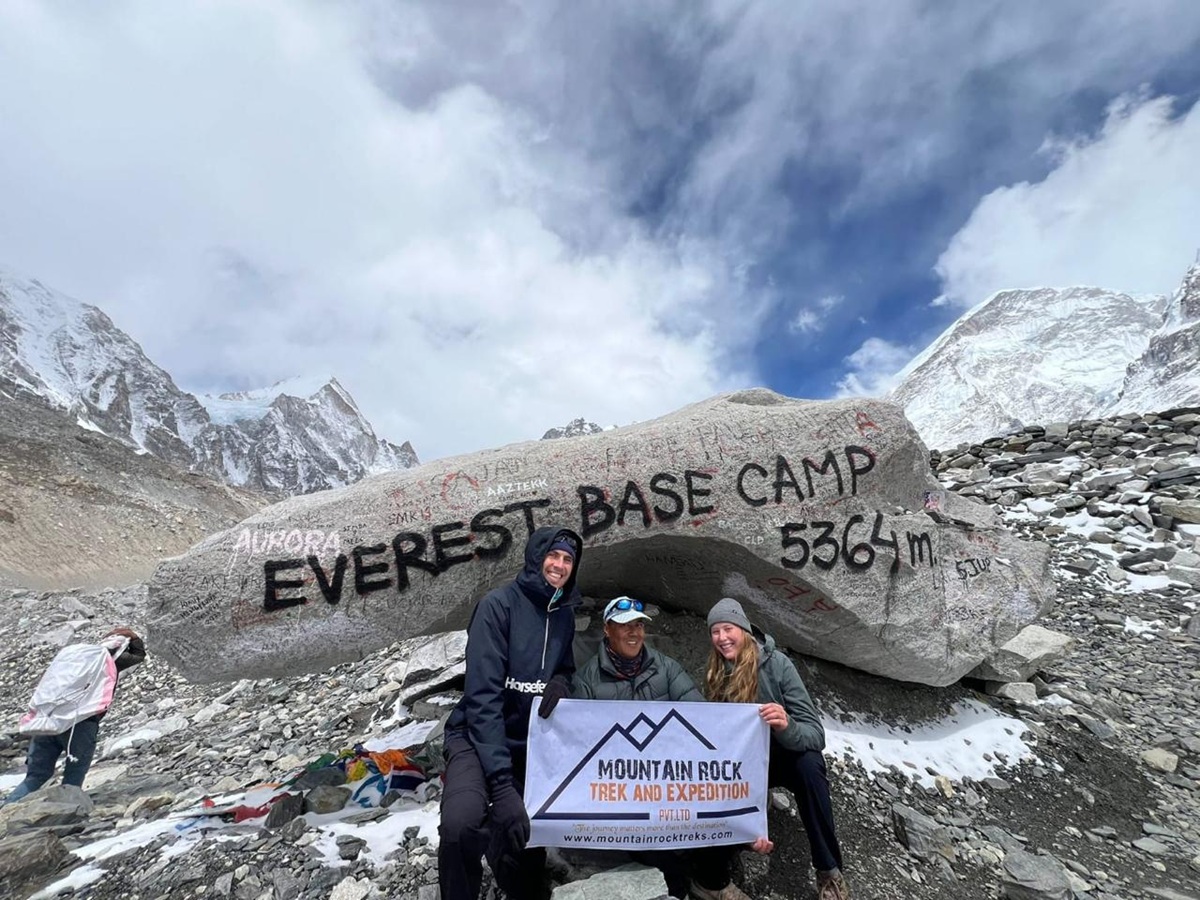
Everest Base Camp Trek from Australia with Mountain Rock Treks Team
Establishing itself as the most famous and well-known trekking route in Nepal, the Everest Base Camp Trek ascends to the slightly less than 5,364m Mount Everest. Along the trek, you will experience several points of interest, including Namche Bazaar, Tengboche Monastery, and Khumbu Glacier, as well as breathtaking views of the Himalaya, and get a truly authentic cultural experience of the Sherpa culture, making it quite challenging, either moderately or based on the altitude.
How Australians can do it:
You must fly from a city in Australia to Kathmandu, followed by a quick domestic flight from Kathmandu to Lukla. Then you will begin your trek with a registered guide. Most Aussies will book their whole package in Kathmandu, which includes permits, flights, and accommodations, to make sure they arrive at the right place and at the correct time during clear weather to take advantage of the stunning mountain views, which are typically obtained between the months of March through May or September through November.
Annapurna Base Camp Trek (7–12 Days)
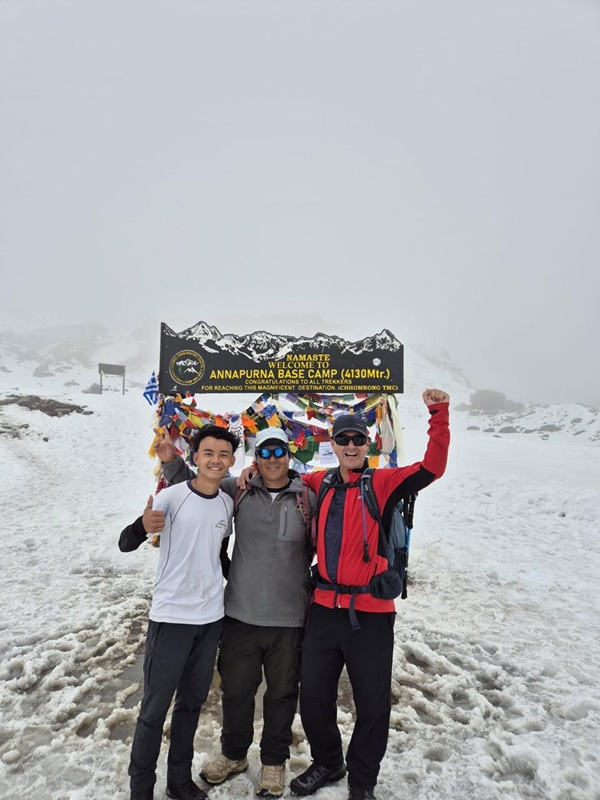
Annapurna Base Camp Trek from Australia with Mountain Rock Treks Team
Although the Annapurna Base Camp Trek is considered a shorter trek at only 4,130m, it is nevertheless a magnificent adventure through the Himalayas. The trek itself has the potential for many other spectacular highlights along the way, including rhododendron forests, terraced farming, Gurung villages, and stunning views of Machhapuchhre and Annapurna South at close range. The difficulty level is considered to be moderate and would be an ideal trek for those who are doing their first "trek".
How Australians can do it:
Fly into Kathmandu, then go on a domestic flight or tourist bus to get to Pokhara -- the main hub for trekkers, where you can begin the trek (with a licensed guide, or in a pre-paid bundle). Australians usually pre-purchase through trekking agencies for this trek, or arrive at the location and arrange for their tours when they get there. You will not need to fly into remote mountain airports, so the Annapurna Circuit is arguably much easier to access than Everest.
Annapurna Circuit Trek (14–21 Days)
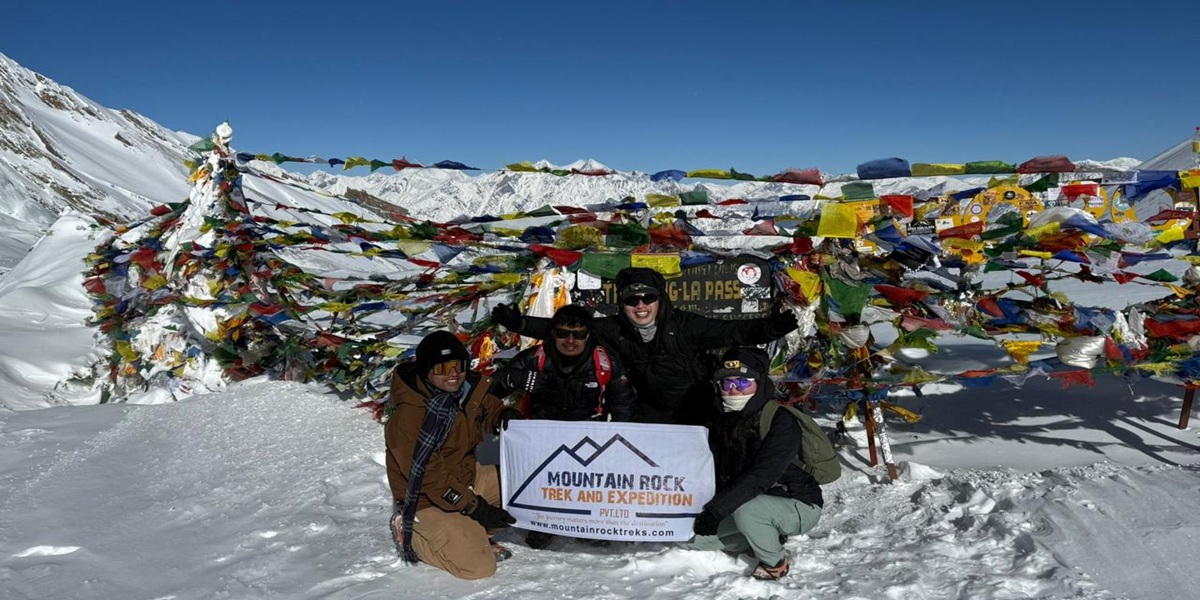
Annapurna Circuit Trek with Australian Clients and Mountain Rock Treks Team
The Annapurna Circuit Trek (14-21 Days) is one of the most diverse long-distance hikes in the world, and it crosses the entire Annapurna range and culminates at Thorong La Pass (5,416m). This hike goes through subtropical valleys, Tibetan-style villages (which are located at higher elevations), and wind-swept desert-like terrain. Although a physically challenging hike, the Annapurna Circuit is a culturally rich experience.
How Australians can do it:
Fly into Kathmandu, then travel overland to either Besisahar or Chame, depending on your itinerary, and from there you can begin trekking with your licensed guide. Due to the permits required for trekking in Nepal, transportation logistics, and the difficulty of high-altitude trekking, most Australians will pre-book their trek with a full package deal. The best times to plan your trip will be in the spring or autumn when the trails will be stable, and weather conditions will be conducive to a successful journey.
Langtang Valley Trek (7–10 Days)
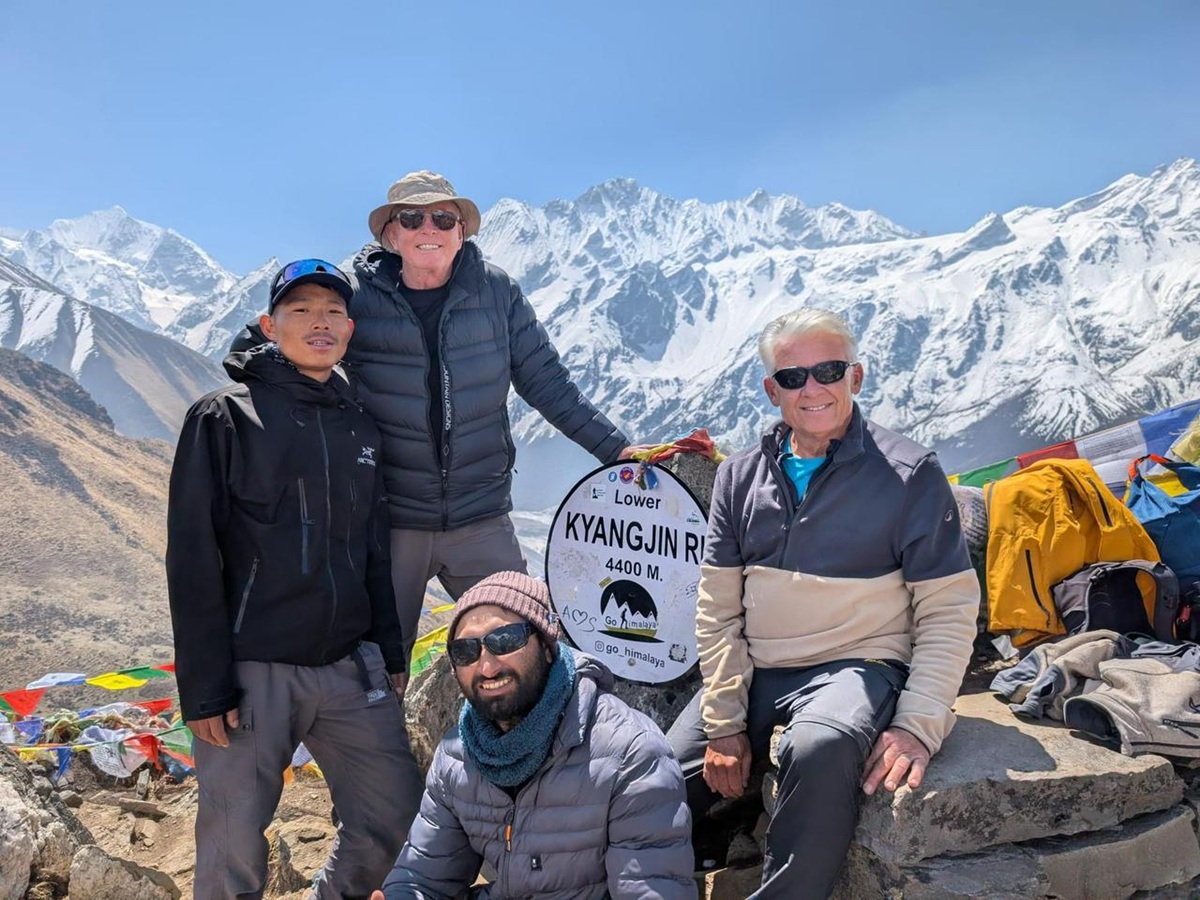
Langtang Valley Trek with MRT and Aussie Hikers
The Langtang Valley Trek (7 to 10 days) is the closest trek from Kathmandu to the Himalaya and is, therefore, a great choice for shorter treks. It reaches elevations of approximately 3,800m to 4,984m, and offers views of glaciers, yaks, and the influence of Tibetan culture. This trek is much less difficult (in terms of physical and emotional condition) than Everest and Annapurna.
How to get there: After arriving in Kathmandu, you can take a bus or jeep to Syabrubesi (the starting point for your trek) – this journey will take you around 6 to 7 hours. You will need a certified trekking guide. Many Australians are selecting the Langtang Valley trek because of its limited number of flights, as well as its more relaxed trekking environment, while still offering stunning views of the Himalaya.
Manaslu Circuit Trek (14–18 Days)
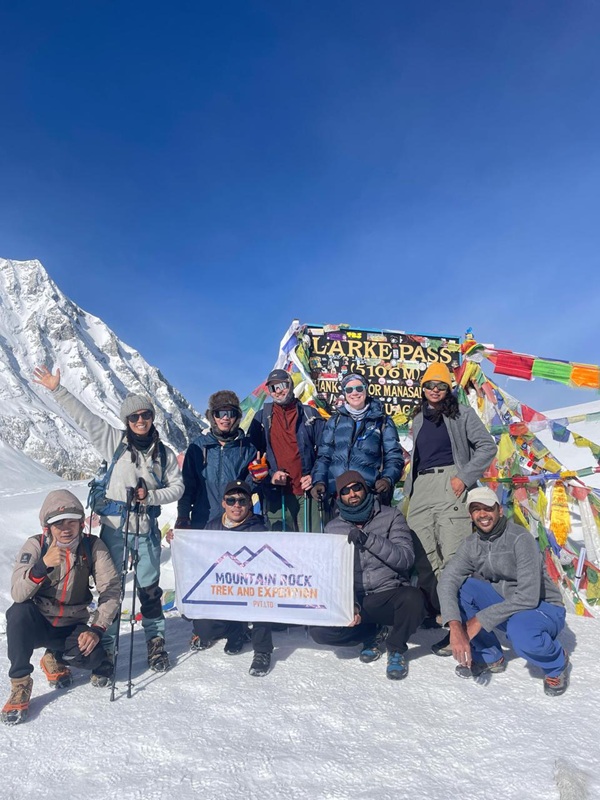
Manaslu Circuit Trek From Australia with MRT (Mountain Rock Treks)
Manaslu Circuit Trek (14-18 Days): One of the world's 8th-highest peaks, the Manaslu Circuit Trek, takes you around the base of mountain Manaslu (8,163m), considered one of the most authentic and remote trekking experiences in Nepal. This area is stunning with beautiful Buddhist villages, deep valleys, and picturesque landscapes. Crossing Larke La Pass (5,106m), this trek is more challenging than the Everest and Annapurna trekking circuits, and is much less crowded.
How Australians can do it:
Australians can complete this trek by flying to Kathmandu and traveling via road to Soti Khola. The trek to Soti Khola requires both special restricted area permits and licensed guides; hence, Australians interested in completing this trek must book through a registered trekking company that can assist them with these. Most travelers make all of their arrangements in Kathmandu or pre-book from Australia due to the logistics of permits and the remoteness of this area.
Popular Tours from Australia in 2026
Tour Name
Duration
Avg Cost (AUD)
Type
Highlights
Kathmandu Cultural Tour
4–6 Days
$800–$1,400
Heritage
UNESCO temples, Durbar Squares
Kathmandu Valley Explorer
5–7 Days
$900–$1,600
Cultural
Ancient cities & monasteries
Kathmandu–Pokhara Tour
6–8 Days
$1,200–$1,900
Scenic
Lakes, mountains, sunsets
Nepal Highlights Tour
8–10 Days
$1,600–$2,400
Classic
Kathmandu, Pokhara, Chitwan
Kathmandu–Chitwan Safari Tour
5–7 Days
$1,100–$1,800
Wildlife
Rhinos, elephants, jungle safari
Nepal Family Tour
7–10 Days
$1,400–$2,200
Family
Easy sightseeing + nature
Luxury Nepal Tour
6–9 Days
$2,800–$5,500
Premium
5-star stays + private guide
Everest Scenic Flight Tour
1–2 Days
$300–$450
Adventure
Everest aerial view
Everest View Cultural Tour
7–9 Days
$1,700–$2,600
Scenic
Everest region villages
Pokhara Leisure Tour
4–6 Days
$900–$1,500
Relax
Lakeside stay + mountains
Spiritual Nepal Tour
7–10 Days
$1,300–$2,300
Religious
Temples & Buddhist sites
Lumbini Pilgrimage Tour
3–5 Days
$700–$1,200
Spiritual
Birthplace of Buddha
Kathmandu Heritage Walk
2–3 Days
$400–$800
Short Tour
Old city exploration
Nagarkot Sunrise Tour
2–4 Days
$500–$900
Scenic
Himalayan sunrise views
Annapurna Panorama Tour
6–9 Days
$1,400–$2,300
Mountain
Annapurna viewpoints
Langtang Cultural Tour
6–8 Days
$1,300–$2,100
Rural
Tamang villages
Upper Mustang Cultural Tour
10–14 Days
$3,000–$5,200
Remote
Desert Himalaya kingdom
Chitwan Jungle Safari Tour
2–3 Days
$400–$900
Wildlife
National park safari
Pokhara Adventure Tour
5–7 Days
$1,100–$1,900
Adventure
Paragliding, boating
Himalayan Combo Tour
10–14 Days
$2,000–$3,500
Mixed
Culture + nature + wildlife
In terms of travel and adventure, by 2026, Nepal will be one of the top cultural and adventure destinations for Australian travelers. Most of the tours in Nepal include a visit to the heritage sites in and around Kathmandu, the scenic lakeside area in Pokhara, the wildlife safari in Chitwan, and the mountain views along the Himalayan mountain range. Nepal is rich in nature, spiritual experiences, wildlife, and opportunities for soft adventure. Most of the packages available range from 3-day weekends to 14-day multi-country trips, so there is something for everyone, including couples, families, and solo travelers.
Most Australians visiting Nepal will travel through a group or private tour, which typically includes accommodation, transportation, sightseeing tours with a guide, and domestic transportation. The tours originate from several airports in Australia, including Sydney, Brisbane, and Melbourne, and also connect to major Asian travel hubs such as Singapore, Doha, or Kuala Lumpur before flying to Kathmandu. Like everything in life, the price range for these trips varies from budget to luxury, and Nepal is becoming increasingly popular for Australian travelers because many are seeking small group trips and experiential holidays in Nepal in 2026.
For example, many itineraries also contain optional highlights such as taking a scenic flight over Mount Everest or doing an animal safari; therefore, Australians can experience some of the things that make up the essence of Nepal without having to trek. All in all, if you are looking for an accessible adventure, a unique and rich culture, and diverse natural landscapes all in one trip, then you should plan a trip to Nepal.
Thrilling Activities Beyond Trekking: Rafting, Paragliding, and More from Australia
Nepal has a variety of thrilling activities to do besides trekking. However, the most popular area for adventure in Nepal is actually around Pokhara and also around the Trishuli River. Australians can easily do these adventures while doing tours from Kathmandu, or also from Pokhara; most of them will take anywhere from a couple of hours to a full day. Most of these adventures are very affordable, and they are all run by certified adventure companies with the appropriate safety equipment and guides.
Rafting in Nepal (Trishuli & Seti Rivers)
Activity
Where
Duration
Cost (AUD approx.)
Best Season
Trishuli River Rafting
Between Kathmandu & Pokhara
1 Day
$45–$70
Mar–Jun, Sep–Nov
Seti River Rafting
Pokhara
2–3 Hours
$55–$90
Year-round
Rafting in Nepal is also one of the most popular short adventures to do for tourists, as the Trishuli River is designed for beginners. The rapids are all moderate, and the scenery is beautiful with valleys along the route. The Seti River is also a good option for rafting if you are in Pokhara; however, the length of the trip is shorter than that of the Trishuli. The Seti can also be run by experienced rafters in narrow canyons and very calm forested areas. All of these trips include transportation, safety briefing, life jackets, and guides.
Paragliding in Pokhara
Activity
Where
Duration
Cost (AUD approx.)
Best Season
Tandem Paragliding
Sarangkot, Pokhara
20–30 min flight
$110–$140
Sep–May
One of the most renowned aerial activities in Nepal is paragliding in Pokhara. Visitors can take off from Sarangkot Hill (at an elevation of 1,600m) and enjoy breathtaking views of Phewa Lake and the Annapurna and Machhapuchhre peaks as they glide through the sky. All flights are conducted as tandem flights with qualified pilots, ensuring that all participants will be safe, even those who are new to paragliding. Most packages include hotel pick-up as well as digital photographs and videos.
Bungee Jumping in Pokhara & Kushma
Activity
Where
Height
Cost (AUD approx.)
Duration
Pokhara Bungee
Hemja
80–101m
$90–$130
2 hours
Kushma Bungee
Parbat District
228m (Asia’s highest)
$120–$160
Half day
Bungee jumps in Nepal are among the craziest bungee jumps you can find in Asia; bungee jumping is also a sport that lots of people enjoy. A popular first jump for individuals new to bungee jumping is the Pokhara bungee jump. The bungee jump at Kushma Bridge is so high that it continues to appeal to adventurous jumpers from everywhere in the world. All safety measures comply with international standards, including safety equipment and a harness system.
Ultra Light Flights & Mountain Flights
Activity
Where
Duration
Cost (AUD approx.)
Best Season
Ultra Light Flight
Pokhara Airport
15–60 min
$160–$250
Sep–May
Everest Scenic Flight
Kathmandu
1 hour
$300–$450
Year-round
Ultra-light aircraft flights enable participants to fly exceedingly close to the Himalaya range, as opposed to scenic flights over Everest from Kathmandu, which allow individuals to view the entire range without trekking through the region. These expeditions are excellent for people living in Australia or who have very limited time to spend traveling to and participating in similar experiences.
Zipline Adventure in Pokhara
Activity
Where
Distance
Cost (AUD approx.)
Speed
ZipFlyer Nepal
Sarangkot
1.8 km
$100–$130
100+ km/h
ZipFlyer in Pokhara, Nepal, has one of the fastest and steepest zip lines in the whole world, with a vertical drop of approximately 600m (1,968 ft) and speeds exceeding 100 km/h (62 mph) as it passes above the Annapurna mountain range.
Favorable Currency Exchange Rate for Australian Travelers
Currency and Exchange Rates
Australians regard Nepal as a cheap country to travel to, mainly because the AUD-NPR exchange rate offers them solid purchasing power in the Nepalese economy. When you compare how much your local currency is worth against the NPR, it is possible to estimate that an average meal will typically cost 80-95 rupees based on what is usually charged in Australia (Approx AUD $8). This means that traveling daily throughout Nepal will feel even cheaper than doing so within Australia (taking into consideration transport).
ATMs and Cash Withdrawals
When it comes to obtaining cash while on holiday, the two main locations where Australians will withdraw their funds are in the major cities of Kathmandu or Pokhara, which are both serviced by a good range of banks. The banks that have ATMs where foreign cardholders can withdraw their money include Nabil Bank, Global IME Bank, Kumari Bank, and NIC Asia Bank. The majority of ATMs in these locations will charge around NPR400 to NPR600 (approximately AUD $4-6) for local/ATM fees per transaction, and your Australian bank may charge a 3-5% international fee for using their services outside of Australia (which is usually based on a percentage of the amount withdrawn).
When using ATMs, only withdraw the maximum amount allowed in order to limit the number of times that you will incur transaction fees.
Carrying Cash
In Nepal, cash is still king (especially in the trekking areas), so it is recommended that you carry some local currency when traveling throughout the country. You may exchange your Australian dollars in Nepal (e.g., money exchanges or banks in Kathmandu). You'll find that there are usually better exchange rates at licensed money changers located in Thamel, Kathmandu, than at airport counters for exchanging money. When using your credit/debit card, always choose to be charged in local currency (Nepalese Rupees) so that you will avoid receiving poor exchange rates for dynamic currency conversion.
Overall Affordability
In general, Nepal is very affordable for Australians, based on the high value of the Australian dollar against the Nepalese rupee, and the fact that financial institutions charge lower transaction fees than they do at most other destination areas around the world.
Dipak starts to step up from porter, guide, and trekking leader to the company owner. Sometimes he share his experience with others as well as wrote in local travel news. Most of time he spend his time on mountain and his company.