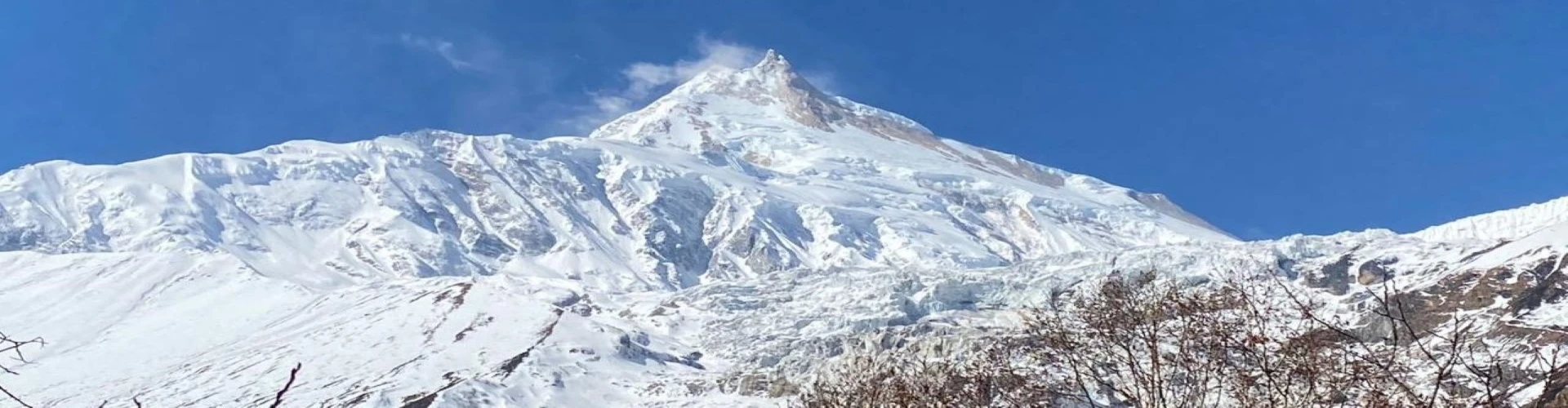
Nepal Manaslu Circuit Trek in September Essentials
Category | Details |
Trek Name | Manaslu Circuit Trek |
Best Time in Sep | Mid-September to the end of September (Sept 14 to 30) |
Distance | approx 177 km (110 miles) - Machhakhola to Dharapani |
Duration | 14 days (recommended) |
Max Altitude | 5160m or 16929 ft - Larkya La Pass |
Difficulty | Moderate to Challenging |
MRAP Permit (Sep) | USD 75 per week - cheaper than Oct/Nov (100 per week). Save 50 on a 14-day trek! |
Required Permits | MRAP plus MCAP (30) plus ACAP (approx 22) |
Guide Required | Yes - mandatory by Nepalese law. Now solo trekking is permitted with a mandatory guide. |
Start Point | Soti Khola or Machhakhola (8 to 10 hr drive from Kathmandu) |
End Point | Dharapani to Besisahar to Kathmandu (drive) |
Accommodation | Teahouses or basic lodges throughout the route |
Trekkers (2025 to 2026) | approx 13000 total - vs 250000 on Annapurna Circuit. Genuinely off the beaten path. |
Why September Is One of the Best Times for the Manaslu Circuit Trek?
For the Manaslu Circuit Trek, September is one of the best months to go trekking in Nepal. It's the start of the fall trekking season. The monsoon rains have ended. So the trails will be clear and the scenery will be lush and vibrant. During September, permit prices are lower at $75 per week compared to peak season in October. There won't be as many people on the trails either. And the Larkya La Pass will be clear of snow during September.
The Monsoon Fades, and the Landscape Becomes Extraordinary
September in Nepal marks the end of the heavy monsoon rains that typically occur during July and August. As a result, the land is transformed into a very beautiful place. The Budhi Gandaki Valley is deep and vivid in colour due to all the rain. The waterfalls are running full. The rice paddies have turned golden in colour, and the harvest is beginning.
There are also dramatic cloud formations hanging over the ridges. So for photographers and those who love nature, late September on the Manaslu Circuit Trek may be the most stunning time to travel there. It has the fresh, new green look of summer. And it simply can't compare to the old, brown look of autumn.
You'll Have the Trail Far More to Yourself
Only about thirteen thousand trekkers did the full Manaslu Circuit during the year 2025 in September, compared to 250,000 people trekking on the Annapurna Circuit. In September, this number becomes substantially lower. On certain parts of the trail, you may go for hours without seeing another foreign trekker.
You will find most of the teahouses empty in September compared to in October. Many trekkers report that the teahouses in Samagaon (which are crowded during peak season) are generally empty in September and relaxed.
Permit Costs Are Lower
The Manaslu Restricted Area Permit costs $75 per week in September. That's the same discounted rate as the off-season. But in October and November, the cost rises to $100 per week. So that's a saving of $50 for each person on a fourteen-day trek. And if you have four trekkers in your group, you'll put $200 back in your pocket. That's enough money to cover your porter.
Larkya La Pass Is Snow-Free and Genuinely Accessible
At 5,160 meters, Larkya La Pass is the highlight of the Manaslu Circuit Trek. During September, there will be no snow or ice on the pass. It's entirely composed of solid ground, rock and trail. So crossing this pass in September is done on solid ground without using crampons or microspikes. That makes it a great deal safer than crossing in November or December, when crampons or microspikes are sometimes needed as safety measures.
New trekkers often say their experience of crossing Larkya La Pass in September was far better than they expected. They reported clear skies, no snow on the ground and the opportunity to see a sunrise over the Himalayas. Many have called it a "once in a lifetime experience." And trekkers with no prior mountain climbing experience were also able to cross Larkya La Pass successfully without major problems in September. But proper preparation is still key.
Manaslu Circuit Trek Weather in September 2027
The weather during the month of September on the route of Nepal's Manaslu Circuit passes through two very different sets of conditions. The weather changes from the last weeks (1–2) of the monsoon to clear autumn conditions (weeks 3–4). Temperatures range during the day on the Manaslu between 13°C & 26°C, depending on altitude. For elevations above 4,000m, night temperatures will range from 0°C to 5°C. Late September (after the last week of the month) generally has little rainfall, making it great for trekking.
Understanding the weather for September on the Manaslu Circuit means understanding two completely different environments at the same time. The circuit covers the lower, subtropical valley area below 2,500m and the high-altitude Tibetan Plateau zone above 3,000m.
These two areas behave differently enough to affect the way you pack and plan for your trek. So don't treat them as the same environment when preparing for your journey.
Week | Day Temp | Night Temp | Rainfall | Trail Condition |
Week 1 (1 to 7 Sep) | 20–26°C (low alt) | 4–8°C (high alt) | Light showers possible | Muddy on lower sections |
Week 2 (8 to 15 Sep) | 18–23°C | 3–7°C | Clearing quickly | Mixed - good above 2,500m |
Week 3 (16 to 23 Sep) | 15–21°C | 2–6°C | Minimal/rare | Good to excellent |
Week 4 (24 to 30 Sep) | 13–19°C | 0–5°C | Negligible | Excellent |
Low Trail (Days 1 to 5, Below 2,500m)
It's very hot and humid, especially in early September. You'll be trekking through subtropical jungle along the loud Budhi Gandaki River. And you could have rain during the first week. So wear light, moisture-wicking clothing and start walking at 7 am before the valley heats up.
Mid Trail (Days 6 to 9, 2,500m to 3,800m)
It's much cooler up here. Mornings are crisp and fresh. But afternoons can bring cloudiness. Classic layering will work really well in these conditions. You'll start to see good views of Mt Manaslu as you leave Lho each day. And the clarity of those views improves day after day as you go throughout September.
High Altitude (Days 10 to 11, 3,800m to 5,160m)
It's cold up here. At Dharamsala at 4,460m, temperatures drop below freezing at night even in September. So prepare accordingly. At Larkya La Pass at 5,160m, you'll feel it early. So start your crossing at 4 am while it's still cold, and you'll be warming up by 9 am. Your down jacket, thermal layers, and a -10 degree sleeping bag will be worth every dollar you spent on them. On cold nights at this altitude, you'll be glad you didn't cut corners on gear.
Tip: Consider booking your trek starting around September 14 to 16. Based on the timing of your trek, you’ll find that the monsoon climate will clear while you make your way to Kathmandu. By approximately the eighth through eleventh days of trekking, you'll be hiking in nice early fall conditions. Most experienced hikers aim for this window of time.
14-Day Manaslu Circuit Trek Itinerary for September
Day 1: Arrival in Kathmandu
Arrive, check into your hotel and attend your trek briefing.
Permits are arranged on this day. These include the Manaslu Restricted Area, MCAP, ACAP, and TIMS if applicable.
Gear is checked for September's mixed conditions. You'll need rain gear, warm layers, and sturdy boots for mud.
Day 2: Drive Kathmandu to Soti Khola to Machha Khola (869m)
An overland journey via Arughat and Soti Khola to Machha Khola.
In early September, the lower hill climate near the Budhi Gandaki valley is warm and sometimes humid. It's your first impression of the region.
Day 3: Trek Machha Khola to Jagat (1,410m)
The trail runs riverside through tiny Gurung and Magar settlements.
You'll cross suspension bridges in hot, humid weather. Afternoon rain is likely.
Jagat is your overnight stop and the first checkpoint into the restricted area.
Day 4: Trek from Jagat to Deng (1,860m)
Day 5: Trek Deng to Namrung (2,630m)
The trail transitions from a narrow river gorge to a broader valley with Buddhist cultural areas.
Temperatures drop, and the air feels crisper with elevation.
Day 6: Trek Namrung to Shyala (3,575m)
Trees and terraced fields line the trail.
In clear September skies, you'll get your first sights of the high Manaslu peaks.
It's also your first night sleeping above 3,500m.
Day 7: Trek Shyala to Samagaon (3,520m)
It's a shorter, scenic day to Samagaon at around 3,530m.
Light afternoon walks around the village are suggested for gradual acclimatization.
Day 8: Acclimatisation Day in Samagaon (3,520m)
Don't skip this day. Samagaon is the main acclimatization stop on the entire circuit.
Optional side hikes include Pungen Gompa or Manaslu Base Camp at 4,000 to 4,800m. But you'll always return to sleep low.
In Samagaon, your body finally gets a chance to adjust.
Day 9: Trek Samagaon to Samdo (3,875m)
You'll climb to the yak-grazing and trade village of Samdo near the Tibetan border.
It's a short day by design to aid staged acclimatization above 3,800m.
Day 10: Rest and Acclimatisation Day in Samdo (3,875m)
This second acclimatization day prepares your body for the Larkya La approach and reduces the risk of AMS.
An optional hike towards the Tibetan border ridges gives you high-altitude exposure. But you'll return to Samdo to sleep low.
Day 11: Trek Samdo to Larkya Phedi / Dharamsala (4,460m)
A light but important climb to Dharamsala at 4,460m. It's the last stop before Larkya La.
Eat early, sleep early and focus on hydration and rest.
Day 12: Larkya La Pass Crossing to Bimtang (3,590m)
A pre-dawn start across moraines to Larkya La at 5,106 to 5,160m. Controlled pacing is essential.
Early morning temperatures are sub-zero even in September.
Each settlement along the way has food and drinks. And the steep descent to Bimtang is your reward.
Day 13: Trek Bimtang to Dharapani / Tilje (1,963m)
You'll descend through lush rhododendron and pine forests towards Tilje and Dharapani.
The climate shifts noticeably below 2,000m. Dharapani marks your junction with the Annapurna Circuit trail.
Day 14: Drive Dharapani to Besisahar to Kathmandu
Day 15: Depart Kathmandu
Nepal Manaslu Circuit Trek in September Cost and Departure 2027
There is no better time to hike through the high peaks of the Himalayas than in September, post-monsoon. The views of the mountains will be crystal clear, and the beautiful landscape fresh and green for trekking. The Manaslu circuit trek has been scheduled to have maximum availability for travelers from where you will start at Kathmandu and be part of a guided group trek with a group departure date in September 2027.
Once you have met your guide on location and done your group briefing, you will begin your well-organized, 15-day adventure trip around the incredible Manaslu area.
Manaslu Circuit Trek Permits and Costs in September
A total of three permits will be needed to do the Manaslu Circuit Trek. These include the Manaslu Restricted Area Permit (MRAP) at $75 per week in September, the Manaslu Conservation Area Permit (MCAP) at $30 and the Annapurna Conservation Area Permit (ACAP) at approximately $22. All trekkers must also have a licensed guide accompanying them. So the estimated all-in cost for a 15 day trek is approximately $900 to $1,400 US dollars per person.
A registered trekking agency is required by law and will arrange any and all permits for you when you make your booking through them. Below is a breakdown of each cost you will incur for a September trek of the Manaslu Circuit:
Permit or Expense | Cost (USD) | Notes |
Manaslu Restricted Area Permit (MRAP) | 75 per week | September rate = saves 25 per week vs Oct/Nov. All that can be issued ONLY by registered agencies |
Extra MRAP days (after first 7 days) | 10 per day | Applies if you extend your trek beyond the first 7 days. |
Manaslu Conservation Area Permit (MCAP) | 30 | One-time fee. Required from Philim village onward. |
Annapurna Conservation Area Permit (ACAP) | approx 22 | Required for the descent section from Dharapani. |
Local Manaslu Area Entry Permit | approx 7.50 (NPR 1000) | Updated with an additional specific local permit for 2026. |
Licensed Guide (MANDATORY by law) | 25 to 40 per day | Cannot be substituted. Solo trekkers are allowed, although they must apply through a registered trekking agency and be accompanied by a guide |
Porter (optional but strongly recommended) | 18 to 28 per day | Carries up to 20kg. It’s a game changer on 8 to 10 hr days above 4000m. |
Teahouse accommodation | 5 to 15 per night | Commonly cheaper/free if you eat all meals at the same teahouse. |
Meals on trail (full board) | 20 to 40 per day | Dal bhat, noodles, soups. Prices rise noticeably above 3500m. |
Kathmandu to Soti Khola transport | 15 to 30 | Shared jeep or local bus. Usually arranged by your agency. |
September prices for the MRAP are always at a transitional price point when considering its rate structure across low and high seasons. One key thing that most miss is that October and November are charged at $100 per week. But September is charged at the transitional rate of $75 per week.
Thus, for a 14 day trek in September, booking the same would be about 50$ cheaper for the traveler as compared to booking it in October.
Since 2026, trekking in restricted areas of Nepal, which includes the region of Manaslu, has been allowed only when accompanied by a government-registered guide. Trekking independently or without a guide is illegal. All the required permits shall be processed via a registered trekking agency along with a certified guide.
The past ruling that at least two people were required to trek together has changed. Solo trekkers are allowed to procure their permits via an agency, but they have to be accompanied by a certified guide during the entire expedition.
Several trekking agencies even put solo travelers into groups (joining a trek) so as to help reduce their cost and process permits smoothly. You can ask for a departure schedule directly from the trekking agencies.
Budget Tip: Book through a local Nepali agency rather than an international tour operator. It can typically save you 30 to 40% for the same level of service. The guides will be the same licensed professionals. The only difference is the markup through an international travel agent. So please ask us about verified local agency referrals.
Larkya La Pass in September: Everything You Need to Know About 5,160m Pass
The Larkya La Pass (16,929 ft / 5,160 m) in September has no snow and can be crossed without crampons or other technical gear (i.e., just normal footwear). Most trekkers will start their ascent to the summit around 4 o'clock in the morning, and after 4–5 hours, they will reach the top of the pass, then take another 3–4 hours to descend to Bimtang. September is one of the best months to do this crossing because there is generally no ice either on the way to the top or at the top of the pass.
September Month Specific Conditions at the Larke la Pass
Surface: Clear rock and loose moraines with no ice and no snow. You can cross this pass using just boots. There's no need for crampons.
Temperature at the Summit at 4 AM: Between -5°C and -10°C. So be prepared to layer all of the warm clothing you've brought with you.
Visibility: Excellent from mid-September onwards. Sunrise offers a clear view of the entire Himalayan range.
Wind: Not as high as November or December. But a good shell-type jacket will work to your advantage.
Technical Difficulty: Non-technical. The only difficulty is altitude.
Our top tips for a successful pass day in September:
Start by 4:30 AM. You'll want to reach the summit before afternoon clouds develop in the south.
Take everything you need in your daypack. Don't wait for your porters to catch up while you're crossing the pass.
Eat a good hot dinner the night before and drink at least 3 litres of water throughout the day.
If you experience excessive breathing difficulty, dizziness or confusion, advise your guide right away. Don't try to push through AMS symptoms.
Take your best camera. The view from the top is one of the most breathtaking in the Himalayas. And on a clear September morning up here, you'll be glad you didn't leave it behind.
Manaslu Circuit Trek Difficulty: Is September Suitable for Beginners?
The Manaslu Circuit Trek is categorised as Moderate to Challenging. Complete novice trekkers with little or no prior experience would be unlikely to complete the trek successfully. But reasonably fit trekkers who can manage 3 to 5 hours of multi-day hiking will have little difficulty completing it in September. The weather conditions in September, with no snow or ice, continue to improve throughout the entire month. So it establishes good trekking conditions for beginner trekkers.
The Manaslu Circuit Trek is significantly more challenging than the Annapurna Base Camp Trek, Langtang Valley and Ghorepani Poon Hill. But it's comparable in difficulty to both the Annapurna Circuit Trek and the Everest Base Camp Trek. It's also significantly less challenging than Island Peak or Mera Peak climbing and technical mountaineering.
The most significant challenges are walking for an extended period each day, between 5 and 9 hours, and the high altitude experienced on days 9 to 11. And due to the remote nature of the trekking route, there are very limited evacuation options available for both trekkers and guides past Jagat. So preparation and a licensed guide aren't just recommended. They're essential.
In our years of guiding this route, here's who consistently succeeds in September:
Frequent day hikers who hike multiple times per month.
People who have done a minimum of one multi-day hike before (regardless of distance).
Individuals ages 18 through 70 who do not have serious heart or lung issues.
Individuals willing to adhere to the guide's instructions and follow proper acclimatisation procedures.
What to Pack for the Manaslu Circuit Trek in September
The most important things to pack are moisture-wicking base layers, a down jacket rated 600 fill minimum, a waterproof shell, waterproof and fully broken-in trekking boots, a sleeping bag rated to -10°C, a 20,000mAh power bank for charging mobile devices, Diamox for possible altitude sickness and an offline map downloaded before departure.
When you pack for your September trek, you have to prepare for two very different conditions. Think warm jungle valleys and freezing nights at high elevations.
Clothing
You'll need 2 to 3 moisture-wicking base layers, 1 fleece mid-layer, 1 down jacket rated to 600 fill minimum and 1 waterproof shell. September temperatures can vary greatly from day to night. So layering is extremely important. Don't underestimate how cold it gets once the sun goes down at altitude.
Footwear
You'll need waterproof trekking boots that are fully broken in and at least 6 pairs of trekking socks. Getting blisters on the 8th hour of an 8-hour trek is not fun. So don't make the mistake of bringing new boots on the trail. Break them in well before you leave home. On long days like these, you'll be glad you did.
Sleep System
A sleeping bag rated for use at -10°C should be used with a silk liner. The teahouse blankets aren't sufficient at Dharamsala at 4,460m. On cold nights up here, you'll be glad you didn't cut corners on this one.
Navigation and Safety
For navigation and safety, you'll need offline maps using Maps.me or Gaia GPS, a headlamp and spare batteries. These are essential for the 4am start at Larkya Pass.
Health and Medical
To stay healthy, you'll need Diamox to prevent AMS, Ibuprofen, blister kits, water purification tablets, and sunscreen of SPF50 or higher.
Electronics
To keep electronics charged, you'll need a 20,000mAh power bank. Most teahouses charge between NPR 100 and 300 per device. So a power bank will save you both money and hassle.
Trekking Gear
Trekking poles are also essential for the steep descent from Larkya Pass. Your knees will thank you for it.
You Don't Need to Pack These Items
Crampons. September is too warm to need them.
Cotton clothing or untested gear.
Anything that contributes to an overall weight greater than 13 to 15kg if you're hiring a porter.
Thamel Tip: Please remember that it's cheap and easy to rent all equipment in Thamel, Kathmandu. This includes sleeping bags, poles and even boots. So if you don't have to, don't ship bulky equipment from home.
Teahouses and Accommodation on the Manaslu Circuit in September
The Manaslu Circuit trek is an entirely teahouse trek, so you will be able to find lodging every night on the trek. September is not as busy as October, and therefore you will not have to worry about full teahouses (like you would in October). The rooms are twin-share, and all have access to a communal bathroom. You will eat your meals in a communal dining room. If you have not booked trekking packages then allow $5 to $15 a night for your lodging.
The Manaslu Circuit is a teahouse trek. So you won't need to pitch a tent. In September, you'll have your pick of almost any teahouse or guesthouse room because there are fewer people on the circuit compared to the busy October season. Rooms are single or double share with shared bathroom facilities. And teahouses offer communal dining with a fireplace to help warm the atmosphere. You'll be glad of that warmth after a long day on the trail.
Shower facilities are available up to 4,000m at an average cost of around $2, depending on the time of day. And charging each device costs around NPR 100 to 300.
There is one unwritten rule. If you stay at a teahouse, you'll be required to eat there too. Teahouses are subsidised on the understanding that you'll eat breakfast, lunch and dinner at their kitchen. And it's a fair agreement because it directly supports local families. Dal bhats are very hearty and freshly made. And if you'd like more, they can be refilled.
The major highlights you can expect to see are Lho, where you'll get your first views of Manaslu; Samagaon, which is the most culturally diverse area in the upper circuit, and Bimtang, which is the prize that awaits you after crossing Larkya Pass. So every tough day on the trail is building toward something truly special.
Festivals Trekkers Get to Enjoy on Their Manaslu Circuit Trek in September Month
What you have to know about the Menstrual Cycle & Your Happiness
Teej
Teej celebrates women's lives, where women dress in red garments, fast, sing, dance, pray to the gods, and look at men, while celebrating their own fertility. In the Manaslu area of Nepal, the festival is celebrated with local women gathering to go to temples located in the villages of Soti Khola, Machha Khola, etc., to pray for family well-being and celebrate each other's company.
Indra Jatra as a Festival (Rain)
The Indra Jatra Festival takes place predominantly in Kathmandu; however, it also influences the Gorkha District, located beginning in the Manaslu area of the Nepal region. The festival commemorates both Lord Indra and the end of the monsoon season. During the cultural processions of the festival, there may be local areas where villagers wear masks and perform traditional dances along the jatra. This festival is also celebrated throughout the Manaslu region.
Dashain as Festival (Pre-festivities)
The festival of Dashain (October) is the most well-known celebratory festival in our region of Nepal, with most of the pre-festivities occurring during the month of September. By the end of September, there will be signs of the pre-festivities, including villagers swinging on old traditional "ping" bamboo swings, preparing themselves to return to their ancestral homes and preparing for their families to gather together.
- 2027: Starts September 27
Essential Tips for Trekking the Manaslu Circuit in September
Start Mid-Month: September 14 to 20 is the sweet spot. The monsoon is clearing, crowds are low, and weather stability is increasing. Starting in Week 1 is riskier.
Book Your Guide Soon: September is when demand begins to rise. So the best licensed guides get booked weeks ahead of time. Don't leave this too late.
Use the Acclimatisation Day: The Samagaon rest day is the most important thing you can do for a safe Larkya Pass crossing. Don't skip it.
Leave Early Every Morning: Try to be walking before 7 am. You'll escape the heat of the valley on lower sections and arrive at teahouses ahead of the rush.
Pack Rain Gear on Top of Your Bag: In the first week of September, you'll want it at a moment's notice. So don't bury it at the bottom.
Check Your Headlamp the Night Before Day 11: Finding dead batteries at 4 am in the dark is not what you want. So carry spares and check them the night before.
Speak Up About Altitude Symptoms: If you don't feel well above 3,000m, tell your guide straight away. There's no shame in slowing down. But staying silent is a real danger.
Have Cash in Nepalese Rupees: There are no ATMs after Arughat. So pack enough for your entire trek plus a meaningful buffer.9. Get Offline Maps Before You Leave Kathmandu: Use Maps.me or Gaia GPS with Nepal Himalaya maps. For most of the route, you won't have cell service.
Hire a Porter: Even if you're fit and have a light pack. The weight you save on a 10-hour pass day at altitude is massive. And porter wages go straight into local mountain communities.