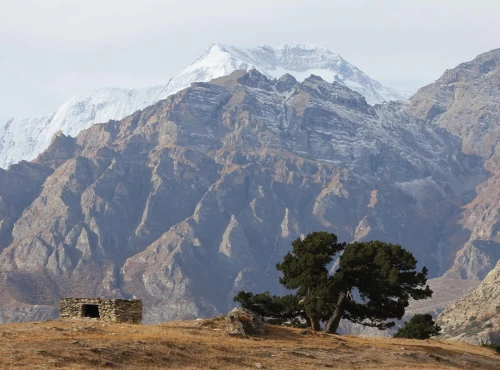
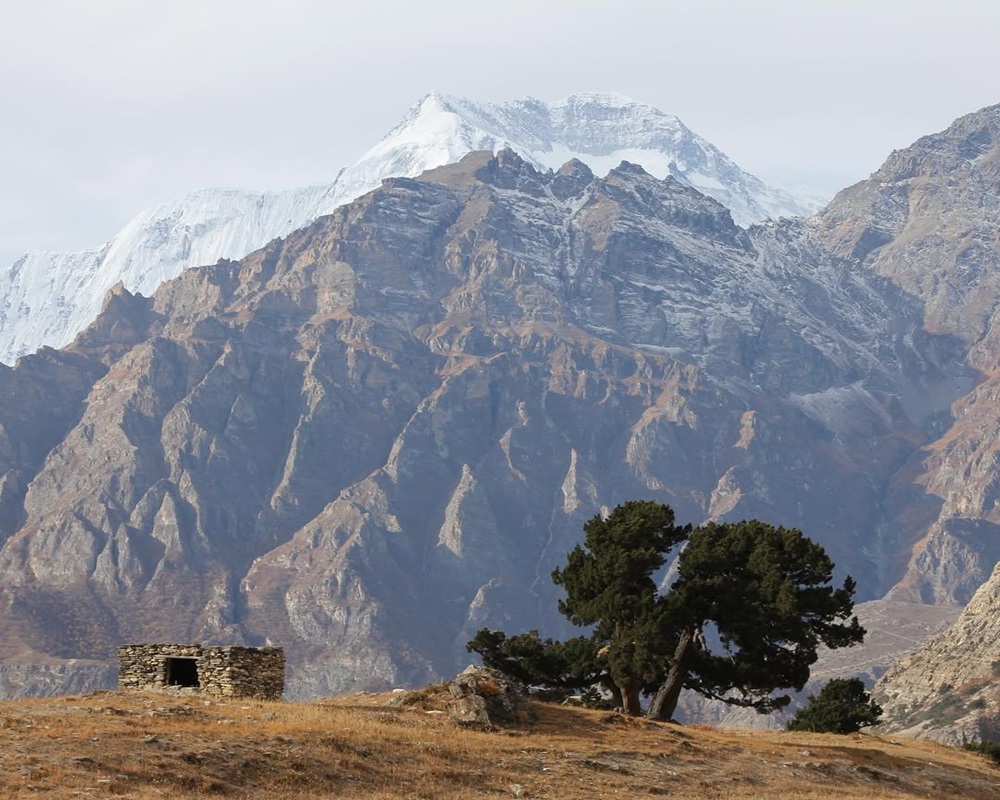
The toughest challenges to tackle Himlung are its extreme altitude (7,126m: here oxygen plummets lower than half that at sea-level), freak weather in which temperature can drop below -30°Celsius, and near 45-50 degree steep ice walls and an unreachable, isolated location in Nepal's Nar-Phu Valley, which makes any rescue very tough. Challenges on the mountain include long, 10- to 12-hour summit pushes requiring high-level physical fitness, using climbing gear such as crampons and ice axes appropriately, and planning your trip so you don't get altitude sickness.
At 7,126 meters, towering in Nepal's remote Annapurna region, Himlung Himal has become an increasingly popular pick for climbers seeking their first big Himalayan peak. But do not be fooled: No one is going to tell you it's an easy climb. While some refer to it as a 7,000-meter mountain that is "entry level," Himlung offers plenty of challenges even for climbers who are experienced.
Many climbers have miscalculated how much challenge they will face after seeing that Himlung is not as technical as some of its counterparts. Most climbers think that because of its "non-technical profile", it will be an easy climb.
The truth, though, is that Himlung requires respect and humility towards it. Although it may not be as challenging as climbing Everest or K2, climbers will still experience the same effects of elevation - thin air, turbulent weather, and unrelenting ground.
The one thing that distinguishes Himlung from many other mountains is its location. Himlung is located at the end of Nar Phu Valley and is extremely close to the Tibetan border. This region was not opened to climbers until 2001 and therefore remains totally untouched by the influx of climbers that have migrated to Everest's south base camp over the last twenty years.
Not having to deal with large numbers of climbers means that climbers will have an opportunity to experience the atmosphere of the mountain in its natural state; however, climbers must also keep in mind that the remoteness will make rescue efforts much more difficult.
What makes us love Himlung so much is that it provides the opportunity for climbers to learn the skills necessary to climb high mountains without facing total failure. As long as the climber is prepared, trains appropriately, and respects the mountain, reaching the summit will be achievable, and the breathtaking views from the top of Himlung with Annapurna, Manaslu, and numerous other Himalayan peaks surrounding them make all of his/her struggles worthwhile.
What are the Main Himlung Himal Climbing Difficulties?
At an altitude that climbs to 7,126 metres with alarmingly low oxygen levels during the final couple of hours, breathing is laboured, and Acute Mountain Sickness (AMS) becomes a serious worry.
Technical glacier and ice climbing requires good crampons, ice axe and rope skills on steep 45–50° slopes.
The extreme cold at the upper camps increases the danger of frostbite, allowing exposed skin to freeze within a few minutes.
The weather is also erratic, with sudden snowstorms, high winds and poor visibility that can trap climbers in their tents.
The remote position is many hours from any rescue and involves tramping through rugged country for days on end with little or no help if something goes wrong.
Physical stamina is also required, as you will be trekking 5-8 hours a day along rugged, rocky trails with up to 25 pounds of gear.
The day you’re going to put everything on the line and dash for the summit, it’s a 10–12 hour climb with 1,100 meters of elevation gain, where you’ve got to conserve pinpoint energy to get down safely.
Good mental resilience means being able to overcome fatigue, the effects of thin air, and to keep focused despite the pull of summit fever.
You must have previous mountain climbing experience, have climbed 5-6,000 meter high peaks and have the know-how of technical equipment to take on this climb.
Challenge 1: Altitude and Acclimatization Struggles
The 7000-Meter Threshold
Himlung Himal looms at 7,126 meters within the “death zone,” so-called because oxygen levels descend to less than half that of sea level. The lower air pressure also results in each breath delivering only 40–50% of the oxygen your body requires.
The ascent starts between 840 – 2600 m and ascends approximately 600200m/day while exerting constant stress on the heart and lungs. This rapid climb pushes one’s body to adapt, making 7,000 meters a crucial tipping point at which the endurance, oxygen use and recovery of your system are severely challenged.
The AMS is reported to develop in about 50–80% of the climbers on Himlung. Typical symptoms include headache, nausea, dizziness, fatigue and fitful sleep within 48 hours of ascending to higher elevations.
The symptoms happen when the brain and muscles are not getting enough oxygen, causing the body to work harder. It's crucial to catch the signs early ignoring them can result in life-threatening conditions. In order to avoid AMS, expeditions commonly spend a night in acclimatization at Meta (3560m) and Phu (4250m) en route to BC.
Acclimatization Schedule and Rotation Strategy
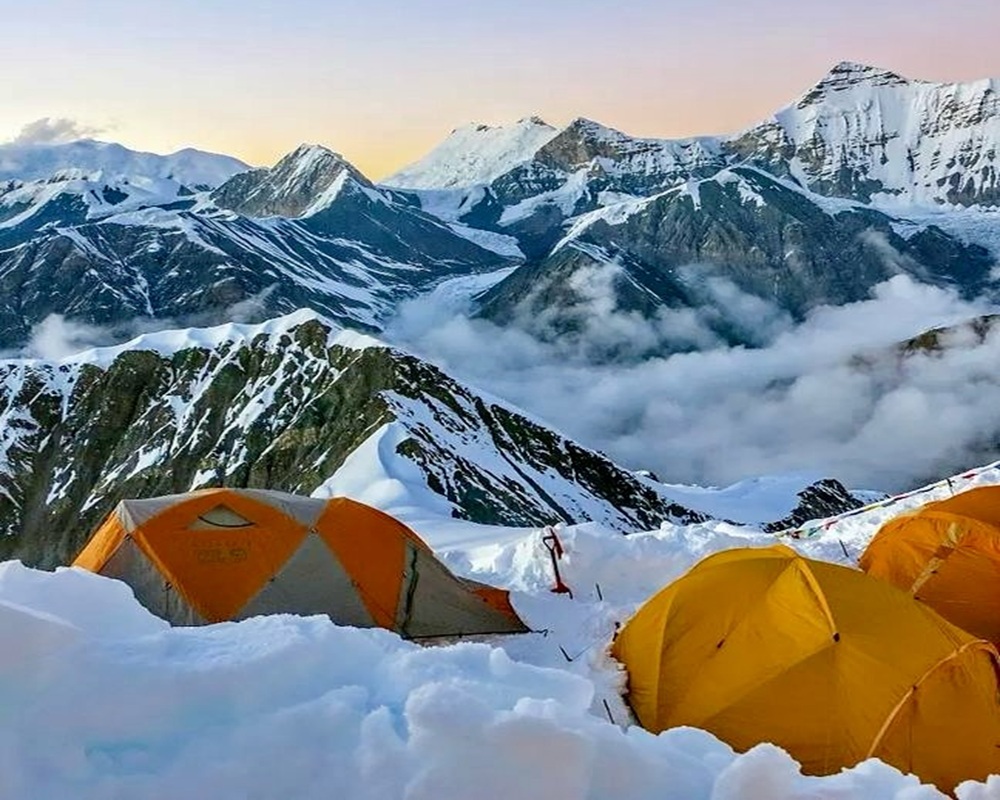
Himlung climbing expeditions usually take a process of over 30 -40 days, with approximately 14 days for acclimatization. Climbers use the "climb high, sleep low" technique moving to Camps 1 (5,435m), 2 (5,800m) and 3 (6,400m above) before descending back to base camp (4,850 -4,925m) in the evenings.
Typically, two to three rotations are done: the first up to Camp 1 and back down, next move all the way to Camp 2 for an overnight, then all the way to Camp 3 for summit acclimatizing. Every turn of the wheel stimulates production of more red cells so that they can carry oxygen, while rest at lower altitudes lessens the likelihood of altitude overload.
Managing High-Altitude Cerebral Edema (HACE) and Pulmonary Edema (HAPE)
High Altitude Cerebral Edema (HACE) and Pulmonary Edema are uncommon but serious. HACO induces swelling in the brain that can result in confusion, loss of coordination and potentially unconsciousness. HAPE fills the lungs with fluid, and it can be fatal because breathing becomes very hard, often within two days after fast ascent to 2,500 metres. The threat increases substantially with rapid ascents, climbing to a height of 4,559 meters in less than 22 hours, raising the incidence of HAPE from 0.2 percent to more than seven percent.
Slow and carefully supervised feeding significantly reduces this risk. Perhaps while confusing, at any sign of trouble breathing or overall downhill condition during rest, it is time to get down immediately.
How to Overcome These Challenges?
Preparation starts months before the climb. Condition yourself with over 16 weeks of cardiovascular and interval training.
Drink 3-4 liters of water per day, eat high-calorie food to keep your energy up and take medication such as Diamox (acetazolamide) only if prescribed.
When you have symptoms, never climb higher; instead, take rest days and short acclimatization hikes.
Communicate with your guides on how you’re feeling; they are trained to notice the difference between typical exhaustion and dangerous altitude responses.
Last but not least, restrict climbing to 300-350 meters of gain per day above an altitude of 2,500m. This rate has been demonstrated to keep risks for HAPE and HACE minimal, even in those with susceptibility to high altitude.
A climb of Himlung Himal involves steep ice walls fronted by glacial terrain and snow slopes, together with difficult mixed rock-ice. Even for regular climbers, this mountain can be a challenging proposition.
The climb follows the North Ridge and ascends 30 to 50 degree slopes, which require front-pointing on crampons on hard alpine ice.
Over 2-3 hours of sustained, technical climbing, climbers ascend ice-sculpted escarpments where placement of the ice axe is a prerequisite for stability and safety - between Camps II and III.
Terrain alternates constantly between snowfields, rocky moraines and exposed ridgelines, disrupting the rhythm and prompting you to adjust your technique each time you set a crampon.
Warmth of the day disrupts ice texture: crusty (read reliable) early morning fields become unpredictable as softened layers cause crampon teeth to penetrate deeper than desired.
The Demanding Summit Ridge
There is a final difficult section, 400m long at an angle of 30–35° before the summit, with hazardous exposure and very real potential to fall.
Each maneuver requires precise footwork and mental concentration, while judgment becomes fogged by altitude fatigue, and reactions slow.
A single slip on this ridge and the results can be catastrophic, which is why the final 1,100 metres of climbing are a true challenge of technical ability and mind control.
Summit day usually requires 8-10 hours of solid climbing, and the balance between what’s left in the tank to ascend and return is a survival element that is often passed over.
Crevasse Navigation and Glacier Travel
Negotiating glacier sections like the Pangir Glacier demands team ropework and vigilance for hidden crevasses.
Climbers check through snow-crossed fissures, some bridged and safe, others open and wide enough to be fallen into with one misstep.
Probing snow bridges, maintaining a 10–15 m interval and performing a rescue are all skills that every member of the rope team should have.
Some glacier areas include ice, scree and massive boulders, requiring attention to balance as well as the search for a safe route through what is sometimes uncertain terrain.
Short Rope Sections and Self-Arrest Skills
Sherpa guides fix approximately 800m of rope on low-angle terrain, notably up the 30-35 degree summit ridge, where fall consequences are dramatically increased. Jumars mechanical ascenders are what climbers climb up on these lines, whereas descents involve things like figure-eights or disciplined rappelling. The ability to self-arrest using an ice axe is key on unroped descent, especially in poor visibility or a sudden slip.
How to Overcome This Challenge?
Focus on organized mountaineering training pre-trip and take an 8-12 week rock and ice climbing class that will include crampons, self-arrest, rappel systems, etc.
You’ll get some real-world experience by doing glacier travel and crevasse rescue on the alpine training peaks (between 5,000-6,000 meters) such as Lobuche East or Island Peak.
Strengthen grip and upper body with pull-ups, dead hangs and farmer carries, train for long fixed rope ascents while wearing heavy gloves.
There yerself can tidy up the jumar technique and rope management yourself before you reach BC, and ask a focused guide for input on navigating them on your first acclimatization spin for moving well & staying safe.
Condition your legs for downhill terrain with stair climbing and hiking exercises that save the knees during technical descents.
Most of all, develop mental toughness from earlier high-altitude technical climbs; don’t make Himlung your first tough 7,000m peak. Warm up on a technically challenging 6,000-meter peak.
Challenge 3: Extreme Weather Conditions
Himlung Himal Area
Temperature Drops Below -30°C (-22°F)
The bitter cold of Himlung Himal is among the expedition’s most dangerous challenges: The temperature plummets with every meter climbed. At base camp (5,000m), daytime temperatures hover between 5-15°C while at night dip around -5°C, pushing the climbers into a warm layer or two.
The higher you go, the air cools rapidly, and in spring summit conditions will frequently range from -15°C to -25°C at 7,126m, though temperatures plummet even lower during winter forays.
As the temperature usually falls 0.6°C per 100 meters of elevation gain, climbers experience an approximately 36°C difference from base to summit. Beyond Camp III, frostbite is an imminent danger; any skin on fingers, toes, nose or cheek left uncovered can freeze in a matter of minutes.
Exposure to the low end of this range is long enough to thicken your blood and slow circulation, prompting your body to conserve heat by preserving warmth for its vital organs, even if it must forsake extremities in order to do so.
High Winds and Wind Chill Factor
Wind chill makes things infinitely worse, which means Himlung’s cold is much colder than the numbers indicate.
Gentle breezes may be felt at lower camps, but higher elevations are exposed to strong winds, over 40–50 km/h (25–30 mph), sometimes exceeding dangerous speeds.
This wind chill can drop the feeling of temperature to below -25C, at which point skin and unsealed equipment can freeze in less than an hour.
The exposed summit ridge provides no windbreak, and climbers must cope not only with gusts but also with the challenge of balance on steep, thin terrain.
Besides, high wind speeds dehydrate the body surface due to quick evaporation and decrease in system stability in whole directions, increasing the energy demand for every motion.
Sudden Weather Changes in the Manang Region
The weather in the Manang region is prone to unexpected changes, as safe climbs can quickly become life-threatening due to a shift in conditions within just hours.
Spring ascents can begin under clear skies and break down into heavy snowstorms by the afternoon, reducing visibility to metres. They are fueled by snowfall, temperature drops and wind surges that keep climbers pinned down in high camps or force early decisions to descend.
During the day, heat from sunlight melts layers of snow; this is followed at night by refreezing and the development of a crust that offers much less stability. Afternoon degradation is dependable, and so climbers want to push for the summit before 2 PM to begin a descent with more daylight.
Monsoon and Post-Monsoon Weather Patterns
During monsoon (June–August), lower valleys are wet and lush, but if you want to do a rain shadow trek, you may be avoid it by following the natural features that provide shelter. Manang remains dry under the rain-shade.
During post-monsoon months (September–October), however, the presence of layers of moving clouds and the influx of relatively unstable moist air can lead to abrupt rain.
As a result, the most predictable weather windows are in March–May (pre-monsoon) and early September (post-monsoon) when there’s less fresh snow and better stability.
How to Prepare for This Challenge?
If you’re heading out into sub-zero temperatures, investing in the quality gear of an expeditionist, down jackets, insulated pants and boots rated to anything from -40°C upwards is essential.
Strategically layered with a merino base, fleece mid and windproof outer shell to help manage temperature and avoid heat loss.
Obsessively necessary: protect extremities: if you can find mittens (as opposed to gloves), wear them. Use hand warmers in your hands and keep an eye on fingers for numbness or they turning white.
Watch the forecast daily on legit sites, Windy & Mountain-Forecast. Com, tweaking plans as things get worse in summit attempts.
Schedule early summit attempts, leaving around 2- 3 AM to descend before the afternoon weather deteriorates.
Finally, acclimate well before the final ascent as thin air suppresses normal heat production and increases susceptibility to cold.
Challenge 4: Physical Endurance Requirements
Sustained Multi-Day Climbing at Altitude
Himlung Himal requires 25-30 days of continuous physical effort. Half of this time is spent above an altitude of 4000 meters, where oxygen levels are critical. The access hike takes 5–8 hours of walking/jumping daily for a week, with loads weighing between 15–20 kg.
Climbers at base camp cycle through higher camps: Camp I (5,450m), Camp II (6,000m) and Camp III(6,400m+), up 6-8 hours per day.
Among these rotations, they return to rest at Base Camp, but with the constantly cycling up and down build a deep-seated fatigue over time.
Even at rest, the human heart and circulatory system operate under more pressure than we’re accustomed to. Base Camp’s thin air. This means your heart will race higher and higher all around the clock.
Exhaustion and Energy Management
Mountaineering studies indicate climbers burn 4,500–6,000 kilocalories/day at elevations of 5,000 to 8,000 meters, and most eat only about two-thirds to three-quarters of that amount because they do not feel like eating.
This extreme energy deficit causes the body to feed off of what little muscle we have, which explains why most expeditionary weight loss is stripped from lean tissue and not fat.
Carbohydrates are the primary energy source for the body at Himlung, and 6- 8 g/kg BW is needed every day. Nevertheless, the loss of appetite that people experience under high altitude and the dearth of foods in a village make it nearly impossible to get enough food to match those caloric needs, resulting in an ongoing state of malnutrition.
On summit day, the body is pushed to its extreme, climbers ascend 1,100 meters in 10–12 hours on close to no stored glycogen. When that store is depleted, the body burns muscle protein for energy, an additional source of debilitation during the critical period.
Sleep Deprivation at High Camps
Beyond 5,000 metres, getting good rest is all but impossible because of a phenomenon called Cheyne–Stokes respiration that introduces cyclical breathing irregularities.
Sleep comes in brief 5–15-minute episodes, and climbers are left with a total of only 2–4 hours of continuous sleep a night.
Repeated awakenings due to cold and sudden drops in oxygen prevent them from fully recovering. On summit day, climbers frequently do not sleep for 36 to 48 hours and start climbing around 2 – 3 AM after a few nights of little to no sleep.
That sleep deficit lowers focus, coordination, and decision-making when the route requires pinpoint accuracy.
Maintaining Strength During Summit Push
Whereas summit day brings the expedition’s most profound physical test: 6,500 vertical feet of climbing across 30-35 degree terrain and at least ten to twelve continuous hours of hard exertion.
By now, climbers are exhausted from the three rotation cycles and have to find that last bit of energy for the final push up. They require almost as much effort and attention to such detail going down, when you’re already at your most tired and dehydrated.
Accidents typically occur during the descent, as climbers lower themselves through technical sections on wobbly legs after their long effort to reach the top.
How to Prepare for This Challenge
Start developing structured training six months out, focusing on cardio activities like running, cycling or hiking to improve endurance.
The last 2-3 months, ramp up some intensity do two 60-75 minute moderate sessions a couple of times each week and do some intense work on another two days of the week for 30–35 minutes.
To be in good condition to move a heavy pack over steep terrain, you should develop your legs with step-ups, lunges, squats, and weight hikes.
Integrate upper-body strength work like pull-ups, pushups and rope climbing to develop grip and stamina for fixed-rope sections.
Cut out heavy training at least 10 days before travel to ensure full recovery and recharge the energy stores.
Support your training with good quality nutrition and aim to eat 6-8g of carbohydrates/kg bodyweight per day to optimise glycogen availability.
Finally, super-tweak your eating at altitude on previous high-mountain treks: test out which foods your stomach tolerates best to minimize digestive stress.
Challenge 5: Objective Hazards
Avalanche Risk Assessment
Avalanches are one of the most lethal natural risks on Himlung Himal, particularly on slopes steeper than 30 degrees that can topple packed snow at any moment. Because the glacier approach and some of the sections near higher camps cross through riskier avalanche terrain, we were fortunate to have timing on our side.
Climbers traverse these dangerous spaces in the morning (usually between 2-4 am), before the sun softens the snows. As the day heats up and melting intensifies, snow bonds weaken, and an avalanche becomes much more likely.
Avalanches can be initiated by heavy snowfall, vibration from falling rock or ice, or internal weakness resulting from melting and refreezing of snow.
While Himlung’s avalanche risk is lower than that of steeper Himalaya ascents, mountaineers still have to exercise strict timing discipline and never grow complacent, because a single lapse in attention can turn a manageable risk into a catastrophe.
Serac Fall Dangers
Ice towers known as seracs that form on glaciers and create crevasses represent a serious hazard to any people passing underneath them. They will cave in without warning when temperatures or the internal structure of ice weaken under gravity.
Some sections of the route below these icefalls have fixed ropes to prevent slipping and to hold climbers independently in case of a fall, although the ropes became buried by snow and risked being covered by avalanche debris; however, they cannot offer protection against blocks of falling ice.
Seracs are unpredictable and no equipment or technique can entirely mitigate the danger, so your sole defense is speed and timing.
Rockfall in Warming Conditions
When the sun heats the peaks, which are free of snow, the ice that holds the loose rocks melts, liberating debris.These loose rocks roll down hillsides, transforming what had been a safe ridge line into a danger area by late afternoon.
The 400 meters of summit ridge at 30- 35 degrees has to be climbed before the afternoon’s warming rockfall commences. The guide's schedule starts on the summit early, so climbers are through key sections by 2 P.M., to reduce exposure to falling debris.
Non-negotiable: Helmet, one that does not stop direct heavy hits to the skull but prevents smaller rock strikes and head injuries resulting from an accidental slip.
Hidden Crevasses and Snow Bridges
Himalayan glaciers mask deep crevasses under a thin layer of snow bridge that appears stolid but gives way under pressure,” causing climbers to tumble as much as 50 meters.
The path to Himlung includes a number of glacial crossings, so rope teamwork for self-preservation becomes crucial. Climbers follow in roped parties of two or three spaced 10–15 m apart for quick rescue if one party member breaks through a bridge.
Guides are always exploring the snow bridges with their poles and finding out where they are weak or where you have to cross one at a time because of holes on the other end.
Hidden crevasses still present the largest danger on Himlung, and they’re not much of a problem if you know how to manage the ropes wisely, with cautious guides behind them.
How to Overcome This Challenge?
Opt for professional guides with at least 5 Himlung summits under their belt; they know the seasonal dangers, safe route stops and emergency evac plans on retainer.
Begin leaving camp regularly between 2-3 AM to negotiate glaciers and serac zones before morning heat undermines snow or ice stability.
Always exhibit rope discipline: stay tied in, keep 10–15 meters of separation, move cautiously.
We will never know what the chances were to hit a head at rockfall or ledge slip, but it’s a reason for constant wear of helmets in the far more technical sections.
Follow the weather closely by way of the Windy app and the guide updates, and turn around if winds pick up to more than 50 km/h or visibility falls below 100 meters.
Agree in advance on a policy of no compromise on turnaround times with your team – if time limits are elapsed, head down without looking back, however close or attainable the summit may be.
Train on smaller peaks for rope handling and crevasse rescue to be able to move quickly in case of emergencies when you finally attempt Himlung.
Challenge 6: Logistical and Organizational Challenges
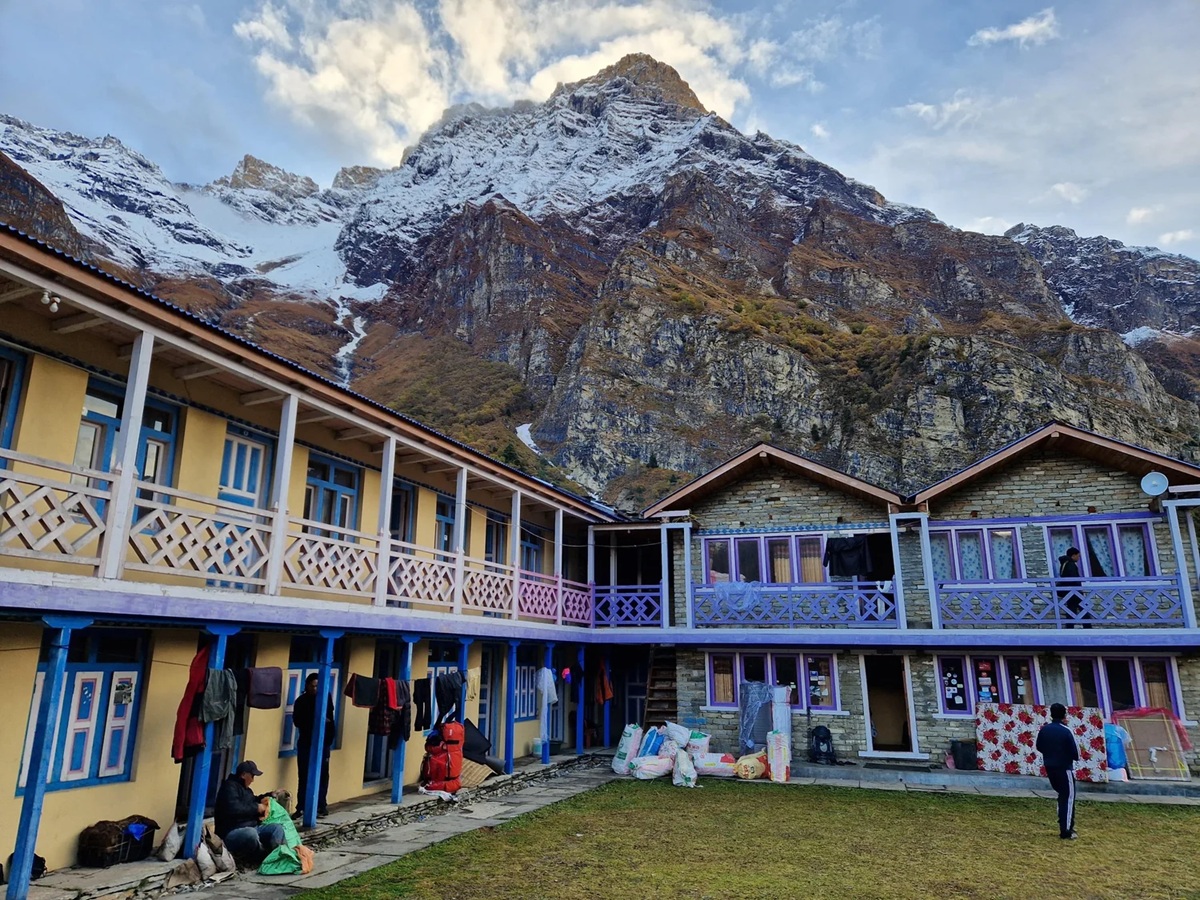
Himlung Himal Climbing Enroute Accommodation
Permit Complications and Regulations
Climbing Himlung Himal requires multiple permits, which can be tricky to navigate. Climbers must have a Climbing Permit (5,500 USD in autumn or 7,000 USD in spring), a Restricted Area Permit for the Nar-Phu valley (100 USD per person per week) and an Annapurna Conservation Area Permit (25 USD per person). Nepal’s law also mandates that climbers over 6,000 meters obtain a government-certified guide.
It takes time to process permits, and changes in fees or rules from season to season can cause holdups. Incomplete paperwork is a sure route to delayed starts or outright cancellation of trips, so early coordination is key.
The remote location of Himlung makes logistics an immense challenge.
There is no airstrip close by, so teams have to drive overland from Kathmandu to Koto, a journey of more than 14 hours. From Koto, it takes climbers 5 to 7 days to reach Base Camp, establishing and moving gear ropes, tents, and climbing systems.
Over 800 pounds of group gear is carried by porters and sherpas - that’s a lot of weight and needs to be balanced evenly and with communication. In the monsoon season, road conditions deteriorate , and landslides can cut off roads, making costlier helicopter options necessary.
Communication Difficulties in the Region
There is no mobile signal in Nar-Phu Valley, so communication is severely limited. There's no communication with the outside world, other than satellite phones that work in good weather and when signal strength is reliable.
Technical problems or subpar conditions can also sever communication lines, leaving those who might be involved in crashes or other emergencies without aid.
Coordination With The Expedition Teams And Staff
A typical Himlung expedition would have 15 to 25 members, ranging from climbers and Sherpas to cooks and porters. Getting a group so diverse to play together regularly for over 30 days is one of the hardest things you will ever do and requires incredible teamwork and leadership.
Expeditions are often overseen by government liaison officers, which adds another layer of coordination and approval. Even in the best of times, having to make quick decisions under intense pressure amid language barriers and differing cultures can put people on edge.
How to Overcome This Challenge?
Begin the organizing process at least six months in advance so that all permit approvals and logistics have time to fall into place.
Do business with established expedition companies that manage the paperwork, transport and organization for you, rather than going at it yourself.
Get an equipment list before you leave to make sure that each piece of gear makes it to Base Camp as expected.
Base Camp has satellite phones available and tests their use in case of an emergency contact.
Establish clear team communication standards on leadership, safety protocols and decision making under dynamic conditions.
Challenge 7: Mental and Psychological Barriers
Dealing with Fear and Uncertainty
The isolation, hard terrain and erratic weather of Himlung Himal mean there is always uncertainty to keep the anxiety stoked long before the climb begins.
Fear comes in many disguises: fear of falling, coming down with altitude sickness, being caught out by bad weather or confronting the mountain’s elemental danger. The risk becomes even more terrifying by the fact that weather predictions are not trustworthy at high altitudes.
Climbers often plan summit pushes on peaks based on optimistic forecasts, only to be surprised by snow or wind. Low oxygen also slows thinking and blurs focus, leading to a cycle in which fear triggers poor decisions, while poor decisions compound the risk.
When it counts most, judgment is clouded as “summit fever,” a primal desperation to reach the top despite everything, mixed with fear and confusion.
Maintaining Motivation During Setbacks
Expeditions rarely flow smoothly. Poor weather, altitude challenges and team illness test motivation more than muscle. Days living in tents at 5,000 meters crush morale; boredom, cold, and deprivation turn every setback into a heavier burden.
Success climbers practice short-term target setting focusing on getting to the next camp or doing one rotation rather than fixating on the far-off 7,126-meter summit.
Confidence from earlier climbs is another factor that helps keep motivation up: Those who’ve already summited six-thousanders know they can take it, even when conditions are on the decline.
Decision-Making Under Stress
High altitude pressures climbers into life-or-death decisions while oxygen-starved and weak. Each decision, whether to press on for the summit, whether to stop or turn back, is made under pressure and fatigue.
Elite climbers access mindful reflection, comparing their thoughts against reason to prevent them from emotionally reacting and making impulsive decisions. But group tension complicates everything. When guides say stop, and others keep insisting on climbing, communication can crack, and danger spikes quickly. Managing emotions is important; denying fear may sound tough, but tamping it down ultimately creates silent pressure within the collective.
Isolation and Team Dynamics
To spend almost a month removed from life as normal takes an emotional toll and can be lonely, even for a group. Close quarters within tents lead to near-constant interaction and inevitable friction over duties, personality clashes, and bad communication. As fatigue takes hold, teams begin to miss important messages; they start turning inward and emotionally isolating themselves, which is precisely when they need cohesion.
Keeping things honest and open about stress is so important for safety and trust.
How to Overcome This Challenge?
Start meditation and deep breathing at least eight weeks before departure; a brief daily practice acclimates the mind to calm focus, stress release.
Ascend a 6,000m peak before you go to know if you can keep your nerve in a tight spot.
Get to know your team and guides long before you arrive at base camp; trust and understanding only come with time.
Determine strict turnaround time points before the climb so that there is no debating them during emotion-charged summit attempts.
Try visualisation a few times a week of you climbing, managing fear calmly and making wise turnaround decisions.
Conduct team debriefs daily to discuss mental obstacles, adapt plans and communicate openly.
Establish several small goals, like getting to the next camp or completing a rotating shift; each victory may help build motivation and maintain morale.
Challenge 8: Medical and Health Risks
Limited Medical Support Above Base Camp
Because Himlung is so remote, a ground rescue is out of the question; helicopters are the only option for serious emergencies at higher camps. There are no doctors or hospitals within 8 days’ walk/ride of Base Camp, and supplies remain basic first aid, painkillers and oxygen.
The higher-end care, such as IV fluids or life-saving defibrillators, is out of reach, leaving climbers exposed to the elements when emergencies arise. Mobilization for the evacuation from Camp III to Kathmandu with helicopter transport takes 20–60 minutes after coordination, causing dangerous injury-treatment windows.
Now every climber would need comprehensive insurance with helicopter cover.
Frostbite and Cold-Injury Prevention
If above 6,000 meters (20,000 feet), frostbite attacks quickly; at -20 to -30°C (-4 to -22°F) with wind chill, exposed skin freezes in minutes.
Numbness, white skin and loss of feeling are warnings that you’re experiencing early frostbite; waiting for pain means the injury is well underway. Hands are most vulnerable during technical moves when climbers strip off thick mitts to clip gear or swing ice axes.
Prevention will mean adopting a regular regimen of glove checks, using hand warmers promptly, and confronting the hard truth that, in severe cases, amputation may be necessary.
Dehydration at High Altitude
Gasping at altitude wicks moisture from the body, even when cold trickles thirst. Dehydration worsens altitude sickness, increases the risk of frostbite and confuses thinking when making decisions is most crucial. Most climbers drink too much in hopes they can prevent AMS; sip 3-4 liters per day instead–a bit at a time for consistent hydration.
Pre-existing Conditions and Risk Factors
Having heart disease, lung conditions, sleep apnea, sickle cell trait, or anemia greatly elevates the danger at Himlung’s elevation. Altitude sickness is not a respecter of fitness level, genetics, prior experience, and rate of ascent determine risk instead. To establish safe altitude limits, doctor approval is required upfront for those with hypertension, diabetes or asthma.
How to Prepare for This Challenge?
Secure trip insurance that will reimburse the cost of a helicopter rescue up to 7,126 meters, including coverage for pre-existing conditions.
But if you have heart, lung, metabolic or sleep concerns, check with a physician before heading out to receive custom advice on altitude.
Arm yourself with a full medical kit complete with frostbite supplies (hand warmers, antibiotic cream), altitude drugs (Diamox, dexamethasone), anti-nausea meds and blister care.
Bag some frostbite-busting behaviors, go hand-checking every hour, swap mittens before they freeze, and always carry extra.
Sip 3 - 4 litres per day from Day 1; avoid caffeine, alcohol that induce a flow of fluid.
Challenge 9: Technical Equipment Demands
Essential Gear for 7000m Peaks
Himlung Himal requires specialized gear designed for the harshest cold and steepest terrain.
Personal gear includes an ice axe, crampons, a helmet, a harness with jumars for ascending the rope (for climbing the mountains), carabiners and figure-eight descending devices. Similarly, 3 Clothing Top quality down Insulation to – 40 C° is required, and this includes expedition Down Suits, Jackets, Merino Base Layers Wind windproof shells Heavy Insulated boots.
Sleeping equipment: 5-season bags rated -40 °C or colder, thick insulated pads and foam mats to prevent cold from the ground at high camps. Sherpas ferry team gear, including tents, 800 meters of fixed ropes on steep sections, hardware, stoves and cooking equipment.
Equipment Failure in Extreme Cold
Freezing temperatures wreck gear fast. Camera batteries fail in hours, oxygen regulators ice up and shut down (as happened on Everest, where 10 out of 39 malfunctioned all at once), zippers freeze closed, and wet down loses its warmth., Oxygen systems are particularly treacherous; cold shrinks interior components, halting the flow abruptly and prompting emergency descent., Even good gear misbehaves headlamps flicker, water bottles freeze solid, and tent zippers need regular clearing.
The Right Weight and What to Pack High
Climbers are expected to carry 15–20kg of personal gear up to the higher camps, while Sherpas look after group loads. Excessive weight above 6,000 meters sucks one’s strength quickly, but inadequate clothing is frostbite bait. Cramped-pack philosophy eliminates non-essentials, but maintains survival basics for the final big push.
Oxygen Supplementation Decisions
And at 7,126 meters, supplementary oxygen remains optional as Himlung lies below the actual 8,000-meter death zone.
Bottled oxygen is an even bigger benefit to folks who are susceptible to altitude sickness, which decreases your risk of getting AMS, HACE and HAPE.
Each bottle adds 8–10kg, so teams weigh medical needs against the burden of carry. Most maintain emergency supplies at camps and don't submit with full bottles.
How to Get Ready for This Test?
Purchase reliable brands like Black Diamond, Petzl, Salewa, or Mountain Hardwear. Budget gear doesn't hold up when temperatures drop.
Test it all on 5,000–6,000m peaks to find and fix problems before Himlung.
Cram no-brainer backups for essentials like the extra headlamp, spare gloves or emergency jacket because breakdowns occur well beyond help.
Discuss with your operator what group equipment they supply and what's your own responsibility.
Discuss oxygen plans with guides and the expedition doctor, if available, in advance, especially if you've suffered from altitude sickness in the past.
Challenge 10: The Remote Location Factor
Access Problem to Himlung Base Camp
Himlung lies in the confined Nar-Phu Valley, 150 km north west of Kathmandu, a journey which would take more than 14 hours by jeep. From there, it is a 5-7 day portage across the Pangir Glacier and rough country to reach Base Camp; there's no airstrip to shorten that journey. Moreover, roads closed with regularity because of monsoon landslides, adding hours onto long delays well before the climbing even begins.
Evacuation Challenges in Emergencies
From higher camps down and with Sherpa assistance on foot, no engineered climber can do it solo in 6-12 hours. However, a rescue by helicopter from Base Camp is weather permitting; a storm or simply some winds could close things down and force one to wait 12–24 hours per flight. Additionally, the satellite phones connect through to operators in Kathmandu, if they can establish a connection at the right time and with the weather holding.
Distance from Medical Facilities
Base Camp provides only basic first aid, and no doctors or advanced care are close at hand. In fact, the closest hospitals are 12–14 hours away by road, with limited knowledge of high altitude emergencies. Therefore, all serious medical conditions require an immediate descent as treatment above Base Camp is still not feasible.
Limited Rescue Infrastructure
There is no rescue gear in the Nar-Phu Valley, no trained medics, no backup facilities to send hikers to.
Guides make all calls using satellite telephones, and the availability of a helicopter, climbers control nothing during emergencies.
How to Train for This Challenge?
Get comprehensive rescue insurance that includes helicopters, transport and hospital stays. There is no negotiating here.
Be sure to check whether satellite phones will be available in an emergency.
Establish clear rules for evacuation upfront, including how it will work, whom you’ll contact and who has final say.
Opt for spring or early-autumn missions to skirt monsoon weather, which can inhibit rescues.
Challenge 11: Summit-to-Descent Dangers
Caption
The 12-Hour Summit Day
The last push takes 10-12 hours from the middle of the night, ascending 800-1100 meters in exhaustion and thinning air. Energy burns out quick enough, yet the way back is impossible once the pressure of mentality starts to take on shape.
Tip: Leave camps at 2–3 AM. And make hard cutoffs at 2 PM, no matter how tantalizingly near the summit may seem.
High-Altitude Winds
Winds overhead in the jet stream tear tents at Camp III and blast climbers on exposed ridges, reaching 40-50 km/h with no place to hide. Consequently, balance gives out, hypothermia takes over, and each step pushes back against the blast.
Tip: Check the Windy app hourly. Cancel if winds exceed 50 km/h or gusts reach 60 km/h.
The Steepest Final 400m
The final 400 meters turn to 45-50 degrees right, where exhaustion peaks pure technical hell. Foggy thinking from altitude drain needs to be replaced with muscle memory.
Tip: Train on 45–50 degree ice beforehand. Learn how to front point crampons and swing an ice axe.
Descending on Jelly Legs
70% of accidents occur on descent after 10-12 hour summit days – legs shake, brains lose all cognitive function. One thousand five hundred meters across technical terrain requires concentration when energy falls back.
Tip: Move slow. Break every 20–30 minutes. Use poles. The descent is longer than the ascent, accept it.
Pangir Glacier Crevasses
To descend that next 2-mile-long, threatening icefall means bypassing unseen splits under the snow bridges and taking whatever concentration fatigue has not killed. A single worn step lower, and you are 20 to 50 meters down.
Tip: Keep the rope on, 10-15 meters apart. Follow the guide probing. Prioritise safety over speed.
Load-Carry Fatigue
Acclimatization rotations demand 15–20kg carries over 4–6 rotations, sapping strength before summit day arrives. However, Sherpas assist, but you still carry your gear on your back.
Tip: Pack right, only take the essentials for a high camp. Pre-position duplicates with the Sherpas to reduce loads to 8-10kg. Here is out detailed Peak Climbing packing List for your reference.
False Summit Blues
Hump ridges and squinty peaks fool climbers into thinking the top is reached, then there are more mountains to climb on empty. Subsequently, mental collapse follows false victories.
Tip: Study route photos. Know the true summit's look. Anticipate deception, save energy for the real push.
Extreme Wind Chill
Feels like -30 or colder with that air plus winds of 50 km/h, skin frostbites in 10–15 minutes.
Tip: Mittens over gloves. Pocket hand warmers. Restrict bare hands to 1-2 minutes. Check fingers hourly.
Mental Crash on Descent
Summit high disappears quickly into exhaustion fog, slop footwork on 45–50 degree slopes once the hazard is most significant.
Tip: Consider descending the critical phase. Use mantras like "one step." Have a guided coach from behind.
Final Say: Are Himlung Himal Challenges for You?
Himlung demands brutal honesty. You will require experience at the 6,000-meter altitude of a technical and physical nature, cardio fitness for twice-weekly rounds of 60–75 minutes minimum and also mental toughness to cope with long periods in isolation, plus a budget for some of the best gear available (which doesn't have to be expensive) and experienced operators. The naive mountaineers' risk causes disaster in this isolated death zone.
However, success offers rare rewards: solitude at 7,126 meters, a demonstration of technical mastery, personal breakthrough. No crowds. Pure mountain. Book with operators who know Himlung like the back of their hand. Safety first. Preparation is absolute.
Dipak starts to step up from porter, guide, and trekking leader to the company owner. Sometimes he share his experience with others as well as wrote in local travel news. Most of time he spend his time on mountain and his company.