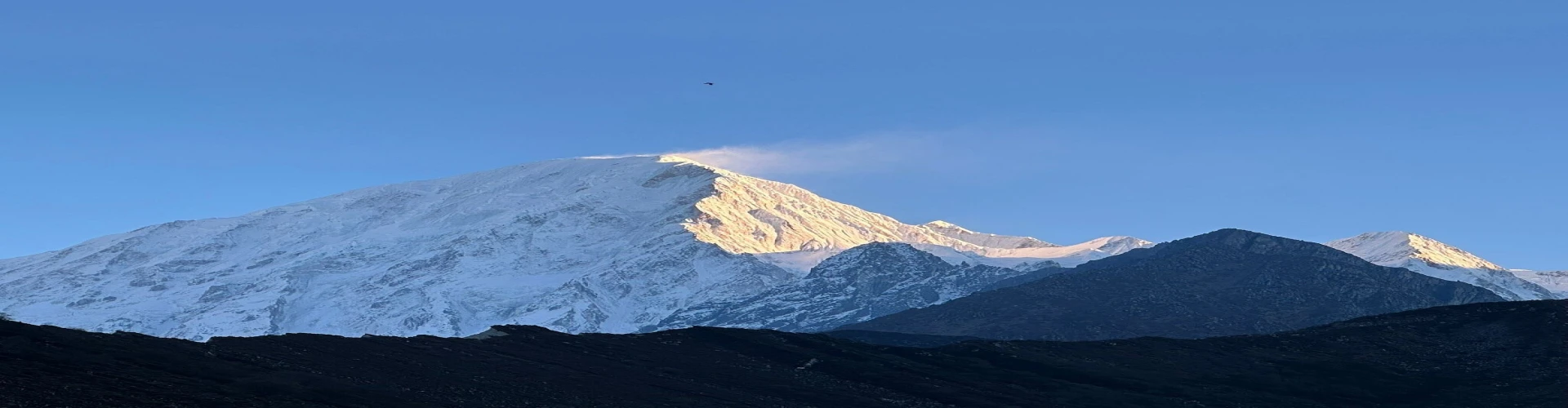
Shyala Village, sometimes called Shyala Kharka, is a typical Tibetan village. It is positioned at a much higher 3,575m (11,732 ft). The village lies in the far remote Tibetan hill bordering the Manaslu Conservation Area in Nepal. It is located along the popular Manaslu Circuit Trek approach.
Shyala is situated conveniently halfway between Namrung and Samagaun. It offers trekkers breathtaking high mountain scenery. The village is a restorative stop in a central alpine meadow and rolling hills. These provide a lovely place to rest. It is also perfect for acclimating before moving to higher and more extreme altitude regions like Larkya La.
Shyala has a unique location in a challenging geography. The village is special because of its expansive mountain views. The scenery from Shyala is absolutely stunning. Trekkers can see magnificent peaks like Mount Manaslu, Himalchuli, Ngadi Chuli, and Ganesh Himal.
These mountains appear very different here. They are starkly illuminated by the golden light of sunrise and sunset, creating a unique experience for trekkers.
On the cultural side, Shyala village has a very Tibetan feel to it in terms of its general character. The style of buildings is mostly stone-and-wood houses. You are likely to see people in maroon robes spending time at the village and monks going about their duties, prayer flags fluttering about the place, and the villagers engaged in traditional activities.
The monastery of Pungyen Gompa is one of the important spiritual sites in this region. The monastery sits above the village and offers peace, quiet, and a view into the practices of Tibetan Buddhism.
Shyala Village has it all: nature, culture, and trekking. You cannot miss this place in your plan to do the Manaslu Circuit.
Shyala Village Facts
Fact | Detail |
Elevation | ~3,575 meters (~11,732 ft) |
Alternate Name | Shyala Kharka |
Region | Manaslu Conservation Area |
District | Gorkha, Nepal |
Population | ~150–200 residents |
Main Ethnicity | Tibetan-Nubri |
Primary Livelihood | High-altitude farming & yak herding |
Trekking Route | Part of the Manaslu Circuit Trek |
Acclimatization Stop | First acclimatization point on the trek |
Nearby Village | 3 km from Samagaun |
Religious Site | Pungyen Gompa monastery |
Flora | Alpine meadows and juniper |
Fauna | Himalayan tahr, blue sheep, pikas |
Water Source | Shyala Khola stream |
Shyala Village Location
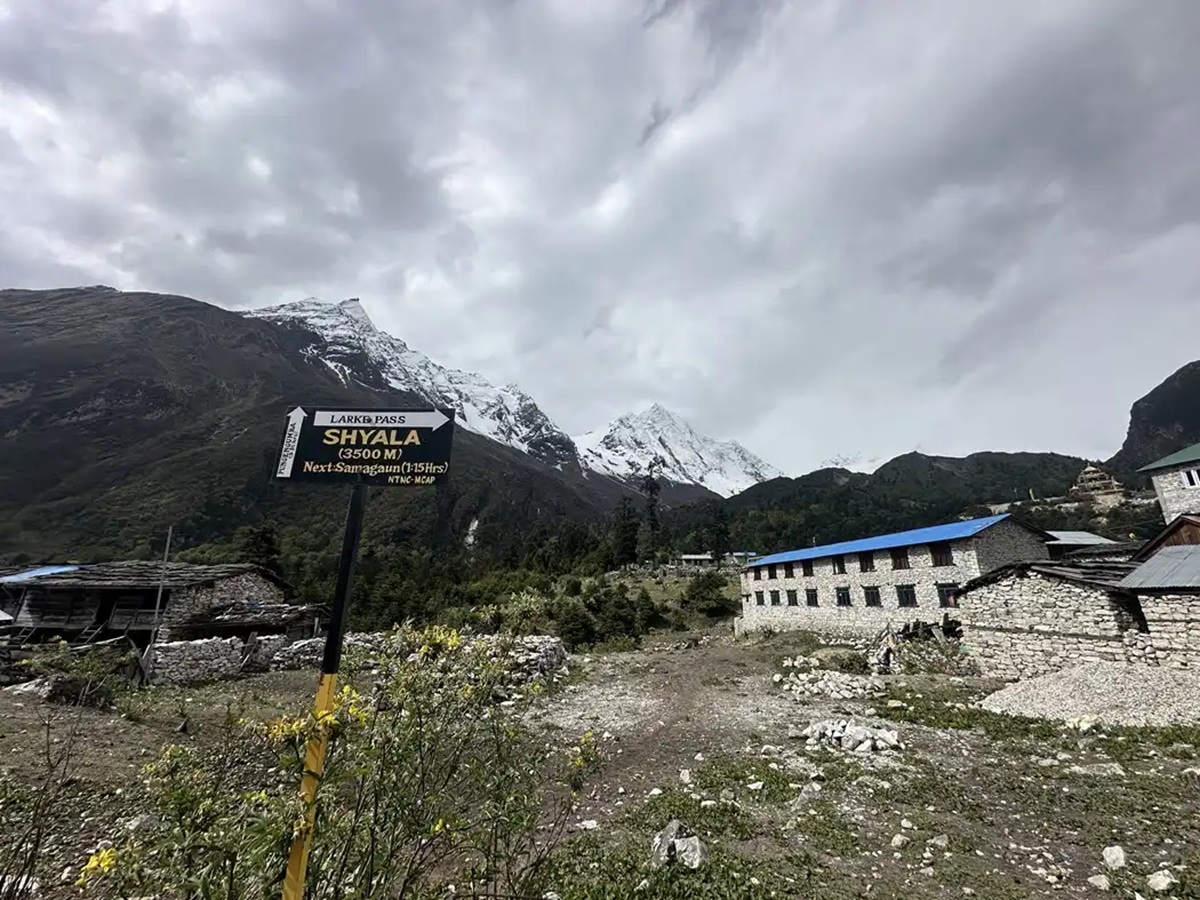
Shyala Village (Shyala Kharka) is a small settlement in Gorkha District located in the center of the Manaslu Conservation Area. Sitting at an altitude of about 3,575 meters (11,732 feet) above sea level, it is an isolated village located in the high mountain region.
In terms of geography, Shyala is located on a hillside against rugged mountains, alpine pastures, and rhododendron forests, and generously displays pleasing and incredible panoramic views of the Himalayan summits year-round. Included among the mountain summits are Manaslu (8,163m), Himalchuli (7,893m), Ngadi Chuli (7,871 m), and Ganesh Himal.
The latitude and longitude of Shyala Village are given as follows
- Approx Latitude Position: 28.5742° N (28° 34′ 27″)
- Approx Longitude Position: 84.6721° E (84° 40′ 22″)
Shyala is located near the Budhi Gandaki River, which originates from the glaciers melting from Manaslu and its neighboring mountains. It has a Tibetan cultural base, has traditional stone and wood housing, has traditional monasteries like the Pungyen Gompa, and, as a village, is still situated within the region's biodiversity of the Manaslu Conservation Area Regional protected ecosystem.
How to Reach Shyala From Kathmandu During Manalsu Circuit Trek?
Step 1: Drive from Kathmandu to Soti Khola
- Distance: Approximately 145 km
- Duration: 7–8 hours
- Mode of Transport: Private jeep or local bus
The drive from Kathmandu to Soti Khola showcases stunning sights of the small villages and towns that make up rural Nepal. This is a great chance to see how people in the rural areas live each day.
Road conditions obviously vary; parts of the road are paved but truthfully, much of the time the road condition is rough, especially the closer you get to your trailhead.
If you want to be comfortable and have flexibility in your schedule, we would certainly recommend a can or private jeep. If you are on a tight budget, we would recommend utilizing the local bus option.
Step 2: Trek from Soti Khola to Jagat
- Distance: 20 km
- Duration (Approximate): 6 – 7 hours
The trek from Soti Khola to Jagat is along a winding path through thick forestry, terraced farmland, local villages, and many suspension bridges crossing the Budhi Gandaki River. The geological views are superb, and trekkers are sure to see some everyday activities on their journey.
Trekking from Soti Khola to Jagat is an easy uphill. In terms of trekking in the Manaslu area, portions of this trek are a good introduction to the more demanding trail.
Step 3: Hike from Jagat to Lho
- Distance: Roughly 17 km
- Estimated Duration: 6 to 7 Hours
The hike from Jagat to Lho is about 17 km, and will take around 6 to 7 hours. The trek, while an uphill progression through the various villages - Sirdibas and Philim - allows you time to enjoy the scenery, and even observe the Traditions and Culture of the people in these villages.
The elevation gain gives you some great views of neighboring mountains and passing through lush Valleys. You will likely see examples of local people in their communities around the time of lunch as you are hiking to Lho.
Step 4: Trek from Lho to Shyala Village
- Distance: Approximately 3 km
- Duration: 1–2 hours
You will continue to climb after leaving Lho, but the incline is gentle, and you will be walking through varied alpine meadows and enjoying beautiful views of the surrounding mountain peaks.
About midway to Shyala Village, you will cross the Shyala Khola stream, which is one of the highlights of this beautiful and peaceful section of the trek.
As you approach Shyala Village, you will get to see the full mountain range surrounding you and take in all of the scenery you have just trekked through one last time on this part of the trek.
Why Should Travelers Include Shyala in Their Manaslu Circuit Trek?
Unparalleled Views
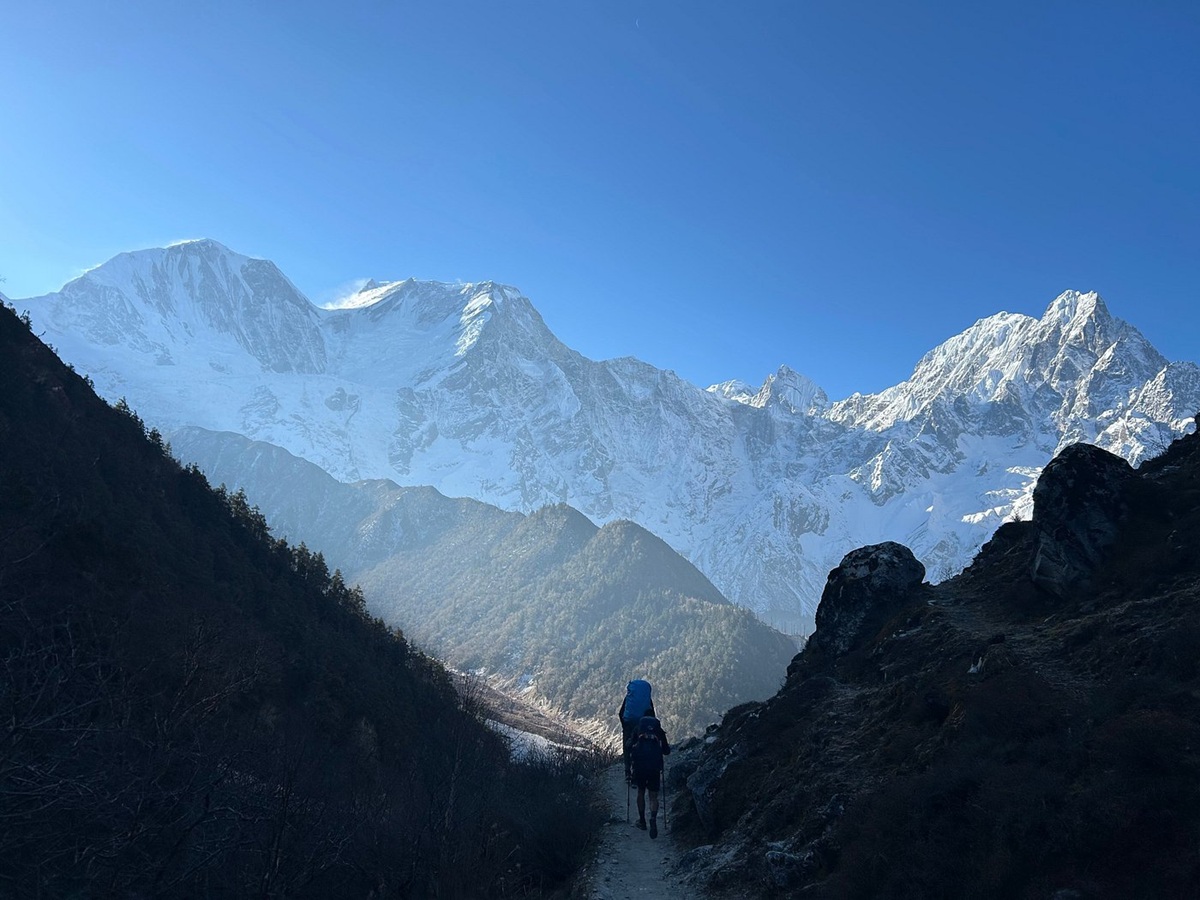
There are unbelievable views of Mount Manaslu (the 8th tallest peak in the world), and the world-famous Himal Chuli, Ngadi Chuli (Peak 29), and Ganesh Himal.
Excellent Acclimatization Place
Shyala is a great acclimatization stop on the Manaslu Circuit Trek. It is high enough that trekkers have a chance to stop and rest; long enough that they can acclimatize to the point they feel they are ready for a long trek to Samagaon or to cross the Larkya La Pass.
In doing this, they will help reduce the probability and negative effects of altitude sickness.
Experience Local Culture
Shyala has been built around Tibetan Buddhist culture visible in architecture, monasteries, and way of life, which indicate the lifestyles of the local residents of the area.
The visitors will be able to see that way of life, engage with local communities, and learn about their spiritual ways of life.
Comfortable Stopping Point
Although remote, Shyala has limited but comfortable accommodation for trekkers. Local teahouses will provide hot food and lodging so travelers can relax and recharge away from the hustle and bustle of the city.
Trek Shyala Village to Larkya La Pass
The trek from Shyala Village to Larkya La Pass is the most challenging but rewarding hike of the Manaslu Circuit Trek. All trekkers begin the hike starting from Shyala Village, a scenic hamlet at approximately 3,575 meters altitude.
The trek to Larkya La Pass starts with first going to Samagaun, around 3 to 4 kilometers away, which is an estimated 1.5 to 2 hours trek. The trek to Samagaun takes trekkers past the tranquil Pungyen Monastery (Pungyen Gumba), an important cultural and spiritual place of the region.
After a short acclimatization stay in Samagaun, we trek on to Samdo, and finally we arrive at Dharamsala (Larkya Phedi), at an elevation of ~4,459 meters.
The trek distance from Shyala to Dharamsala is about 17 to 20 kilometers when you start on the trail at the village of Samdo. It will probably take you 1 to 2 days to complete, depending on the weather, your pace, and acclimatization.
From Dharamsala, we will have several days to prepare for the trek to, and the last big challenge, climbing up and over the Larkya La Pass. The official pass is at 5,106 meters (16,751 feet) and is a high point for the trek. Climbing to the Larkya La Pass from Dharamsala will take a very steep, rocky, and sometimes icy 6 to 8 hours.
Once trekkers have crossed the Larkya La Pass, they have the option to trek back to Bhimtang (approximately 24km total from Dharamsala over the pass).
There are good views of the Himalayas on the descent, including Himlung Himal and Annapurna II.
The trek from Shyala Village to Larkya La Pass is collectively about 30-35 kilometers through Samagaun, Samdo, and Dharamsala, with an elevation ascent from just under 3575 meters at Shyala and ascending to the Pass summit of about 5106 meters.
This trek will require fitness, acclimatization, and preparation with respect to the elevation.
How to Reach Pungeon Gompa From Shyala Village?
- Starting Point: Shyala Village (3,500 m / 11,480 ft)
- Destination: Pungen Gompa (3,870 m / 12,696 ft)
- Distance: Approximately 14 km (8.7 miles) round trip
- Duration: 2–3 hours to the gompa; total trek time around 5–6 hours
- Elevation Gain: ~370 meters (1,214 feet)
- Terrain: Rocky paths, alpine meadows, and panoramic views
The journey through the Manaslu Circuit allows trekkers to immerse themselves in the tranquil landscapes of Nepal and the cultural heritage, including Tibetan Buddhism. One of the best parts of this trek is the side trip to Pungen Gompa after Shyala. Pungen Gompa (located in the Pungyen Valley) is a sacred site for Tibetan Buddhists.
Pungen Gompa is over 400 years old and a source of spiritual devotion for the Buddhist monks and nuns who live and meditate in the monastery. It is worth planning a visit to soak up the atmosphere of the gompa, witness a ritual, or learn about the daily life of the monks and nuns.
The location of the gompa is incredible and offers a unique view of the peaks surrounding the valley, including Mount Manaslu.
The trek to Pungen Gompa from Shyala is a steady uphill hike, and there will be much more variation in views than you've experienced so far.
Because you will be hiking in the early morning, you will be able to experience some peace and solitude, emptiness, and no huge groups of trekkers. When you reach the monastery and enjoy the all-important sense of spirit and space, you will have to hike all the way back to Shyala to make this a round trip in close to a day.
This excursion is not only more of a personal cultural experience, but it is also part of your acclimatisation process before you reach Samagon and beyond.
If you are able to get into Pungen Gompa, it also adds a directional dimensionality to the trek (the Manaslu Circuit Trek or whatever trek you are on) that is absolutely essential; it provides you with the best of local culture and scenic beauty.
Lho to Shyala Distance
The trek from Lho to Shyala is about a distance of 6-7 kilometers (about 3.7-4.3 miles).
Although the path is mostly made up of gentle sloped ascension with oases of steep avenues, it also travels through idyllic forests, terraced farm fields, and mountainous villages of traditional traveler style.
Trekkers usually take about 2-3 hours to cover this distance, depending on how much resting, speed, and travel rate.
There are great views of the hills and mountains around the trek, and this distance is quite agreeable for all, and everyone adjusts to the elevation, traveling all the time.
Shyala to Sama Gaun Distance
The distance from Shyala to Sama Gaun in a straight line through the trekking route taking you through the Manaslu Conservation Area is around 8 - 9 kilometers, or 5 - 5.6 miles, with a gentle overall gain of elevation.
Similar to trekking from Samdo, which by the way we really enjoyed, it was pleasant to trek from Shyala to Sama Gaun; you gradually increase elevation through beautiful scenery, rhododendron forests, and surroundings, and a number of small villas.
Most trekkers will take about 3 - 4 hours to trek from Shyala to Sama Gaun, and this is highly variable depending on the overall trekking pace, taking breaks (for acclimatization or snacks), etc.
While trekking this section, you definitely feel immersed in the views of the mountains and the lives of the local people.
There is a clear link between the distance trekked with the experience of the natural and cultural environment of the Manaslu region.
Shyala Village Altitude and its Effect during the Manaslu Circuit Trek
Shyala sits at around 3575 meters (11,732 feet) above sea level and is an important stop for your acclimatization on the Manaslu Circuit Trek. It is located halfway to your next destination of Samagaon (3530 m), and Shyala lets trekkers acclimatize to the thinning air before gaining more elevation.
Also, it mitigates your risks of ascending in altitude while still exposing you to the dangers of altitude gain, rather than altitude sickness.
Understanding the Effects of Altitude
Although Shyala sits at 3575 meters, the amount of oxygen at that height is about 70% of that at sea level. Trekkers tend to do well at elevations, but trekkers their personnel caution and look for the early signs of altitude sickness and its symptoms of headache, dizziness, and breathing with effort.
As always, acclimatization, hydration, and rest are going to be the best preventative measures so you do not have to turn around on your trek due to altitude sickness.
Importance of Acclimatization in Shyala
The first advantage of spending the night in Shyala is that you can get a night of sleep, which is very important to help you acclimatize to the altitude. This is why it is better to follow the idea of "climb high, sleep low" when trekking, so your body can adjust.
You are likely to enjoy your sleep, as the views of the mountains and the peacefulness of Shyala provide a good environment in which to sleep and acclimatize.
Altitude Sickness Prevention in Shyala Village
Shyala Village is at an altitude of 3575 meters (11,729 feet). It is an important acclimatization area on the Manaslu Circuit Trek. Altitude sickness occurs when our bodies cannot adjust to rapid changes in pressure, so preventing altitude change is critical.
1. Gradual Ascent
You do not want to go up too fast. We need time for our bodies to adjust to oxygen levels being reduced, which is why having rest days after increased altitude isn't a bad thing, and this is also the benefit of sleeping at Shyala.
For example, if you get to Shyala, you may want to consider taking the extra night at Shyala and then going up in altitude.
2. Hydration
Hydration is critical. The body loses fluid at a higher rate as the higher one ascends above sea level. For many, it is important to drink at least 3.5 - 4 Liters of water each day in order to provide hydration and function.
3. Nutrition
A healthy, nutrient-rich diet that provides carbohydrates is very beneficial. It supplies the energy needed for your body to perform well at higher altitudes.
Be sure to select easy-to-digest food. This way, you can maximize good nutrition without taxing your digestive system.
4. Rest and Monitoring
Learn to listen to your body. If you experience symptoms of altitude sickness like headaches or dizziness, allow your body to rest. Use that time to monitor the development of the symptoms or wait for them to subside. If the symptoms persist or worsen, it is time to descend to a lower altitude for recovery.
5. Avoid - Alcohol and Sedatives
Both alcohol and sleeping pills can worsen symptoms associated with altitude sickness. In addition, the best thing is to completely avoid both while on your trek because your body will be working hard to acclimatize.
What Kind of Accommodation Do You Find in Shyala?
Shyala Village has basic but necessary accommodation services. There are simple lodges (teahouses) to accommodate trekkers going on the nearby Manaslu Circuit Trek. Shyala is at approximately 3,575m elevation and has approximately 10 to 15 teahouses/guest houses that were constructed and operated by residents.
The teahouses generally will have very basic, but comfortable accommodation, usually on a twin-share basis. The room at least provides a very simple bed frame, bed mattress, bed pillow, and something to keep you warm for the warmer evenings, those wonderful warm blankets for the cold nights.
If you need these things, you can reasonably expect the following, to name a few:
- Shanti Guest House
- Yeti Guest House
- Nubri Shyala Cottage
- Mountain View Guest House
Most rooms will have a shared bathroom, which will likely be a squat-style toilet and will generally also have some form of manual flush. Generally, rooms will likely not have hot running water. If you are lucky, a place like Nubri Shyala Cottage may have 3 to 4 rooms with attached bathrooms.
Most will also offer a way to take a hot shower for an additional cost. Heating is usually available in the common dining and living rooms to keep trekkers warm at night.
Facilities in Teahouses of Shyala
Charging options in the tea houses
Most tea houses in Shyala allow you to charge your electronic devices like cameras, phones, trekking GPS, etc. Most tea houses will likely have charging plugs in a common area (dumping room, lounge, dining room, etc), rather than in the guest rooms.
In some cases, tea houses will have limited charging plugs, and you will need to coordinate charging with fellow trekkers. Electricity in the village is provided by solar or micro-hydroplant, and is reliable but limited.
Wi-Fi access
There is Wi-Fi access in Shyala, but it is not universal. A few of the tea houses offer Wi-Fi to their guests. However, as most of the tea houses are in the same narrow valley at an altitude of 4100m (13,400 feet), connectivity is generally slow and intermittent due to the poor, high-altitude, remote infrastructure.
In many cases, Wi-Fi is only available in a common area for an added cost, rather than in the guest room. Trekkers should expect only intermittent access to the internet, and primarily for essential communication, not for streaming any media or heavy data use.
Hot Shower Availability
Some teahouses have hot showers; however, these are considered an extra amenity and usually at an additional cost, generally between $2- $5 per shower.
Showers often use solar heaters or wood-fired heaters, and sometimes they do not work because of the seasonal water supply or weather.
It is best to check if the teahouse has hot showers, as some teahouses only have cold showers, or no showers at all, which may or may not be a concern to trekkers, depending on the person's comfort level.
Washrooms in Shyala
The washrooms at the teahouses in Shyala Village all have basic facilities. Most teahouses in Shyala provide shared bathrooms, but all are equipped with squat-style toilets, which are standard in remote Himalayan trekking locations.
Some teahouses (Nubri Shyala Cottage) have 3 to 4 shared bathrooms with attached bathrooms, with a little more privacy and convenience. Typically, there is no modern plumbing in the bathrooms, so some teahouses will have nearby streams or springs to support bringing in water, and sometimes, the water will be heated by solar or gas heater systems.
Shops and Local Supplies
Shyala Village offers a few amenities and only provides the basic trekking supplies as needed by trekkers. Local villagers run all of the shops and only provide Local Trekking Supplies, which include food, bottled drinking water, batteries, toiletries, and a few general supply items.
Since trekkers cannot expect to have any options of vendors, trekkers must plan to source almost all their personal and trekking gear in Kathmandu or larger established supply areas like Arughat or Jagat. There are no large marketplace facilities or specialized stores to draw from.
Prices will also reflect the costs associated with transporting supplies into a remote area.
What Is the Cost of Accommodation per Night in Shyala?
Accommodation at Shyala Village has a price range of $10 to $20 per night. Most teahouses will have basic twin-sharing rooms with basic beds with mattresses and blankets, a suitable level of comfort for trekking tourists.
Prices can vary according to the room and included facilities, and may not include additional costs such as the hot shower or use of wi-fi.
Overall, Shyala provides reasonably priced accommodation that is suitable for trekkers undertaking the Manaslu Circuit with a reasonable standard of practicality and mountain hospitality.
Meals Options in Shyala For Trekkers During Manaslu Circuit Trek
Teahouses in Shyala offer a good menu with locally sourced ingredients, Nepali, and Tibetan food. Trekkers in Shyala will have access to a decent amount of reasonably priced local food that is as simple as basic Nepali dal bhat style meals or Tibetan style momos and thukpa (noodle soup) to yak cheese and herbal teas from the home garden.
These meals provide trekkers with rich caloric nutrition, but also speak to practices of the local farm, sustainable mountain culture. In this way, Shyala offers an exciting taste of the region while trekkers enjoy their culinary and cultural oriented experiences on the Manaslu Circuit Trek.
Below are examples of what a trekker's experience would be like with regard to breakfast, lunch, and dinner.
Breakfast Options in Shyala
Breakfasts are generally light but carb-rich in order to give you energy for the day’s trek.
- Tibetan Bread with honey, jam, or butter
- Pancakes (plain, apple, or honey)
- Porridge (oats, Rice, or tsampa – roasted barley)
- Muesli or Cornflakes with milk (sometimes powdered)
- Eggs (fried, scrambled, boiled, or omelette)
- Tea & Coffee (black tea, milk tea, masala tea, ginger tea, instant Coffee)
- Yak Butter Tea (salty, high in calories, good for cold mornings)
Most trekkers usually go for driving pancakes or Tibetan bread with eggs.
Lunch Options in Shyala
Lunch is mostly taken before or after trekking through Shyala, thus a mid-day stop is required
- Dal Bhat (Rice, lentil soup, curry, spinach, pickle – unlimited refills)
- Fried Rice with vegetables or egg
- Thukpa (Noodle Soup) – warm and hearty, great for cold weather
- Fried Noodles (Chowmein) with vegetables, egg, or chicken (if available)
- Momos (Dumplings) – filled with vegetables, potatoes, or yak meat
- Soup Options – garlic soup (popular for altitude), vegetable soup, mushroom soup
Dal Bhat is definitely the number one choice of trekkers for lunch as it is very filling and keeps you energised for the following hours.
Dinner Options in Shyala
Dinner menus are almost the same as lunch, but trekkers usually opt for hot and heavy meals since nights get colder.
- Dal Bhat Set – the most popular dinner meal as well
- Thukpa or Soup with Bread – a lighter option if you were not too hungry
- Pasta / Macaroni with the tomato or cheese sauce
- Pizza (basic) – a few teahouses might offer a simple locally-style pizza
- Curry with Rice or Roti – potato curry, vegetable curry, and sometimes chicken curry
- Momos – the staple food of the mountain area, and always a favorite
The majority of trekkers usually eat Dal Bhat or Thukpa for dinner, have a cup of hot tea next, and then go to bed.
Snacks & Drinks
The teahouses in Shyala provide delightful, simplifying, and cozy meals that include;
- Biscuits, chocolate bars, Pringles, and quick ramen (quick energy source),
- Hot lemon or ginger tea, masala tea, coffee,
- And sometimes even a local Rakshi (homemade form of alcohol, although probably inadvisable at altitude).
Manaslu Circuit Trek Guide Opinion
In teahouses in Shyala, trekkers have always found the food and drink menus simple but comforting.
- Breakfast: Tibetan bread and an omelet + masala tea
- Lunch: Dal Bhat
- Dinner: Thukpa or momos and hot ginger tea.
Best Time to Visit Shyala Village
Shyala Village, located in the Manaslu region, is an incredible place to travel to, with large towering peaks, alpine forests, and some Tibetan culture; all of this is accessible year-round, but each season has its own charms and can offer you a unique experience, but unpredictable weather, views, and trails.
If you have an idea of how each season is, maybe it can help you make a decision when timing your adventure.
Spring (March - May)
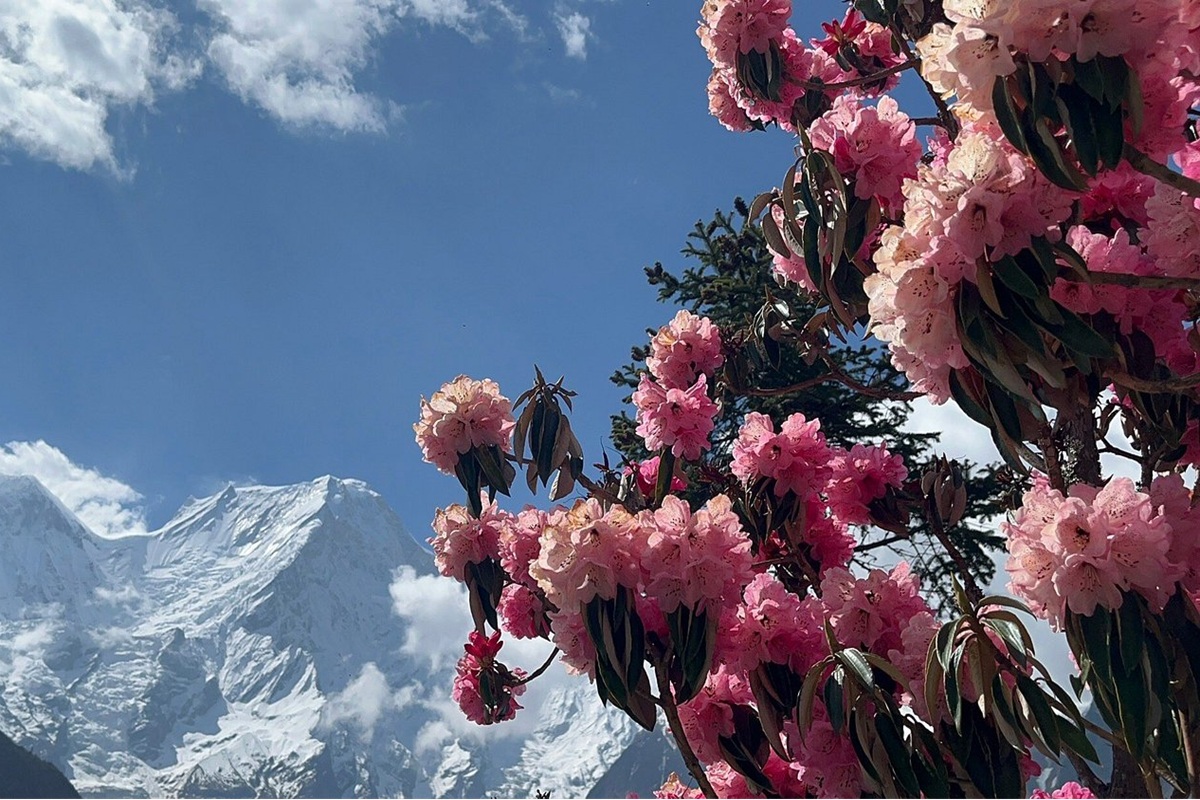
Spring is a really nice time to travel to Shyala. Average daytime temperatures are about 10°C-18°C, and the nights are cold (0°C-5°C). The weather is more stable in the spring, with longer rainy days that are ideal for trekking.
During the Spring months, the hills and forests surrounding the village come to life with colourful blooming Rhododendrons, Magnolias, and wildflowers.
The clear blue skies create a canvas with the mountains framing an already very cool area full of trekking, and with life bursting at the seams, as spring is the time of year when most trekkers travel to the Himalayas.
Pros:
- Mild temperatures, great trekking conditions.
- Rhododendron forests will be in bloom.
- Daylight hours with clear and dry weather will be longer, with better visibility.
- Walking intensity while trekking is lighter with plenty of open teahouses.
Cons:
- Trails may be busy.
- Accommodations may fill on busy trekking routes.
Summer/Monsoon (June through August)
In summer, during the Monsoon rains, Shyala is typically hot during the day with daytime temperatures ranging from 12 °C to 20 °C and nighttime temperatures of 6 °C to 10 °C. Trails become slippery, and hiking can be difficult altogether due to clouds obscuring mountain views.
However, removing mountain views aside, the mountains will all be lush and green, rivers will be flowing, and the waterfalls will be at their best. Fairly few trekkers will be in the mountains during this season, thus it will feel more like a local cultural exposure for the traveler than a trekking expedition.
Pros:
- The landscape will be lush, green, and fresh.
- The trails will be free of people, with possibly only a few trekkers seen.
- There will be more local cultural exposure, as locals will be active in their villages.
Cons:
- Frequent heavy rains, wet, muddy trails.
- Leeches can be a problem, especially on lower trails.
- Mountain views may be reduced, with clouds covering the mountains.
Autumn (September to November)
Fall is the most recommended time of year to visit Shyala. Daytime temperatures range from 8-15°C, and nighttime temperatures range from -2 to 5°C.
The air is crisp, and the views are incredible after the monsoon season, making for excellent possibilities for views of Mt. Manaslu, Himalchuli, and other peaks.
It is possibly the best time of year to be in the gorgeous scenery! Fall also brings the largest holidays (Dashain and Tihar) in Nepal, which enhance the culture.
Pros:
- An incredible season for the best mountain views and photography.
- The stability of the weather and a small chance for rain or snow.
- An incredible mood and atmosphere with festivals.
- The ideal conditions for trekking.
Cons:
- It is peak trekking season, meaning the trails will be busy.
- An extremely high demand for accommodation and services.
Winter (December to February)
The winters in Shyala can be cold and snowy. Daytime temperature usually averages between -2°C and 8°C in the daytime, and nights can fall below -10°C.
For trekkers, the landscape is winter white and quiet, creating a sort of magic.
The views are wonderful too, as more often than not, the sky is clear, and we can see the mountains. Although it gets very cold in winter, heavy snowfall can close higher passes.
Pros:
- Very quiet and relaxing trekking.
- Clear skies and great scenery.
- Incredibly beautiful snowy landscapes.
Cons:
- Very cold nights and mornings.
- Limited teahouses are available for accommodation along the treks.
- The higher passes may snow pack out and be impassable.
Which Mountains and Peaks Can Be Seen from Shyala Village?
Situated at an elevation of about 3,575 meters and within the Manaslu Conservation Area, Shyala Village offers some of the finest trekking views of snowcapped mountains. Along the peaceful alpine meadows and yak pastures, the mighty south face of Manaslu looms over the landscape.
Nearby adds an even more dramatic point to the skyline with Himalchuli and Ngadi Chuli (Peak 29). All around, further in the distance, Ganesh Himal, Baudha Himal, and Shiringi Himal (also known as Shringi) fill the horizon on a clear day, whose layered summits add beauty to the panoramas.
The mountains surrounding Shyala Village provide a breathtaking alpine view that can only be compared to the peacefulness and stillness of the village, whether it is in the rich golden rays of sunrise or the frosty hues of dawn.
Visible Mountains:
- Mount Manaslu (8,163 m)
- Himalchuli (7,893 m)
- Ngadi Chuli / Peak 29 (7,871 m)
- Ganesh Himal
- Baudha Himal
- Shiringi Himal
Shyala Village People and Lifestyle
People & Lifestyle
The inhabitants of Shyala, a village of around 150–200 people, live in the traditional mountain way, which is heavily influenced by Tibetan culture.
Most of them are from Gurung, Tamang, and Sherpa communities. Their days consist of subsistence farming that includes barley, buckwheat, and potatoes on terraced fields and yak herding, which is a source of milk, wool, and transportation for them.
The typical buildings in the area are made of stone with thick walls and flat roofs, both for the storage of the grain and the display of the prayer flags. Windows normally have very delicate wood carvings that are the result of the community's skilled manual work passed down through the generations.
Spirituality & Cultural Practices
The village of Shyala has many mani walls, prayer flags, and chortens, which are manifestations of the Buddhist faith practiced here.
The Pungyen Gompa is a scenic monastery standing on top of a hill that offers a spiritual retreat to both the locals and the trekkers.
Walking around the holy objects and place is what pilgrims do when performing kora - ritual circumambulations, which thus makes the spiritual air denser.
Festivals & Community Events
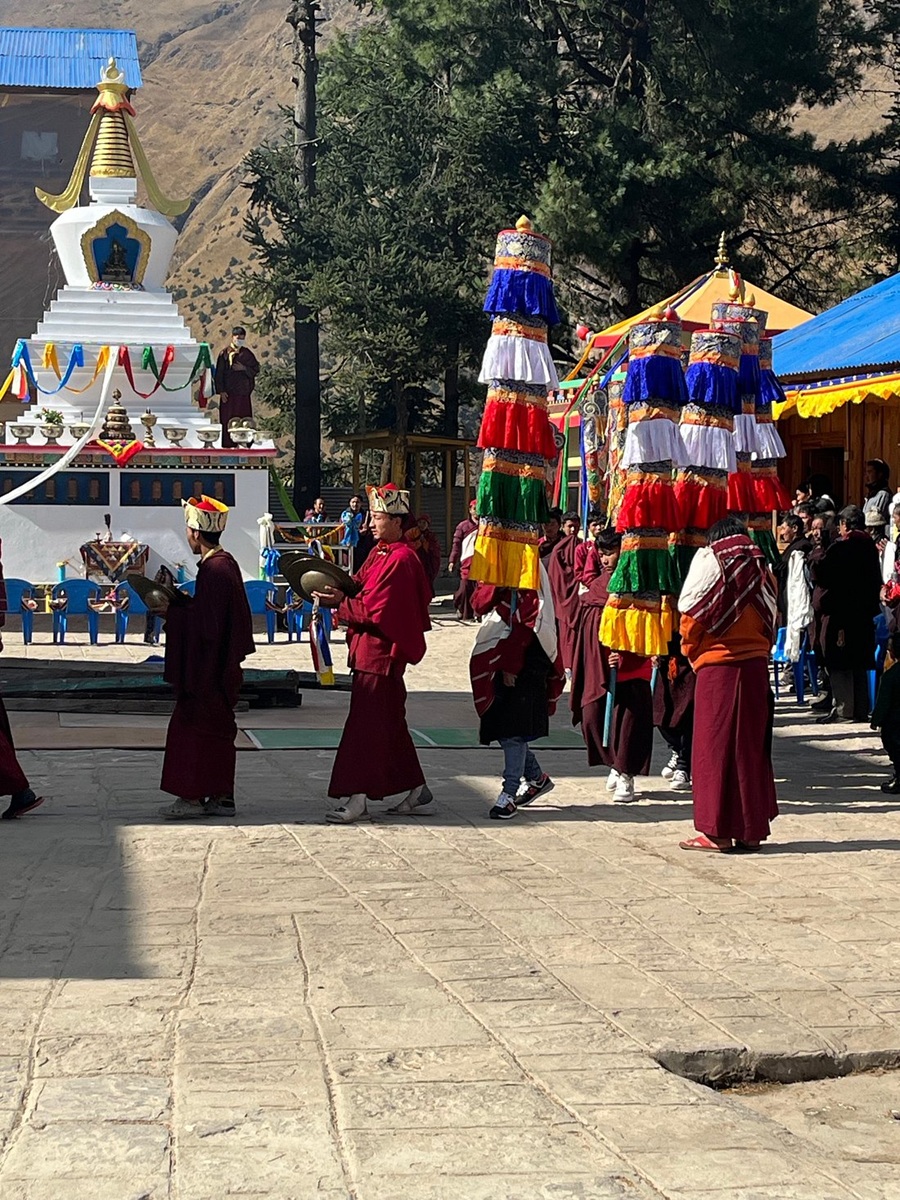
Shyala celebrates Himalayan festivals on its cultural calendar. Yartung is one of the celebrations that is the closest and most often referred to the Shyala, and it is an event of Nubri, a place nearby. It is a traditional equestrian festival that comprises horse races, songs, dances, and the communal sharing of chang (barley beer).
It takes place in late summer or early fall, and festivals of this kind are a very strong demonstration of the community's ability to survive and cultural pride.
