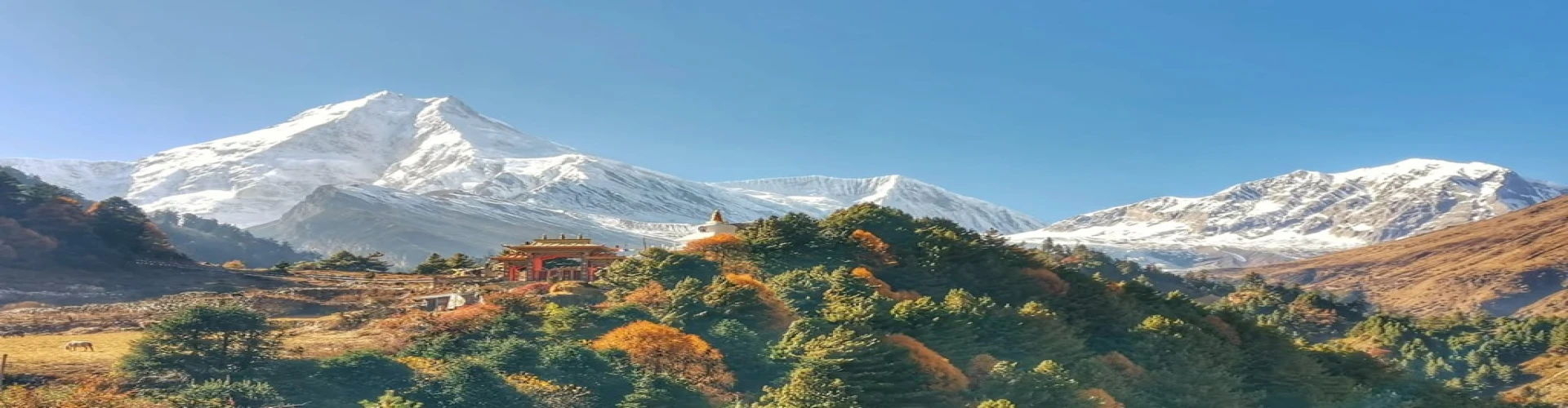
Lho Village is a secluded village nestled in the Himalayas of Nepal. The village is part of the Manaslu region. It is noted for its natural beauty and traditional culture. Lho Village is approximately 3,100 meters (10,170 feet) in elevation. It is surrounded by stunning mountains.
There are a lot of trekkers who will visit Lho Village as part of the Manaslu Circuit Trek. The Manaslu Circuit Trek is a trek around Mount Manaslu. It is the eighth-tallest mountain in the world. It is not as busy with trekkers as the Everest Base Camp or Annapurna trek. Therefore, you will have the opportunity to have a more authentic experience on a trek in Nepal.
Lho Village is not crowded, and the locals are very friendly. Most of the houses in Lho Village are traditional. The culture is very much a Tibetan Buddhist community. There are old monasteries outside of Lho Village. Prayer flags are blowing in the mountains' wind. It is peaceful and perfect for trekkers to rest and recuperate before starting a new leg of the trek.
The Manaslu Circuit Trek takes trekkers through a wide variety of terrains. These include farmland, forests, and rocky high passes. There are also numerous vistas to appreciate and enjoy. Lho Village is perfectly situated near the Lho La pass. It is one of the most arduous sections of our trek. Choosing to sleep here gives all of us the advantage of acclimatizing. It also lets us enjoy a bit of relaxed village life.
Trekkers will find a couple of simple lodges and teahouses in Lho. They offer delicious, hot meals and a dry place to rest after an exhausting day of walking. Most of the local food is not just wholesome, but also made with a lot of fresh ingredients. These include vegetables, lentils, and rice. Being in the village of Lho, there are few modern conveniences. This makes it all the more adventurous. It makes for an even richer experience.
Lho Village for trekkers hiking the Manaslu Circuit is definitely worth a stop. It has not only local community rustic raw beauty and rich cultural significance. It also has a view into more traditional Himalayan life set within the astounding scenic beauty of nature. It serves as a nice location for trekkers wishing to slow the pace down. They can find some peace, rest a little, and take in the full experience of climbing and trekking in the mountains.
Where is Lho Village Located?
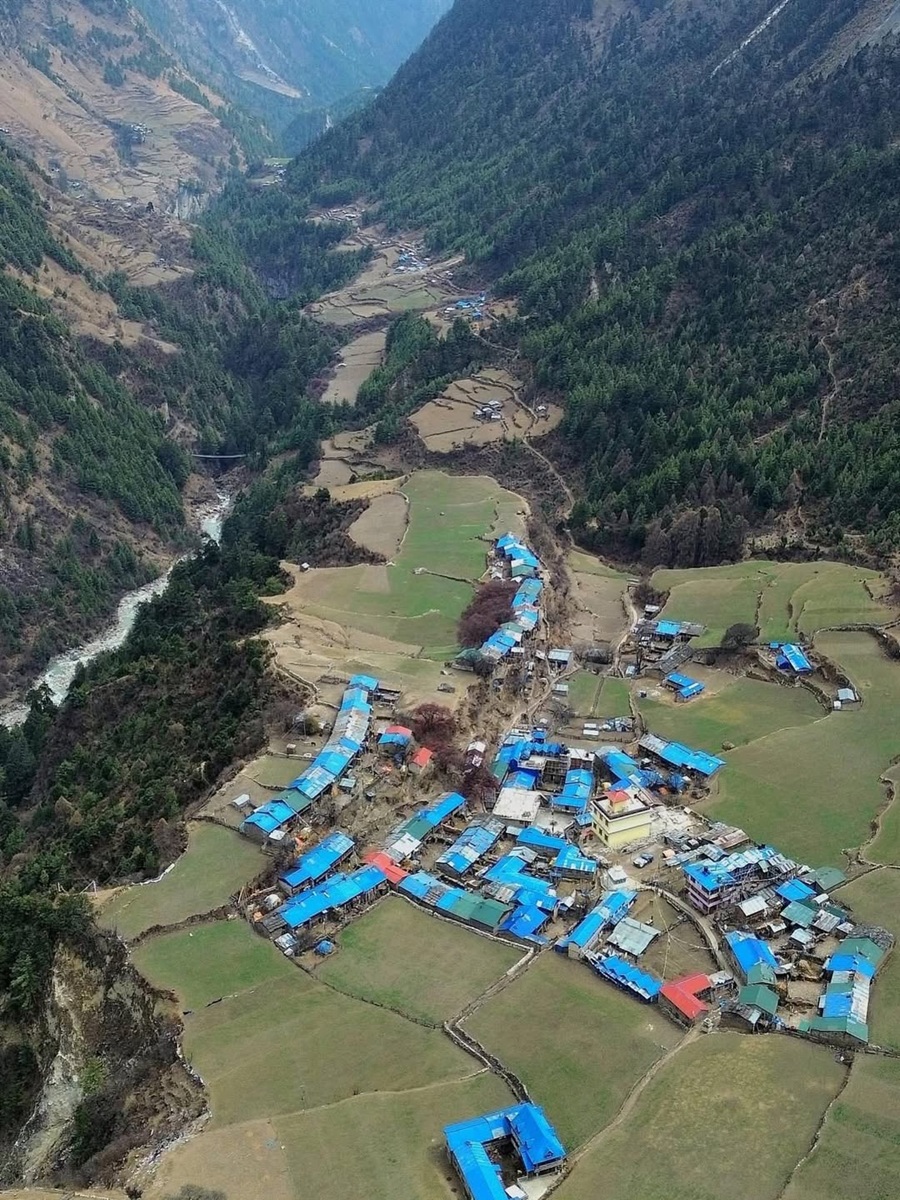
Lho Village (also known also Lho Gaun) is a quaint, tranquil, and scenic village in the Nubri Valley, Gorkha District, Nepal. Lho Village is located on the Manaslu Circuit Trek and is between Namrung and Samagaun. It is for trekkers who need a break from trekking or just want to enjoy the Himalayas.
The elevation of Lho Village is roughly 3,180 meters (10,433 feet) from sea level. This makes Lho Village an important acclimatization stop for trekkers. It is especially useful before continuing to the ultimate elevations, such as Larkya La Pass.
Lho is in the Gorkha District, Gandaki Province (Gandaki Zone). The coordinates for Lho are approximately: Latitude 28.573763° N Longitude 84.702306° E
Those coordinates for Lho position Lho Village on the upper part of the Budhi Gandaki River valley. The Manaslu Circuit follows this valley. The trail starts to ascend gradually through Lihi and eventually climbs up into Lho Village. It then continues upward through Samagaun and higher for Larkya La.
How to Reach Lho Village from Kathmandu?
1. Drive from Kathmandu to Soti Khola, then to Machha Khola (869m)
The journey starts with a long drive from Kathmandu. Travelers depart for an 8–9 hour road trip to Soti Khola via Arughat. At first, the trip moves along even, smooth highways. As the vehicle gets closer to Soti Khola, the ride becomes bumpy. The road follows firm, barely marked trails carved into the hills, and soon you will arrive at Soti Khola. From here, you can go further by vehicle on the road from Soti Khola to Machha Khola (869m), a small village on the Budhi Gandaki River. Machha Khola is the starting point of your trek.
2. Trek from Machha Khola to Jagat (1410m)
Following Machha Khola, the trekking path has a rocky and undulating trail alongside the Budhi Gandaki River. You will trek through Tatopani (hot springs) and cross a few narrow ridges with suspension bridges. The trail passes through subtropical forest and different villages, including Khorlabesi. Then, there is a gradual ascent towards Jagat (1410m), a beautiful stone-paved village. Jagat is also an official checkpoint of the Manaslu Conservation Area.
3. Jagat to Deng (1860m)
Leaving Jagat means continuing along a wide, smooth ridge and terraced hillsides marked with small Gurung villages such as Philim. Along the trek, you will pass waterfalls that drop off rocky cliffs, giving spectacular views. The scenery starts to change as you rise from subtropical vegetation to pine forests. After spending a good part of noting the rich greenery of plants and flowers, you will wade through the Budhi Gandaki River. Eventually, you will arrive at a small village called Deng (1860m), which gives a true flavor of mountain staple life.
4. Deng – Namrung (2630m)
You will begin your trek from Deng to Namrung (2630m). The trail steeply ascends through a dense forest of rhododendron, oak, and fir trees. Along the way, you will pass villages with fluttering prayer flags and Tibetan Buddhist monasteries. These provide views of mountains, including Siringi Himal, and, on occasion, the impressive Ganesh Himal and Manaslu. Namrung provides the perfect opportunity to kick back and take a well-deserved rest. The stunning exposition of mountain views on the way to Namrung is a reminder of how arduous the trek has been. It also reminds trekkers of the beauty of Mother Nature.
5. Namrung to Lho Village (3180m)
The final stretch of the trek from Namrung to Lho (3180m) can feel lengthy, but it is also quite enjoyable, sunny, and doable. The trail moves gently upward. You are beyond the beautiful wooded valley, yet pass through some pleasant farms. The slopes are then enhanced by alpine forest, houses, and pasture. Lihi and Sho are lovely little villages, especially with the displays of chortens, mani walls, and prayer flags everywhere. In the distance, Manaslu (8,163m) becomes more impressive as you continue your journey onward. Eventually, you arrive in Lho Village and the premises of the beautiful Ribung Monastery on the ridge above. It is also an amazing viewpoint over the valley. The overpowering presence of the gigantic Manaslu Mountain gives one of the most iconic views of the entire trek.
What to See in and Near Lho Village, Manaslu?
Breathtaking Mountain Scenery
Lho Village is famous for its breathtaking mountain scenery. Either during the day from the village, or at higher viewpoint areas like Syangok Hill (4,110 meters), a trekker will see fairytale views of Manaslu, Nike Peak, and Sringi Himal. The mountains shimmer with gold at sunrise, perfect for postcard potential. The open courtyard and porches allow trekkers to enjoy the scenery in comfort and peace. The scenes range from well-kept prayer walls (mani walls) to snow-capped far-off peaks. It is a real draw for every trekker and photographer.
Ribum Monastery
A short 10–15 minute hike from Lho Village brings visitors to Ribum Monastery (sometimes referred to as Ribung Gompa). It is of spiritual and religious significance to the region and built in the Tibetan style. On top of a hill, which offers visitors good views of Lho Village and the gigantic Manaslu, Ribum Monastery is an active centre for Buddhist learning, meditation, and rituals. Inside, a massive statue of Buddha embodies peace and goodness in mindfulness. The monastery also hosts sacred festivals at certain times of the year, and Cham dances performed by monks, adding to a trekker's cultural experience.
Nubri Local Life and Traditions
Lho demonstrates the uncomplicated, profound existence of the Nubri people. They coexist in harmony with nature and benefit from ancestral methods of agriculture. The sole focus of farming here is the growing of barley, wheat, buckwheat, and potatoes. The hospitality shown by local people is generous and welcoming. There is little modernity to their lifestyle, but the opportunity to engage in their culture is deeply connected to Tibetan Buddhist mountain culture. Visitors can observe traditional ceremonies, spend time with the people, and enjoy lively festivals such as Lhosar (Tibetan New Year) and Saga Dawa. These celebrations are accompanied by music, dance, and rituals that honour the spirituality of Buddhism.
Nearby Attractions: Syala Valley and Pungyen Gompa
Beyond the village is Syala Valley, a beautiful bowl-shaped valley, which is only a scenic two-hour trek away from Lho. Syala Valley was once a pasture for cattle, but it is now used for places to stay and monasteries, making it a nice side trip. Another interesting site is Pungyen Gompa, a very old monastery near Samagaon, with a sad history surrounding the avalanche of a large group of Japanese researchers. Pungyen Gompa has mostly fallen into ruin, but it is still different from Lho. It remains a spiritual place with great views, especially at sunset. The surrounding sites add to the experiences of culture and landscape in the Lho Village area.
Trekking Experience and Practical Info
Lho is a famous stop on the well-known Manaslu Circuit Trek. It is located between Namrung and Samagaun along the trek. The population is about 150 households. There are a few teahouses and restaurants to cater to trekkers on the route to the Larkya La Pass, 16,752 feet (5,213 meters). The best time to go is during Nepal’s trekking peak times, in the autumn season (September–November) and the spring season (March–May). During these times, the weather is nice and the views of the mountains are unobstructed.
Lho Village to Ribung Monastery Trekking Distance
The distance from Lho Village to Ribung Monastery is just about 1.5 to 2 kilometers (0.9 to 1.2 miles) with an elevation gain of around 200 meters (656 feet).
Even though it is a short trek, it is very nice. It typically takes around 30 to 45 minutes to climb the trail. The trail ascends slowly through pine forests and terraced fields. Along the way, trekkers can enjoy views of the high mountains and valleys in the distance.
Ribung Monastery is up above the village of Lho on a hill. It is a very important spiritual center for Nubri people who follow the Nyingma tradition of Tibetan Buddhism. The monastery houses some old scriptures, thangka (painted and embroidered) wall hangings, and statues of deities. These are kept and preserved by the resident monks of the monastery.
Ribung Monastery Monks
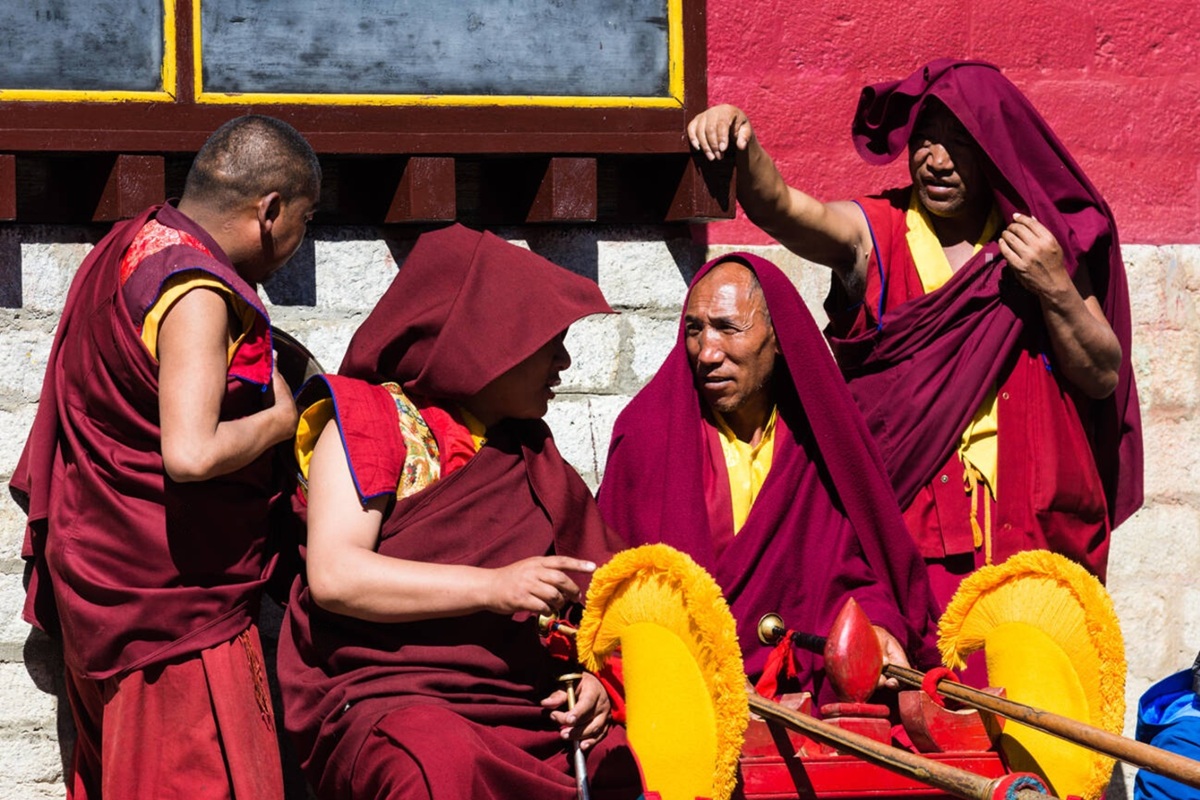
The monks of Ribung Monastery, in the Village of Lho, are fellows of Tibetan Buddhism. They live lives of solitude, discipline, devotion, and simplicity. On a daily basis, they wake up in the morning to light butter candles and chant hymns. The chanting of the hymns removes negative energy from a person and space. Rituals define their way of living. The rituals themselves create a serene place to commence daily meditation that prepares them for a lifetime of spiritual maturity and growth.
The monastery acts as a cultural center, especially around the Buddhist calendar festivals. Monks take part in regional celebrations for Lhosar (Tibetan New Year), Dumje, Buddha Purnima, and Saga Dawa. The festivals feature an assortment of traditional songs, dances, and instruments, ranging from cymbals to drums, conch-shells, tingsha, vajra, gongs, and chod drums. These joyful occasions involve participation from everyone.
In addition to their cultural role, the monks of Ribung Monastery are pillars in the preservation of Buddhist practices in the area. They teach young novices, facilitate understanding of Buddhist philosophy, and perform traditional rites with speed and correctness. The monks work hard to pass on all spiritual practices through the generations and continue to keep these practices alive.
Accommodation Options in Lho Village For Manaslu Circuit Trekkers
Lho's accommodation is made up of small lodges and teahouses which are locally operated and provide a degree of comfort for trekkers. Most teahouses have an option for a shared dormitory room with shared bathrooms. These shared sleeping arrangements foster more of a sense of community among trekkers.
Over the past few years, many teahouses have introduced private rooms (with an attached bathroom), which are a more comfortable option for visitors.
Typical room costs are NPR 500 - 1,500 a night, depending on season and amenities included. During peak trekking season, it is advisable to pre-book accommodation!
In lieu of commercialized hotel chains, the teahouses in Lho are also culturally significant and provide trekkers with an opportunity to see how local Tibetan-Buddhist culture lives and thrives. Trekkers are often treated to home-cooked meals and afforded the opportunity to try the authentic flavors of the region.
Meals and Drinks
For trekkers on the Manaslu Circuit trek, Lho Village has some of the best food and drink options for both local and international tastes.
All of the teahouses provide a combination of traditional Nepali food along with a good selection of Western food. Trekkers will definitely be well-fed while trekking.
In most cases, a meal will be Dal Bhat. It includes two dishes: steamed rice (Bhat) and a soup made from lentils (Dal), along with some vegetable curry and sometimes pickle. This dish is well-known for its nutritional value. Several teahouses even serve Dal Bhat in unlimited portions, giving trekkers an additional energy boost during the trek.
Typical alternatives to Dal Bhat include noodles, momos (dumplings), and thukpa (noodle soup), which is essentially soup with noodles that taper on the ends. Other options include vegetables, hot soup, or broth dishes, which warm the body and soul after a long day.
Local foods, like yak milk, yak butter are offered as local delicacies served up in some of the teahouses, giving an experience beyond local culture. Trekkers will also have an option for breakfast made up of Tibetan bread - highly recommended because it is filling and energizing, and a great way to start the day for a day of trekking.
When it comes to drinks, trekkers will see options for hot drinks, like tea, coffee, and hot chocolate, available. These beverages are good because in the cool mountain temperatures, these hot drinks provide coziness. Trekkers should also remember to pack water purification tablets or filtered water because potable water is getting scarce on the trek.
Teahouses in Lho Village serve meals and drinks to provide a good, nutritious meal, and those who get a chance to experience the local culture.
What Are the Drinking Water Options in Lho Village?
Maintaining enough hydration is very important on the Manaslu Circuit, especially at high altitudes like Lho Village. Lho Village is at 3,180 meters (10,433 feet) and is a key acclimatization stop. Trekkers should drink on average 3 to 4 liters of water a day.
Many teahouses in Lho Village provide boiled water for refill at a very minor cost. This gives trekkers an inexpensive and safe option for their hydration needs.
Some shops and teahouses also offer bottled, natural, or purified mineral water. However, depending on bottled water alone can be difficult and expensive. Bottled water becomes costlier at higher altitudes and is less effective for proper hydration.
Trekkers should use purification methods such as boiling, purification tablets, or portable filters to ensure safe drinking water. Teahouses may provide boiled water, but trekkers should still use their own purification methods. If your backpacking kit doesn’t include a water purification method, get one. Water from streams, rivers, or glacial melt requires careful attention.
Toilet Facilities in Lho Village
Trekkers passing through Lho Village should note that the shared toilets are very basic squat toilets, usually located outside the teahouses. This is common throughout most of the Manaslu Circuit, especially at higher elevations, where infrastructure is minimal.
Occasionally, teahouses may have a Western (sit-down) toilet, but these are rare and cannot be relied on.
Trekkers should carry small amounts of personal hygiene items, such as toilet paper, hand sanitizer, and wet wipes, because these may not be available.
If you are particular about cleanliness, it helps to understand what to expect, since the facilities are basic.
As a safety note, it is best to use the toilets during the day, as it will be very dark at night with little to no light.
Although basic, the facilities are functional enough to serve trekkers in these remote areas. Being prepared and flexible will make using toilet facilities in Lho Village a much more pleasant experience.
Showers and Charging Facilities in Lho Village
Showers exist in Lho Village, but they are typically basic. Due to the altitude and lack of sustainable resources, if there is hot water, it is usually gas or firewood. The charge for hot showers is typically NPR 300-700, depending on the teahouse and how the hot water is supplied.
It's essential to keep in mind that showers always cost extra, and sometimes the hot water may not be available. There is always an outside factor, i.e. the weather, that affects what's available; cloudy days are going to pose a problem for solar.
As for charging devices, most teahouses will allow you to charge devices for a small fee. But as electricity is often backed or reliant on solar, charging your devices will probably only be during the day, and you may encounter the reality of limited power.
We highly recommend that you bring a backup power bank or some other device to keep your devices charged during your stay in Lho Village.
Network and Communication Options
Lho Village is situated on the Manaslu Circuit Trek and has good mobile networks. The village can be accessed by either Nepal Telecom (NTC) or Ncell; usually, NTC has better connectivity in remote areas. Nevertheless, as you are at a greater altitude (beyond Samagaon), you will have less network coverage. You could potentially lose coverage altogether until you descend to a lower elevation, such as Dharapani.
NTC SIM Cards
NTC SIM Cards can be found in Kathmandu and can be purchased with a passport and visa. NTC SIM has better coverage than Ncell in remote places, so trekkers to the remote areas of the Manaslu Circuit would be encouraged to purchase NTC. NTC can provide 2G and 4G service, and over the past couple of years, they have improved their infrastructure in the Manaslu area.
Ncell SIM Cards
You can also find an Ncell SIM in Kathmandu, and they provide competitive pricing and data plans. Ncell provides 3 G and, in some places, a service that is 4G, but at higher altitudes, they do not have even coverage. NTC may be the best, so for this reason, it is recommended that you carry both NTC and Ncell SIMS. Carrying both will give you the best chance of connectivity during the entirety of the trek.
Wifi Services in Lho Village
Wi-Fi services are available in the Lho Village, since this village is a popular stop on the Manaslu Circuit Trek. There are a few teahouses in Lho Village with Wi-Fi for trekkers, and this can be a nice way to connect in a more remote area. Please keep in mind that these services may be inconsistent, and the speed is slower than most trekkers are accustomed to when they are in cities.
In most teahouses, there will be a charge for Wi-Fi for USD 1 - USD 5 per hour (estimates will vary based on the teahouse and coverage).
When you arrive at your teahouse, please inquire with the staff whether or not there is Wi-Fi and the cost involved.
Keep in mind that even if the teahouse has Wi-Fi, it may not be able to carry heavy data loads (i.e., memory-intensive or data-rich apps such as video streaming).
This can be a useful service for basic communication, but for significant data needs, please consider mobile data and/or satellite. In all cases, please confirm that a teahouse has Wi-Fi and what costs are involved with the staff.
When is the Best Time to Visit Lho Village?
Lho Village on the Manaslu Circuit Trek is appealing in any season. This overview of the seasons will hopefully help you determine the best time for you based on your home location and logistics.
Spring (March–May): Best for overall trekking
Spring is the best time for trekking and visiting Lho Village. The day temperatures can vary from 4°C to 16°C, and the night temperatures vary from - 6°C to -8°C. The weather patterns are stable and typically have clear skies with moderate temperatures for ease of trekking.
Witness giant tree rhododendrons, and wildflowers will add tons of colours throughout your trek. There will be fewer trekkers as there are fewer trekkers compared to the mass of trekkers in the autumn.
Monsoon (June–August): Not Recommended
The monsoon rains occur mainly in June and July, when there is a lot of precipitation, resulting in very slippery trails and an increased chance of landslides. During the monsoon, the humidity is high, and in addition, many teahouses will close because of low foot traffic, so it is not recommended to trek to Lho Village at this time.
Autumn (September–November): High Trekking Season
Autumn is the peak trekking season to Lho Village. Daytime temperatures are about 12°C to 18°C, while nighttime temperatures are approximately 0°C to 6°C. The weather is extremely dry, resulting in great clear skies with fantastic views of Mount Manaslu and the gorges below. Autumn is harvest time for Tashegu and other local harvest festivals, making it the time of year for some very varied and interesting cultural experiences.
Winter (December–February): Cold and Snow
Winter temperatures are cold, daytime highs can range from 0°C to 6°C, with overnight lows between -10°C to -18°C. Snowfall occurs often in the winter, especially in January; it then gets harder and more dangerous to navigate the trails. Winter usually also sees many teahouses closed because of virtually no trekkers or very harsh conditions. If you are thinking of trekking in Lho Village in winter, you will need proper gear, and only if you are an experienced trekker should you go.
How long does it take to reach Lho Village on the Manaslu Circuit Trek?
Generally, by the 7th day of trekking the Manaslu Circuit, the trek will have reached Lho Village. After six days from Soti Khola to Lho Village, trekkers would have seen amazing landscapes, terraced fields, and small villages. They would have trekked up a very green dent valley, crossed suspension bridges, walked the trail beside the Budhi Gandaki River, and ambulated alongside many ethnic communities, which demonstrated many applications of culture. When trekkers reach Lho Village, they will have already trekked through Jagat, Deng, and Namrung, albeit over undulating hills and valleys along the way. Lho Village itself is a nice village with traditional buildings, great views of the mountains, and nice lodges. It is a good place to rest and recover before moving further up the circuit. A sample itinerary of trekking to Lho Village from Kathmandu is below.
Outline Itinerary
Day 1:Arrive in Kathmandu
Day 2:Manaslu Restricted area preparation and briefing of Trek
Day 3:Drive to Soti Khola than to Machha Khola (869m)
Day 4:Machha Khola to Jagat (1410m)
Day 5:Jagat to Deng (1860m)
Day 6:Deng to Namrung (2630m)
Day 7:Namrung to Lho Gham (3180m)
Is There Altitude Sickness Risk in Lho Village?
Lho Village is at about 3,180 metres (10,433 feet) above sea level, and is at moderate altitude on the Manaslu Circuit Trek. Although it is lower than in high-altitude areas, yes, altitude sickness can still be a risk.
The risk of altitude sickness is significantly lower at this moderate altitude than at higher altitudes. However, trekkers are still affected by some symptoms, and the amount of oxygen is also relatively low, which may cause headaches, faintness, and nausea.
The best way to avoid altitude sickness in Lho Village is simply to use some of the acclimatisation ideas.
It is important not to gain elevation of 300-500 metres each day, to rest for a couple of days at Samagaun and Samdo, to drink some water, and eat food that is relatively high-energy dense to help the acclimatisation process.
Local Traditions and Festivals in Lho Village
Lhosar (Tibetan New Year)
Lhosar is the festival that holds the highest importance in the Lho region. It is a celebration marking the Tibetan New Year and is celebrated with great zeal and fervour. The whole village glows with the vibrant dances, music, and ceremonies. People wear their beautiful garments and the time is filled with joy and spiritual essence.
Saga Dawa
Saga Dawa is a Buddhist festival that celebrates the birth, enlightenment, and death of Lord Buddha.
In Lho, it is a festival of prayers, offerings, and processions. Monks and villagers come together at Ribung Monastery to perform rituals and chants, inside people's hearts and minds, a shared spirit emerges in a space that together makes it possible.
Dumje Festival
Dumje is a festival of local people that celebrates the protector deity of the monastery. The event at Ribung Monastery is a performance with masked dances, music, and religious ceremonies. It is the moment for villagers to show their delight and seek blessings for their prosperity and peace.
Buddha Purnima
Buddha Purnima is a festival that celebrates the birth, enlightenment, and death anniversary of Lord Buddha. In Lho, it is a festival of prayers, candle offerings, and teachings. The community comes together to meditate on Buddha's life and teachings and thereby encourages peace and compassion.
Essential Tips for Lho Village
- Drink Water: Try to drink 3 to 4 litres a day of safe water to manage your water balance; you can fill bottles from boiled water as it is available in Lho for a small fee.
- Respect the Culture: Lho is a Tibetan-Buddhist village, so honour the culture and respect monasteries and festivals like Dumje.
- Expect Simple Facilities: You should expect tea houses with simple, limited furniture and facilities. They do usually have warm blankets and sometimes hot showers heated by solar or gas.
- Bring Medications: Think about what medicines you might need, in a remote area like Lho there are no medical facilities. Please make sure you have your medications and first-aid kits, at all times.
- Carry Sufficient Cash: Since there are no ATMs, make sure you have enough cash with you. Most payments, including riding and charging of electronics, are made in cash.
- Hire Local Guides: Employing the skilled local guides and porters is not only for easy access to the destination but also for cultural understanding and emergency support on the Manaslu route.
- Trek Slowly and Steadily: For energy saving and allowing your body to acclimatise, take your time on uphill trails, particularly the gradual ascents to Lho through pine forests and rocky paths.
- Pack Trekking Poles: Get trekking poles, which help in better balance and also reduce the force on the knees while walking on the uneven and slippery trails near Lho.
- Respect Wildlife: Try to be as quiet as possible and watch local wildlife such as Himalayan Tahr without interfering with their natural habitat.
- Use Eco-friendly Products: Use biodegradable soaps and do not litter to help keep the area around Lho Village in its original condition.
- Ready for Weather Changes: Weather in the region can change at a moment's notice, so it's smart to carry waterproof gear and wear layering clothing that will protect against the sun, wind, cold and rain.
- Learn a Few Basic Words of Tibetan or Nepali: You can earn the trust of local people immediately by learning a few simple words of the local language, and it will make your trip much more fun and interesting from a cultural perspective.
